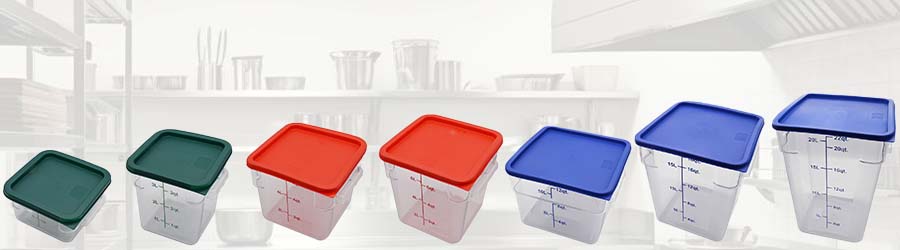
In any kitchen, whether at home or in a professional catering environment, keeping food fresh, organised, and safe is essential. Food storage is not only about convenience, it’s also about preserving flavour, preventing contamination, and reducing food waste. That’s where our Polycarbonate Food Ingredient Storage Containers come into play.
Available in a range of sizes and shapes with matching lids, these containers are durable, stackable, easy to clean, and suitable for both cooked and uncooked food. In this guide, we’ll explore the features of each product, offer tips on storage practices, and help you make the most of your food storage system. Whether you’re meal-prepping at home or managing a commercial kitchen, these containers can take your ingredient preparations to another level.
Why Choose Polycarbonate Food Storage Containers?
Polycarbonate is a food-grade plastic known for its strength, clarity, and temperature resistance. Unlike standard plastic containers, polycarbonate is:
- Virtually unbreakable: Resistant to cracking, chipping, and staining.
- Temperature tolerant: Suitable for use in refrigerators and freezers (up to -40°C) and resistant to temperatures as high as 100°C.
- Clear visibility: Allows for quick identification of contents without opening the lid.
Our Polycarbonate Clear Food Ingredient Storage Containers are available in square and round designs, ranging from 1.9 litres to 20.8 litres, ideal for everything from small-portion storage to bulk ingredients.
How to Store Food Safely Using Polycarbonate Food Storage Containers
Follow food safety best practices when storing cooked and uncooked foods in polycarbonate storage containers.
Step 1: Choose the correct container size
Select a container size appropriate for the quantity and type of food being stored.
Step 2: Use colour-coded lids
Assign lids for vegetables, raw meat and cooked foods to reduce cross-contamination risks.
Step 3: Cool cooked foods correctly
Allow cooked food to cool before placing it into airtight containers.
Step 4: Label stored food
Add preparation dates and contents to support stock rotation and food safety.
Step 5: Store at safe temperatures
Keep refrigerated food at or below 5°C and frozen food at -18°C.
Step 6: Clean and maintain containers
Wash with warm soapy water and inspect containers regularly for wear.
Container Overview: Sizes and Uses
Square Polycarbonate Food Storage Containers
These stackable, space-saving containers are perfect for maximising shelf and fridge space.
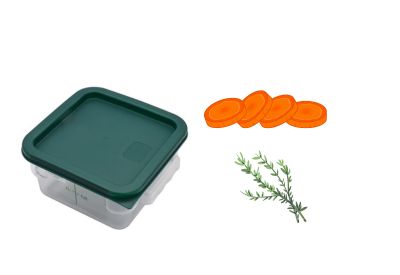
1.9 litre storage container: Great for herbs, spices, pre-chopped vegetables, sauces, or marinated ingredients.
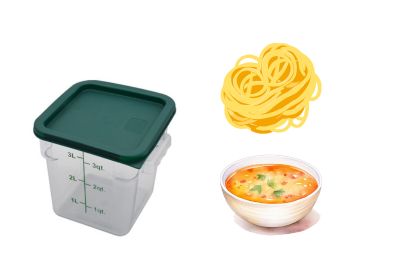
3.8 litre storage container: Ideal for cooked rice, pasta, or smaller portions of soup and stew.
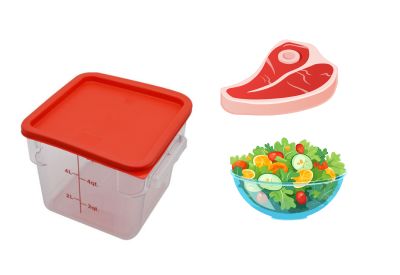
5.7 litre storage container: Store raw meats, bulk grains like quinoa or couscous, or large salad portions.
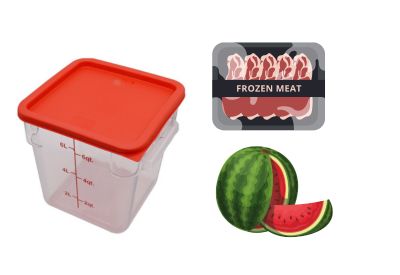
7.6 litre storage containers: Excellent for dough, large fruit pieces, or frozen meat portions.
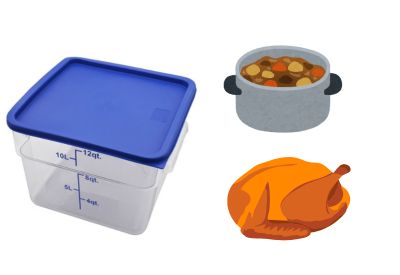
11.4 litre storage container: Store large volumes of stew, chilli, or cooked meat for meal prep or catering.
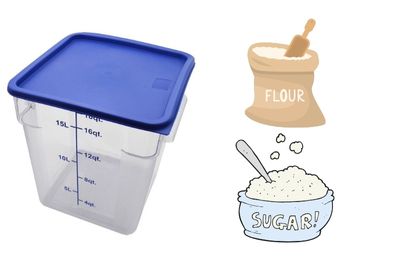
17.2 litre food container: Perfect for dry bulk ingredients such as flour, sugar, rice or cold storage of larger quantities of cooked food.
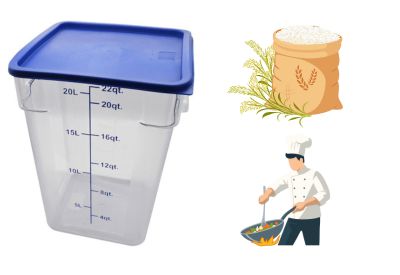
20.8 litre storage container: Ideal for industrial kitchen use: mass-prepared meals, soups, or ingredients for batch cooking.
Round Polycarbonate Food Storage Containers
Round containers promote better airflow and are easier to clean, making them ideal for liquids.
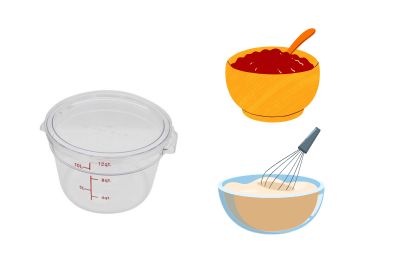
11.4 litre round food container: Suitable for sauces, soups, batters, or pasta dishes.
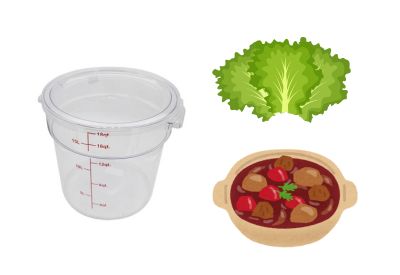
17.2 litre round food containers: Best used for bulk salad mixes, stews, or brining meats.
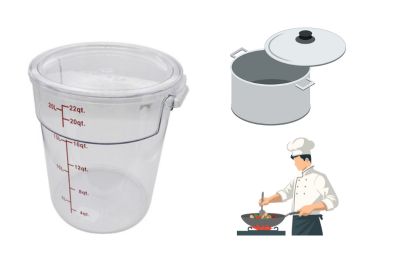
20.8 litre round food container: A go-to for large-scale catering use, excellent for liquids, curries, and stocks.
Colour-Coded Lids: Improve Hygiene and Organisation
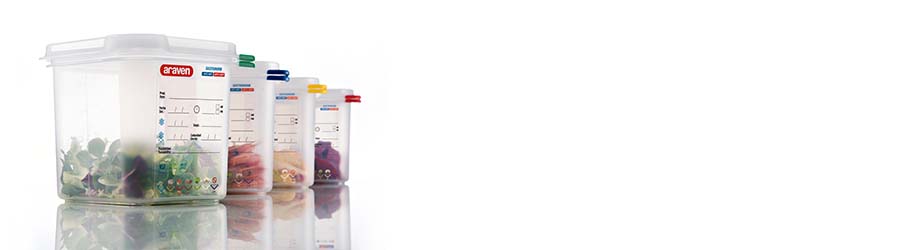
Cross-contamination is a major concern in both domestic and commercial kitchens. Our colour-coded lids help you follow food safety best practices. The lids fit snugly, are easy to remove and help retain freshness by forming a secure seal.
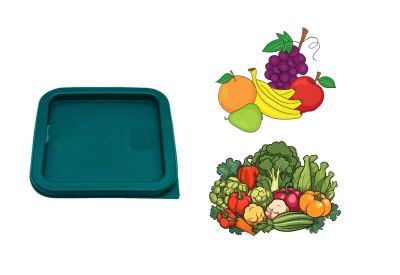
Green Lid (for 1.9-litre and 3.8-litre containers): Use for fruit and vegetables (ideal for vegan prep zones).
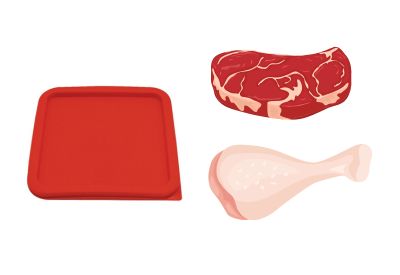
Red Lid (for 5.7-litre and 7.6-litre containers): Designate for raw meat to avoid bacterial cross-contamination.
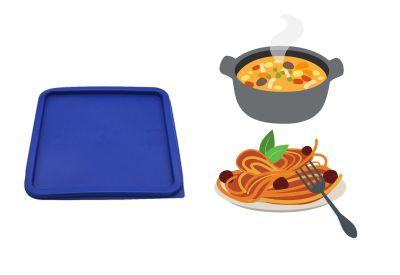
Blue Lid (for 11.4-litre, 17.2-litre and 20.8-litre containers): Ideal for cooked food or allergen-sensitive items.
Storage Best Practices: Cooked vs. Uncooked Foods
Storing Cooked Foods:
Cooked food should be cooled quickly and transferred into airtight containers before being placed in the fridge or freezer.
Key tips:
- Cool food to room temperature within 90 minutes before storing.
- Label containers with the date of preparation.
- Store in the fridge at or below 5°C or in the freezer at -18°C.
- Use within 3-5 days for most cooked foods when refrigerated.
- Frozen cooked foods can typically last 2-3 months.
Storing Uncooked Foods:
Whether it’s meat, vegetables, grains, or dairy, these containers help preserve freshness and prevent odours from spreading.
Key tips:
- Store raw meats on the bottom shelf of the fridge to prevent drips.
- Use colour-coded lids to prevent confusion.
- Raw meat: refrigerate at 0–4°C, use within 1–2 days; freeze for up to 6 months.
- Dry goods: store in airtight containers in a cool, dry place (ideally under 21°C).
Commercial Kitchen Use: Stay Compliant & Organised
Food safety regulations in commercial kitchens require strict hygiene protocols and effective storage. Our containers are designed to assist in meeting these requirements through the implementation of colour-coded lids and clear labelling. They also contribute to reducing food waste by providing improved visibility. Additionally, consistent container sizes enhance inventory management, ensuring all ingredients are easy to keep track of. These containers are also built to withstand repeated washing, ensuring quick and easy sanitisation.
Home Use: Meal Prep, Batch Cooking & Pantry Organisation
While designed for commercial use, these storage solutions are equally beneficial for home use, particularly for meal preparation, batch cooking, and pantry organisation. For meal prep, you can prepare lunches for the week and store them in 1.9L or 3.8L containers. When creating freezer meals, such as soups, stews, or curries, 5.7L or 7.6L containers are ideal for storing large batches made in advance. Furthermore, these containers are effective for pantry organisation, with larger sizes suitable for storing items like rice, oats, flour, or pasta.
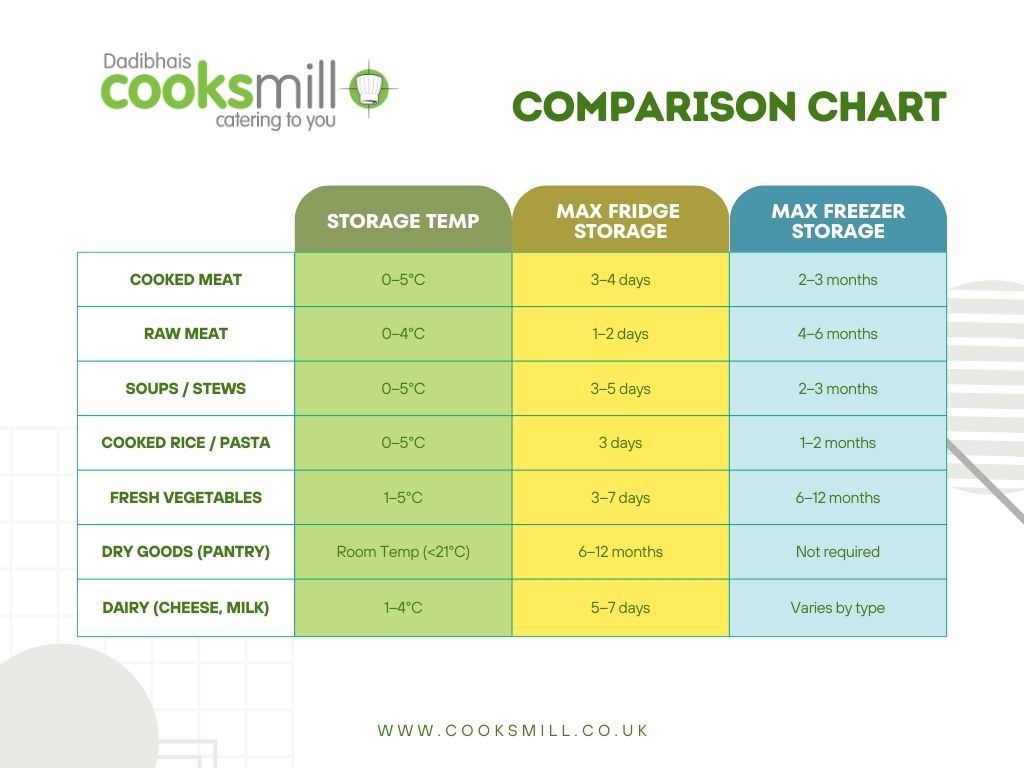
Storage Temperatures and Maximum Storage Lengths
Here’s a handy reference for storage times and temperatures using our polycarbonate containers:
Cleaning & Maintenance Tips
- Wash with warm soapy water to remove dried foods.
- Avoid abrasive pads to maintain clarity.
- Store with lids off to prevent moisture buildup when not in use.
- Rotate your containers regularly to check for wear and tear. Though polycarbonate is highly durable, inspecting your food storage is a good habit.
Why Investing in Quality Food Storage Pays Off
Choosing the right food storage containers might seem like a small thing, but the benefits are far-reaching. Here are some of the main reasons why our polycarbonate containers are such a good addition to any kitchen:
- Saves Money: Keep food fresher for longer and reduce spoilage.
- Improves Safety: Reduce cross-contamination and meet hygiene standards.
- Enhances Efficiency: Stackable and easy to label, making kitchen workflows smoother.
- Eco-Friendly: Reusable and long-lasting, which cuts down on disposable packaging.
FAQ (Quick Takeaways)
Question: What are the benefits of polycarbonate food storage containers?
Answer: Polycarbonate containers are durable, clear, stackable, resistant to staining and suitable for refrigeration and freezer storage.
Question: Are polycarbonate food storage containers suitable for commercial kitchens?
Answer: Yes. They support food safety procedures through clear visibility, colour-coded organisation and durable construction suitable for repeated washing.
Question: Why use colour-coded lids on food storage containers?
Answer: Colour-coded lids help separate raw meat, vegetables and cooked foods, reducing the risk of cross-contamination.
Question: Can polycarbonate containers be used for freezer storage?
Answer: Yes. Polycarbonate containers are designed to withstand freezing temperatures and help keep food organised during storage.
Question: How should polycarbonate food storage containers be cleaned?
Answer: Wash containers using warm soapy water, avoid abrasive cleaning pads and allow them to dry thoroughly before reuse.
Shop Polycarbonate Containers with Cooksmill
Whether you’re running a bustling commercial kitchen or looking to bring more order to your home cooking routine, our Polycarbonate Clear Food Ingredient Storage Containers offer the perfect combination of durability, safety, and convenience. With a wide range of sizes and colour-coded lids, you can tailor your food storage to fit your exact needs and keep food fresher for longer.