Bench can openers are a lesser-known tool in the wide range of food prep and chefs' tools; however, they’re irreplaceable in busy kitchens and food prep areas. Here at Cooksmill, we have a collection of bench-mounted can openers that are designed to meet the unique needs of the food service industry. Our heavy-duty can openers are designed to open extra-large cans that would be extremely difficult to open with a standard handheld can opener. While these manual models are perfect for most professional kitchens, our Tellier electric can opener is a fantastic upgrade for high-output environments, where opening hundreds of tins a day needs to be as fast and effortless as possible.
Bench can openers are valuable tools for anyone who opens a lot of cans, such as those in the professional catering industry. Having a reliable catering tin opener ensures that your kitchen will run smoothly and efficiently.
What Is a Bench Can Opener and When Do You Really Need One?
A bench can opener is specifically designed for high-volume environments where speed, consistency, and safety matter. If your kitchen opens more than a handful of large tins per day, a handheld opener is not enough. Bench-mounted models remove the strain from wrists and shoulders, reduce prep time, and allow staff to work more efficiently during busy services.
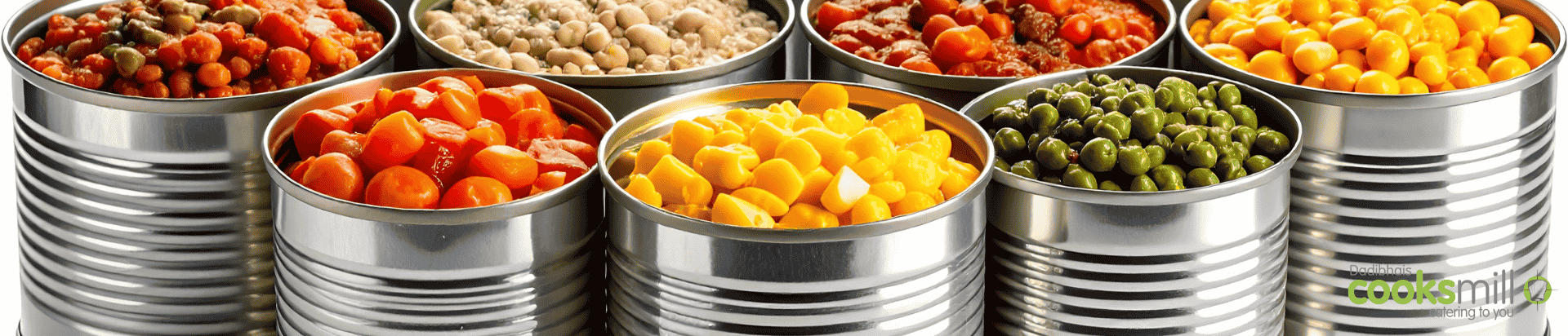
You’ll typically find bench can openers in kitchens that rely heavily on bulk ingredients, such as chopped tomatoes, coconut milk, beans, fruit fillings, syrups, and sauces. These are staples in many commercial kitchens, but the tins they come in are often oversized, heavy, and awkward to handle manually. A bench can opener turns what would be a two-handed task into a controlled, repeatable motion that anyone can perform with minimal training.
How to Use a Bench Can Opener
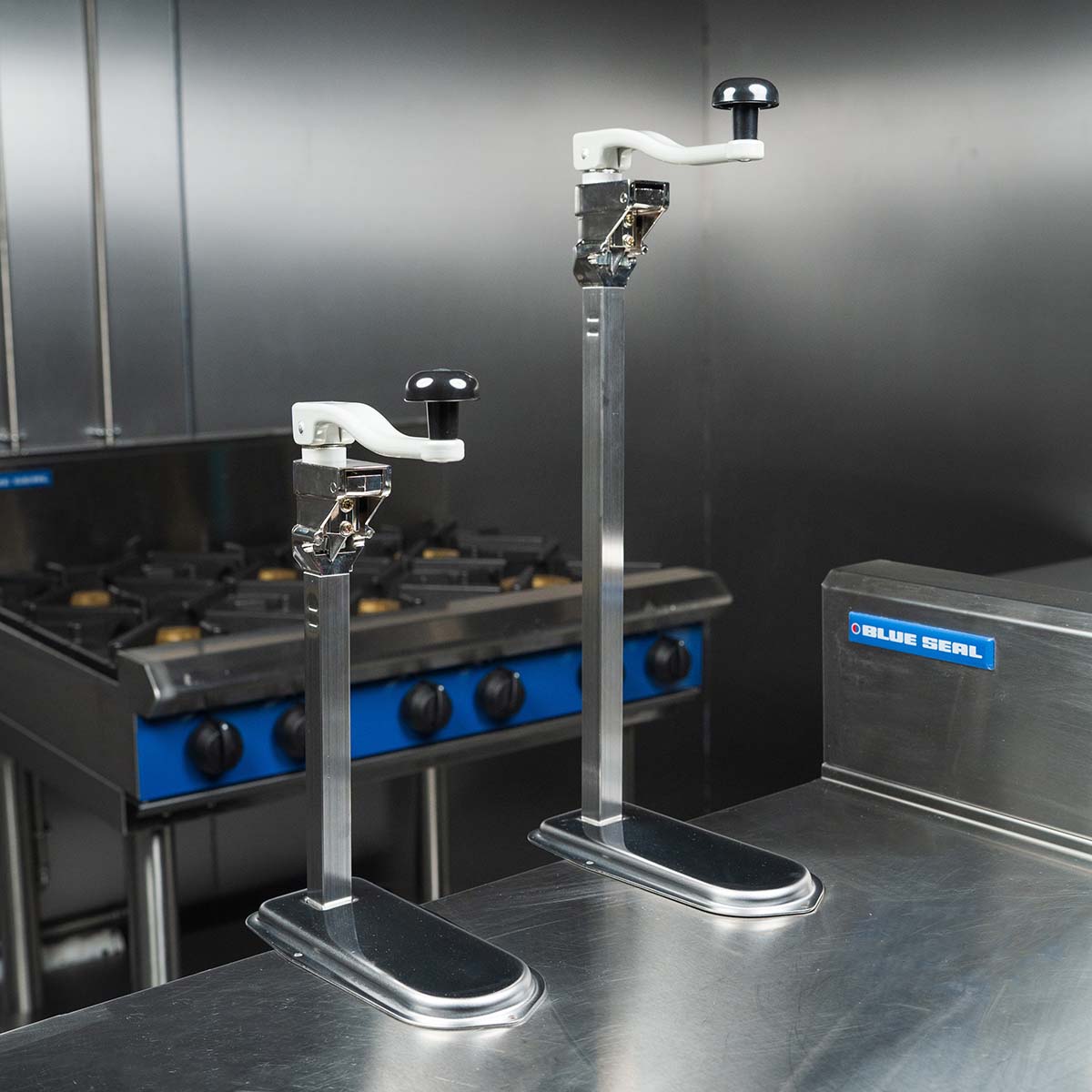
1. Ensure the can opener is securely attached to the worktop

2. Lift the handle of the can opener to the upright position
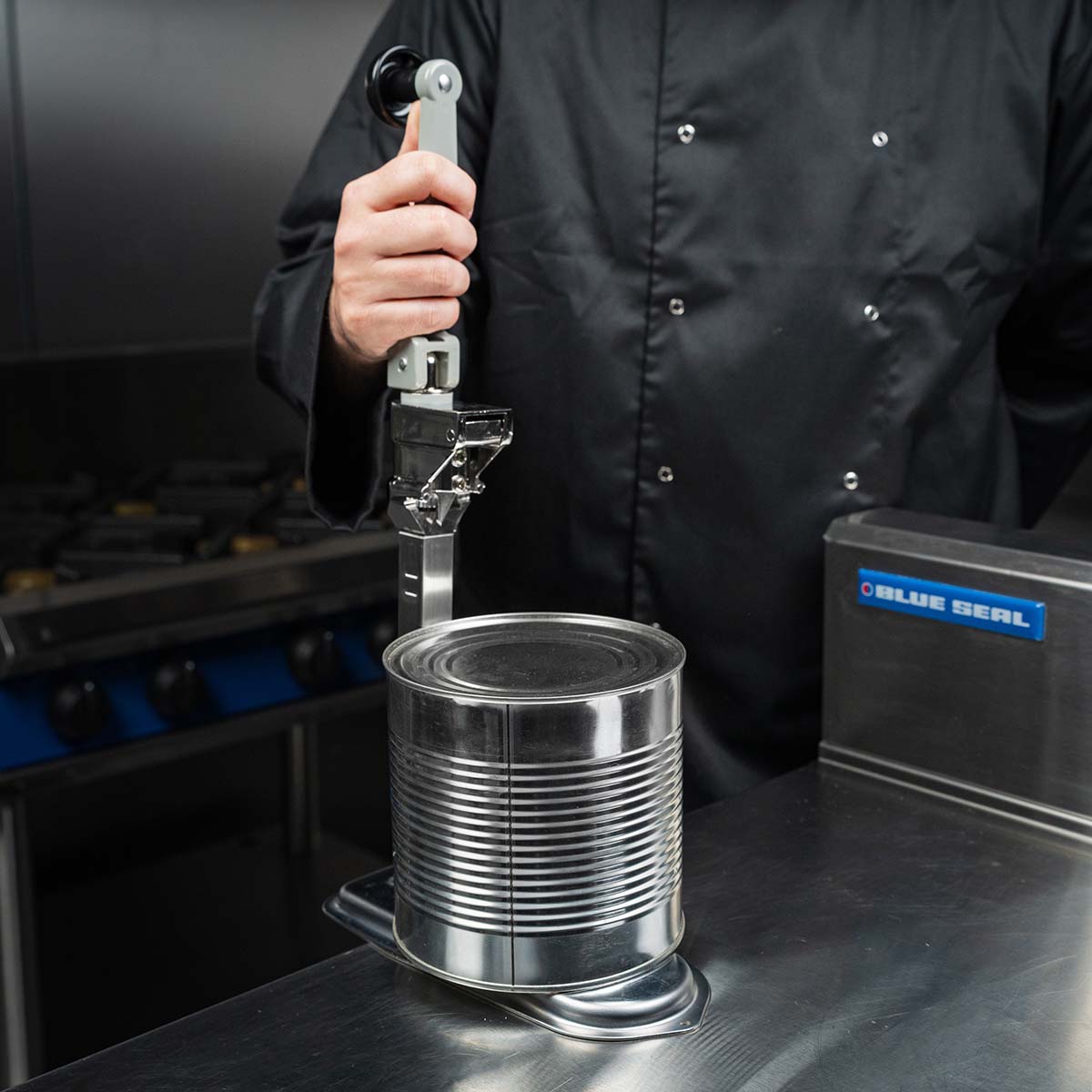
3. Place the can or tin under the piercer
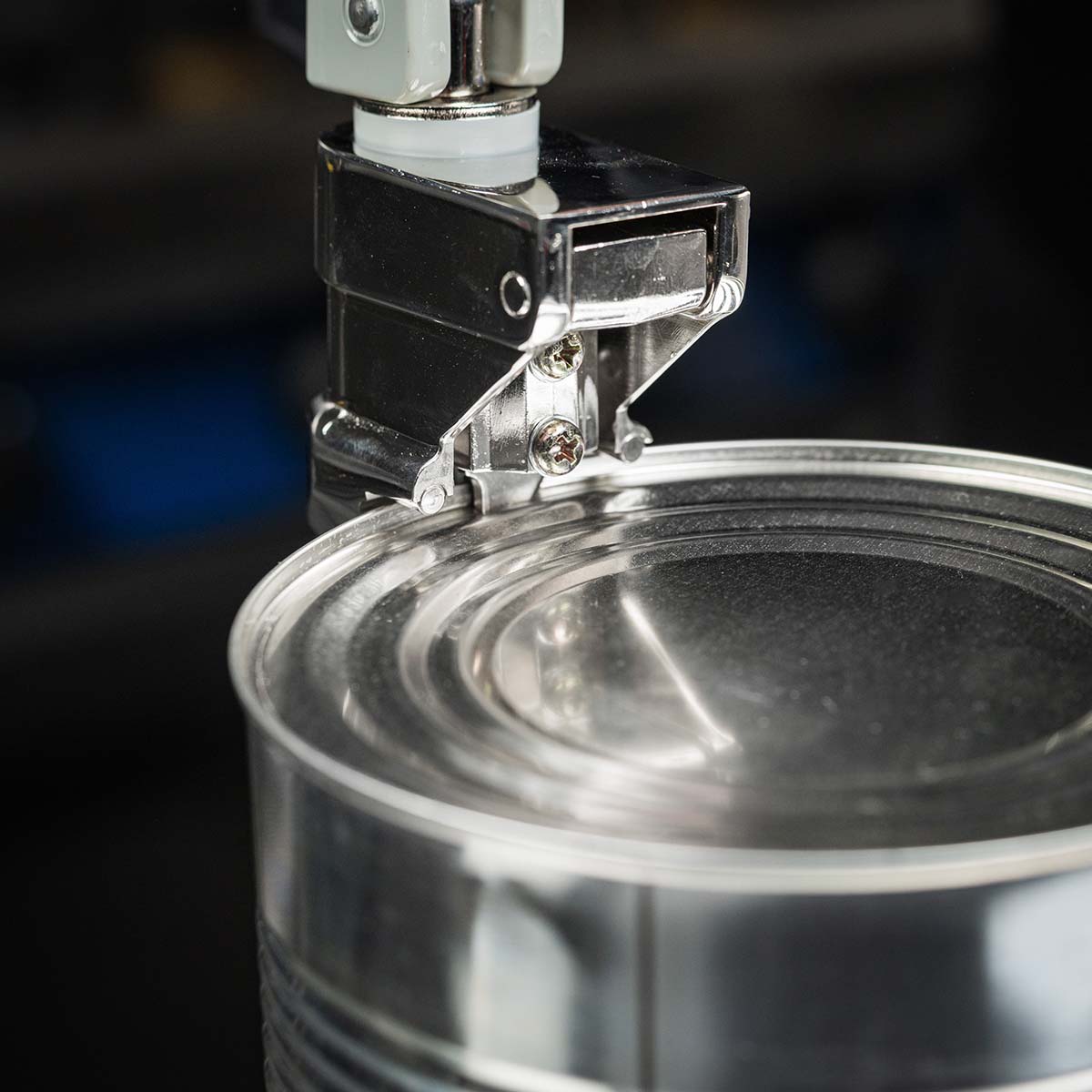
4. Bring down the handle to pierce the can
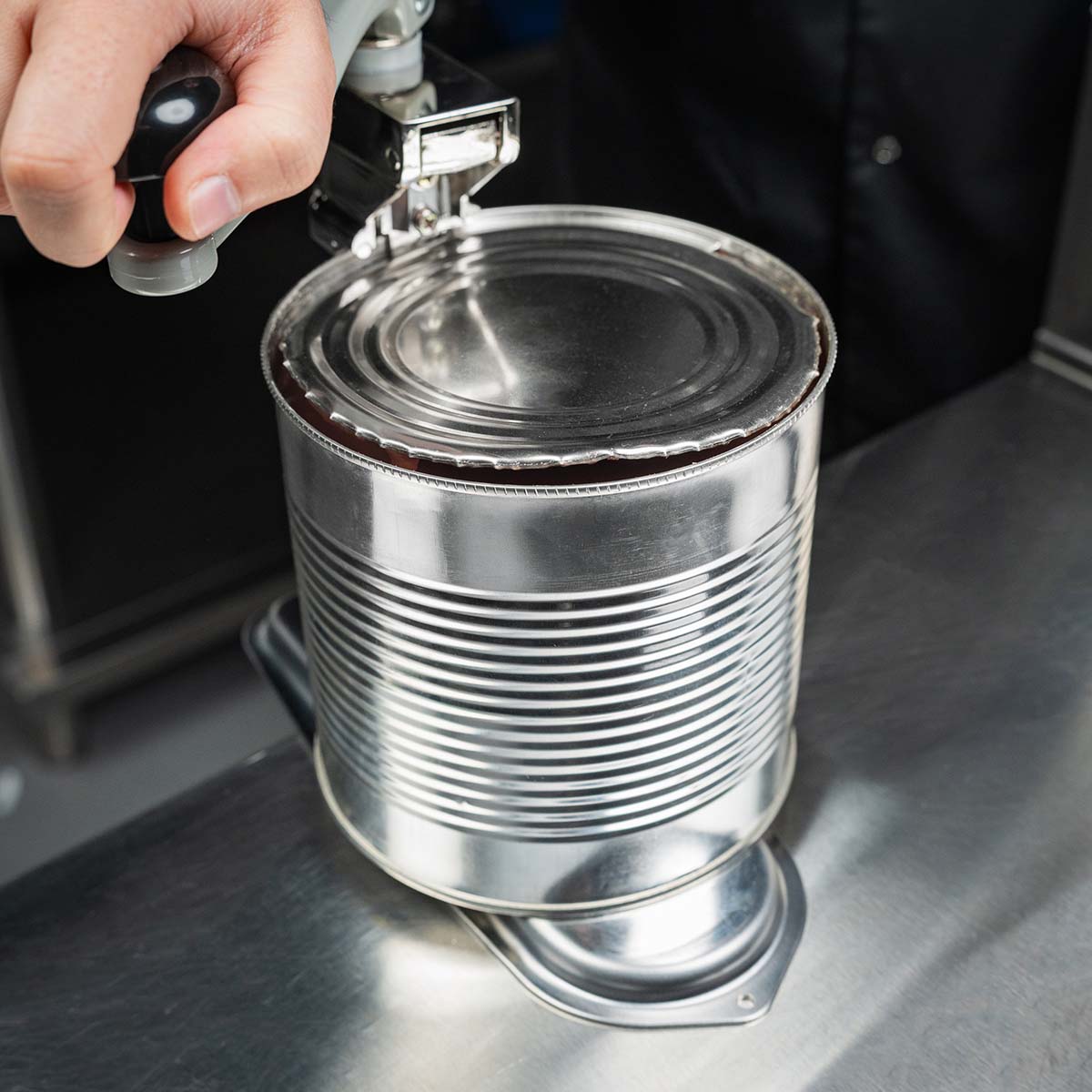
5. Turn the handle via the knob to fully open the can
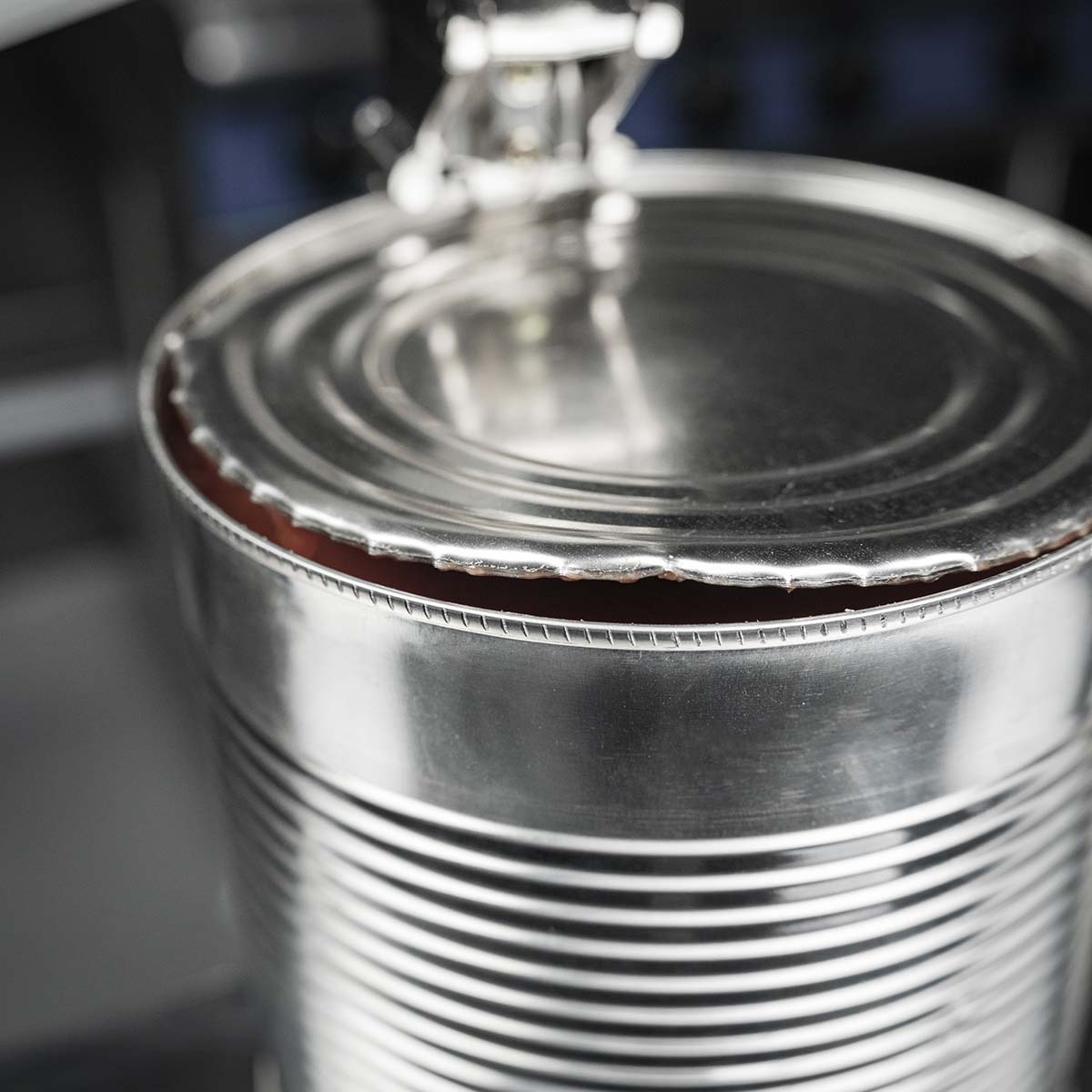
6. Beware of sharp edges when handling the open can
Unlike hand-held openers, industrial can openers are either bolted or clamped to the kitchen workbench or counter. Bolting the can opener to the workbench makes it much more secure, whereas clamping allows the tool to be moved around the kitchen when necessary. Either is a good option depending on your kitchen workflow.
After securing the can opener to the work surface, lift the handle and place the can under the piercer. Then, lower the lever to bring the blade down. After this, begin to turn the cog. This rotates the blade and cuts through the top of the can in a smooth, gliding motion until the lid is removed. Safely dispose of the sharp lid as soon as possible, and beware of sharp edges on the can/tin itself.
Common Mistakes to Avoid When Using Bench Can Openers
Even though bench can openers are simple to use, there are a few common mistakes that can reduce their lifespan or compromise safety. One of the most frequent issues is failing to secure the opener properly. A loosely clamped or poorly bolted opener can wobble during use, increasing wear on the blade and making operation less safe.
Another common mistake is continuing to use a blunt blade. A dull blade doesn’t just make opening cans harder; it increases the chance of jagged edges, metal shavings, and uneven cuts. Regular blade replacement is part of basic food safety and equipment maintenance.
Oftentimes, smaller can openers fail to successfully open large tins and cans of food that are found in busy hospitality and catering environments. Our bench can openers make it easy to open large cans of tomatoes, pulses, sauces, fruits, and whatever else you need, saving you time and effort and possible injury.
If necessary, we also sell replacement parts, including a fresh blade, and cog/wheel, making it easier than ever to keep your can opener in the best condition and working for you and your kitchen. It is recommended that you change your blade and wheel every 3 months with constant use. We also offer two sizes of the can opener in sizes of 66cm and 76cm, which are both handy sizes for professional kitchens.
Benefits of a Bench Can Opener
- Saves time and labour
- Easy and quick to use
- Better for the safety of your employees
- Stable and safe
- Hard-wearing for frequent use
There are several benefits to a bench-mounted can opener, saving time and labour, ease of use, quick operation and a clean open, to name a few. Having a bench can opener saves you and your employees time and labour. Instead of trying to hold heavy and large cans of food while using a handheld opener, the chef can simply place the large can under the opener and let the machine do all the work! This saves time, labour, and potential injuries as employees aren’t lifting heavy cans and trying to hold them while also operating a sharp can opener.
Professional can openers can open several cans in one go. Made from stainless steel, our can openers have a long productive life in busy commercial kitchens. They also produce clean cuts every time, making it safer for employees and easy to dispose of the sharp lid. Where handheld openers or smaller openers might break or become hard to use after frequent use, our bench can openers are designed for heavy use, so you can use them frequently without worrying about their longevity.
Upgrading to Electric: The Tellier Professional Solution
While manual bench openers are a staple for many, kitchens that are preparing food for 300 to 800 people per day may require an even more robust solution. This is where the Tellier Professional Electric Can Opener is the better option.
Designed for medium- to high-capacity venues, this electric model eliminates the manual effort entirely. It is built for continuous operation, featuring a heavy-duty motor and a stainless steel cutting mechanism that delivers precise, clean cuts every time. It is particularly useful for:
- Speed: It allows rapid-fire opening during peak prep times.
- Versatility: The powerful motor and sharp wheel can slice through cans even if they are slightly dented.
- Stability: It is designed to stay perfectly still during use, ensuring maximum safety in a fast-paced environment.
If your catering operation is outgrowing a manual crank, an electric bench-mounted opener is the logical next step to maintain efficiency and reduce staff fatigue.
See It in Action
Want to see the Tellier Professional Electric Can Opener in a real kitchen environment? We’ve put together a quick video guide that walks you through the setup, demonstrates how to handle different can sizes, and shows just how much time you can save during a busy shift.
Choosing the Right Can Opener for Your Kitchen
When selecting a bench can opener, the key considerations are volume, can size, and available workspace. Kitchens working with very large tins or operating high-output prep stations benefit from taller models that offer better leverage and clearance. Smaller kitchens may prefer compact models that still deliver industrial performance without taking up unnecessary space.
Material quality also matters. Stainless steel construction offers durability, but also makes cleaning easier and reduces corrosion over time. A well-chosen bench can opener should last years with proper maintenance, making it a cost-effective investment rather than a recurring expense.
Benchtop can openers are found in several types of kitchens, from cafes to hospitals and hotels to private catering companies and education canteens. They seamlessly transform a kitchen overnight and improve the pace of food prep, making it easier to prepare large batches of food. Whether you need to open a large tin of tomatoes for your pizzeria or a large can of mango pulp to make lassi in your Indian restaurant, our can openers streamline the process.
Hygiene, Food Safety, and Cleaning Best Practice
In commercial kitchens, can openers are often overlooked during routine cleaning schedules, yet they come into direct contact with food containers. Over time, residue from sauces, oils, and liquids can build up around the blade housing and cog mechanism. If not cleaned properly, this can present both hygiene and cross-contamination risks.
A simple daily wipe-down combined with deeper weekly cleaning helps prevent food build-up and keeps the opener compliant with food safety standards. In regulated environments such as hospitals, schools, and care facilities, this level of maintenance is always expected.
Question and Answers FAQ
Question: What is a bench can opener?
Answer: A bench can opener is a commercial kitchen tool designed for opening large catering tins safely and efficiently. It is mounted to a worktop and is ideal for high-volume food preparation.
Question: Why are bench can openers used in commercial kitchens?
Answer: They improve speed, consistency and safety when opening large catering-sized tins and reduce repetitive strain on kitchen staff.
Question: When should you use a bench can opener instead of a handheld opener?
Answers: A bench can opener is recommended when opening multiple large tins daily, particularly in catering kitchens, restaurants, schools, hospitals, and foodservice operations.
Question: How often should the blade and wheel be replaced?
Answer: For constant commercial use, the blade and wheel should typically be replaced every three months to maintain performance and food safety.
Question: What are the main benefits of a bench can opener?
Answer: Bench can openers save time and labour, improve safety, provide stable operation, reduce staff fatigue, and withstand heavy commercial use.
Question: How should a bench can opener be cleaned?
Answer: Regular daily cleaning and deeper weekly maintenance help remove food residue, support hygiene standards, and reduce contamination risks.
Question: How do you use a bench can opener safely in a commercial kitchen?
Answer: Secure the opener to a work surface, raise the handle, position the can beneath the piercer, lower the blade into the lid, rotate the handle until the lid is removed, then carefully dispose of the sharp lid and handle the opened can safely.
Question: When is it worth upgrading to an electric can opener?
Answer: An electric can opener becomes worthwhile in medium to high-capacity catering operations where hundreds of cans may be opened daily and staff efficiency is a priority.
Can Openers at Cooksmill
While bench can openers may seem like a small detail in the wider setup of a commercial kitchen, they can have a huge impact on workflow, safety, and staff wellbeing. Reducing repetitive strain, speeding up prep, and minimising injury risk all contribute to smoother operations, especially during peak service periods.
For kitchens focused on efficiency and consistency, bench can openers from Cooksmill are practical tools that pay for themselves quickly through time saved and reduced wear on staff and equipment.