The kitchen is often described as the heart of the home. Whether you’re a professional chef working in a bustling commercial kitchen or someone who enjoys weekend cooking sessions at home, your utensils matter more than you think. The right tools don’t just make food preparation easier; they improve safety, help you cook more efficiently, and elevate the quality of your dishes.
But the world of kitchen utensils is vast. From silicone spatulas to wooden spoons, nylon pasta servers to stainless steel mashers, every material and design has its benefits and limitations. This guide will help you understand what you need, how to care for your utensils, and which products are truly worth adding to your collection. Along the way, we’ll answer some of the most common questions people ask about kitchen utensils and highlight a few essentials you’ll want to keep in your drawer.
Are Silicone Kitchen Utensils Safe?
One of the most common questions people ask is about silicone. Brightly coloured spatulas, scrapers, and baking tools have become staples in modern kitchens. But are silicone kitchen utensils safe?
The short answer is yes. Food-grade silicone is heat-resistant, non-toxic, and doesn’t react with food. It can handle temperatures up to around 220–250°C (depending on the product), which makes it perfect for stirring sauces, scraping mixing bowls, or folding batters. Unlike plastic, silicone doesn’t release harmful chemicals when heated properly.
That said, not all silicone utensils are made equally. Look for BPA-free products to ensure quality. For example, Cooksmill’s Silicone Spatula/Scraper Small 10” is a versatile tool designed with safety in mind. Its compact size makes it ideal for scraping bowls clean or smoothing icing over a cake.
Silicone also pairs well with non-stick pans. Unlike stainless steel or even hardwood, silicone won’t scratch delicate coatings, keeping your cookware in better condition for longer.
Are Nylon Kitchen Utensils Safe?
Nylon utensils, like the Lacor Black Nylon Spaghetti Server 28cm, are popular because they are lightweight, affordable, and non-stick safe. But are they safe?
Nylon can withstand heat up to around 200°C. If you keep them away from direct flames or prolonged contact with very hot oil, they are perfectly safe. The issue arises if nylon is overheated, which can cause it to warp. That’s why it’s important to replace nylon utensils once they show signs of wear, melting, or fraying edges.
For serving pasta, sauteing vegetables, or stirring soups, nylon tools are a safe and practical option, especially when paired with non-stick cookware. If you regularly cook at very high temperatures, stainless steel or silicone may be a better choice.
Top 5 Must-Have Kitchen Utensils for Home and Commercial Kitchens
No matter the scale of the kitchen, from a bustling restaurant to a cosy home, a few essential utensils form the foundation of great cooking. These are the versatile, must-have tools that make a chef's life easier.
1. Wooden Spoons: The Workhorse of the Kitchen
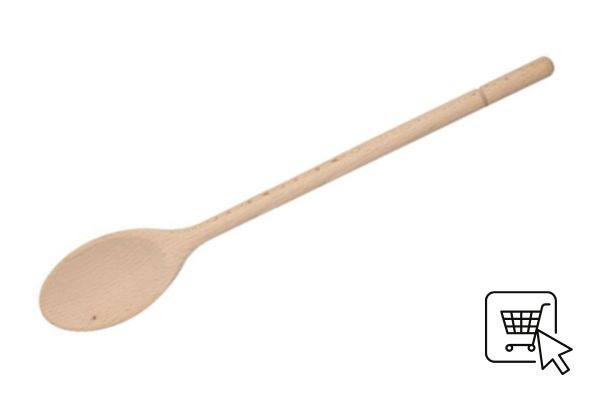
Every professional chef has at least one wooden spoon within arm’s reach. Unlike metal, it won’t get scorching hot in a simmering pot. Unlike plastic, it won’t warp or leach chemicals. And unlike silicone, it has the kind of rigidity you need for stirring thick sauces or risotto without bending. Wooden spoons also develop character over time, absorbing a patina that makes them unique to your kitchen. Cooksmill’s Beech Waxed Wooden Spoon 14”, for instance, has the added benefit of being treated to resist moisture, so it lasts longer without cracking.
2. Potato Mashers: Comfort Food’s Secret Weapon
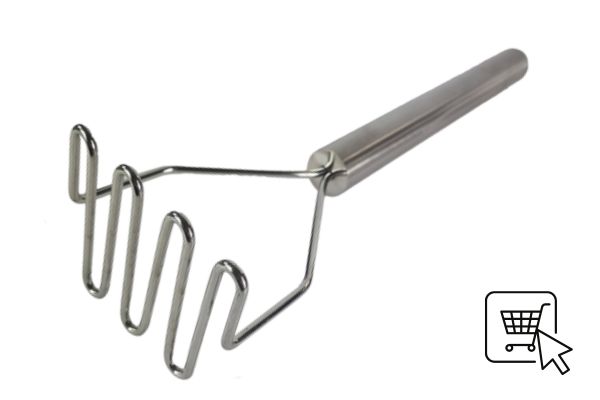
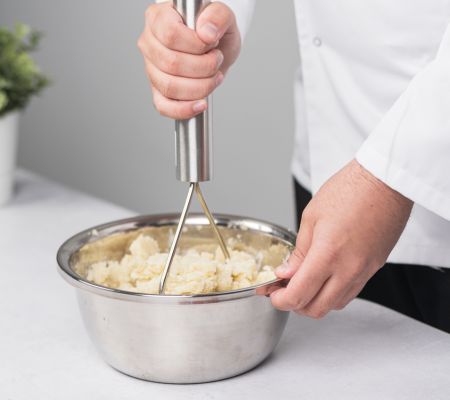
It’s easy to think of a masher as a single-purpose tool, but ask anyone who makes guacamole, hummus, or fruit compote regularly, and they’ll tell you it’s a fundamental tool. A good masher isn’t just about brute force; it’s about even pressure. That’s why stainless steel designs with squared heads are popular in professional kitchens. Our Stainless Steel Square Potato Masher 18" works through food quickly without leaving lumps, and the longer handle gives you leverage without straining your wrist.
3. Strainers: The Unsung Multi-Tasker
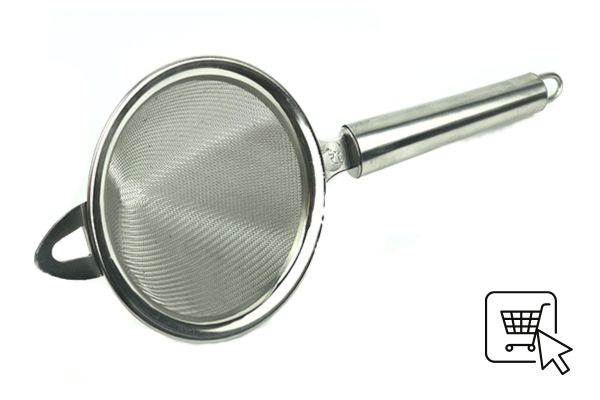
If you’ve ever tried to rinse quinoa in a colander, you’ll know why fine mesh strainers exist. The tiny holes catch grains, herbs, or tea leaves while letting water flow freely. Beyond the obvious tasks of draining pasta or straining stock, chefs often use them to dust icing sugar on pastries, sieve flour for baking, or even separate pulp from fresh juices. A simple stainless steel strainer, like our Elephant Conical Fine Mesh Tea Strainer No 3 10.5cm, ends up being one of the most versatile tools you can buy.
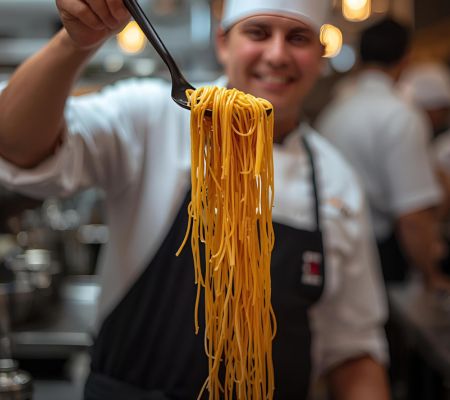
4. Pasta Servers: Small Tool, Big Difference
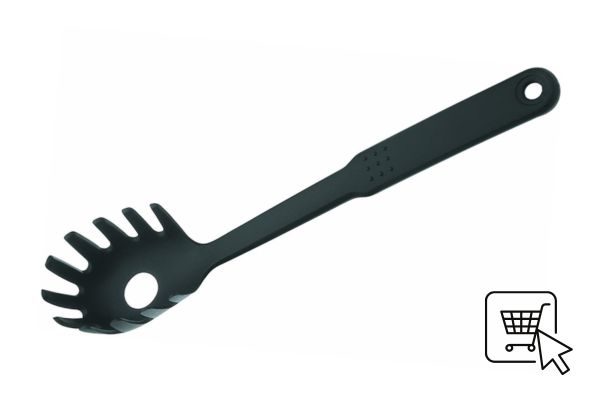
Anyone who’s tried fishing spaghetti out of a pot with a fork knows how frustrating it is. That’s where a pasta server earns its keep. The teeth grip noodles so they don’t slip away, while the hole in the centre doubles as a measuring guide for portion sizes. Nylon models are especially handy in home kitchens since they’re safe for non-stick pots and won’t scrape delicate surfaces.
5. Silicone Spatulas: The Baker’s Best Friend
When it comes to baking, no tool gets used more than a silicone spatula. Our Silicone Spatula/Scraper Small 10” has a flexible edge that makes scraping every last bit of cake batter out of a bowl effortless, and its heat resistance means you can stir melting chocolate without worry. In professional kitchens, chefs favour smaller spatulas for precision work, like folding egg whites into a soufflé mix or smoothing buttercream over a sponge.
Utensil Sets: Building a Foundation
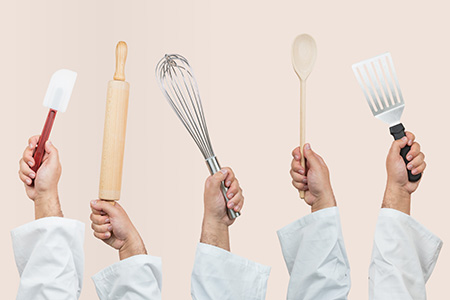
For those setting up a new kitchen, the trick isn’t to buy everything at once; it’s to start with a handful of reliable tools. A set of wooden utensils gives you a solid foundation: one for stirring, one for flipping, one for serving. Wood is gentle on cookware, which means you can use it across stainless steel, cast iron, and non-stick without worry. Over time, you’ll layer in more specialist tools, but a core wooden set keeps you covered from day one.
Other essentials worth adding include a chef’s knife, ladle, tongs, and a slotted spoon. These utensils form the backbone of both commercial and domestic cooking.
How to Arrange Kitchen Utensils
Organisation is key in any kitchen. A cluttered drawer wastes time and increases the chance of using the wrong tool. The way you arrange your utensils depends on your space, but here are some practical approaches:
- Drawer Dividers: Use adjustable dividers to separate spoons, spatulas, and knives.
- Utensil Holders: Keep everyday essentials like the Beech Wooden Spoon or Silicone Spatula in a jar next to the stove for quick access.
- Wall Racks or Hooks: Great for hanging strainers, ladles, or potato mashers in commercial kitchens.
- Tiered Storage: In small kitchens, use tiered organisers so nothing gets buried.
Think about workflow and keep utensils you use most (like stirring spoons) closest to the stove, while baking tools can be stored near your mixing area.
How to Clean Wooden Kitchen Utensils
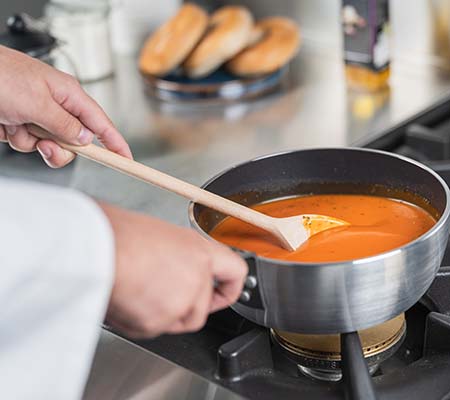
Wooden utensils are beloved for their natural look and feel, but they need proper care. Common questions include how to clean them safely.
Never put wooden utensils in the dishwasher. The heat and water exposure can cause warping and cracking. Instead:
- Wash them quickly in warm, soapy water.
- Rinse and dry immediately with a towel.
- Occasionally, rub them with food-grade mineral oil or beeswax to prevent drying.
Products like the Beech Waxed Wooden Spoon 14” or the Tala Beech Wooden Utensils Set will last for years if cared for this way. Wooden spoons also naturally resist bacteria due to their porous structure, making them surprisingly hygienic when maintained correctly.
How to Choose the Best Utensils for Your Kitchen
With so many options on the market, it’s easy to feel overwhelmed. Do you really need three different types of spoons? Should you choose silicone over wood? Here’s a breakdown of how to make smart decisions when buying utensils:
Match Utensils to Your Cookware
- Non-stick pans - Use silicone or nylon to avoid scratching. The Silicone Spatula/Scraper or the Lacor Nylon Spaghetti Server are perfect here.
- Stainless steel pans - Wooden spoons and stainless steel mashers work well. They won’t damage the pan and can handle high heat.
- Cast iron - Durable enough for any material, but wooden spoons are ideal because they won’t strip the seasoning.
Consider Heat Resistance
Utensils like the Stainless Steel Potato Masher can take extreme temperatures, making them great for high-heat cooking. Silicone can handle moderate to high heat, while nylon should be kept below 200°C.
Think About Versatility
A good utensil should work in multiple ways. A fine mesh strainer, for example, isn’t just for draining pasta; it’s also great for dusting icing sugar, washing rice, or even steeping tea.
Don’t Overbuy
The temptation is to fill drawers with every gadget under the sun, but you’ll end up with clutter. Focus on essentials: a wooden spoon, spatula, strainer, masher, and pasta server cover 90% of cooking tasks. Build out from there based on your style of cooking.
Choosing the Right Material
Each material has strengths:
- Wood is gentle on cookware, eco-friendly, and long-lasting with care.
- Stainless Steel is virtually indestructible, high-heat safe, and has a professional look.
- Nylon is budget-friendly, lightweight, non-stick, and safe.
- Silicone is flexible, heat-resistant, colourful, and perfect for non-stick pans.
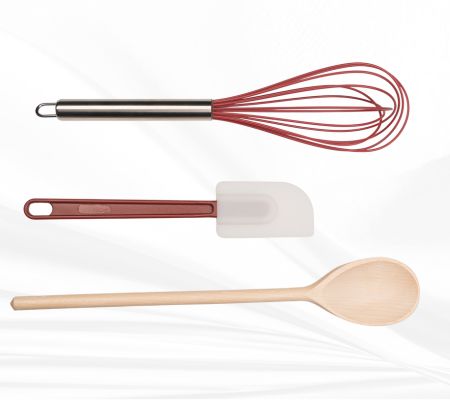
Rather than choosing one, most kitchens benefit from a mix. For example, stainless steel for mashing potatoes, wood for stirring, silicone for scraping, and nylon for serving.
Extra Tips for Caring for Utensils
Good care extends the lifespan of every tool, saving money in the long run.
- Store utensils upright when possible to prevent damage.
- Don’t use abrasive scrubbers on silicone or nylon.
- Replace nylon utensils once they’re warped or damaged.
- Oil wooden spoons monthly for longevity.
- Sterilise stainless steel by boiling if needed.
Why the Right Utensils Improve Your Cooking
It’s easy to underestimate utensils compared to knives or pans, but they’re the tools that touch your food most often. A poorly designed spoon can scorch your hand, a flimsy strainer can spill hot liquid, and a weak masher can leave lumpy potatoes. Quality utensils, like those highlighted here, make cooking not just easier but safer and more enjoyable.
When you invest in essentials like the Beech Wooden Spoon, Fine Mesh Strainer, or Silicone Spatula, you’re investing in smoother workflows, better results, and a more professional kitchen setup.
Shop Utensils with Cooksmill
There’s no one-size-fits-all when it comes to utensils, but there are clear essentials every kitchen needs. From wooden spoons to spatulas, strainers to mashers, Cooksmill offers all the essential tools that form the foundation of cooking.
Add specialised items as your cooking style demands. Over time, you’ll build a collection that feels like an extension of your hands.
Cooking is more than recipes; it’s about the tools that help bring them to life. Equip your kitchen with safe, durable utensils, and you’ll find every stage of cooking, from prep to plating, becomes more enjoyable.