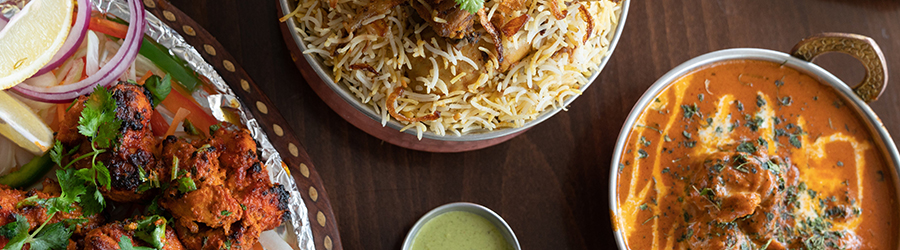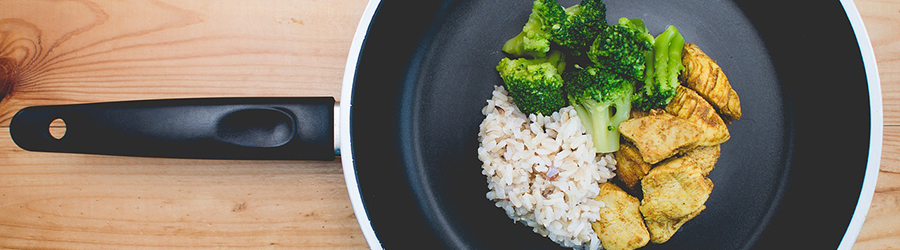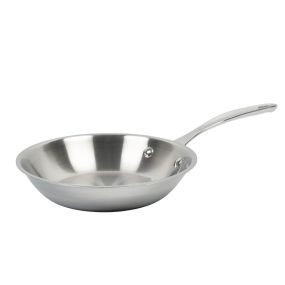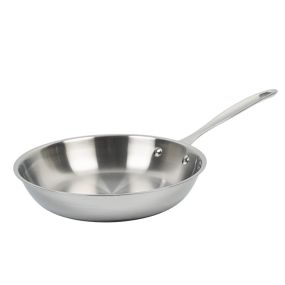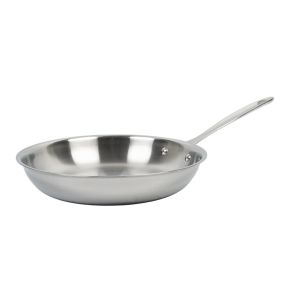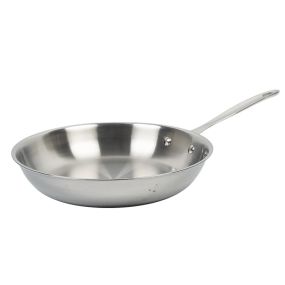
If you've ever wondered why a curry from your favourite Indian restaurant tastes so different to the one you made at home, even when you followed the recipe to the letter, the answer is often less about the spices and more about the pan. Professional chefs working in Indian restaurant kitchens tend to be surprisingly particular about their cookware, and with good reason. The pan you use directly affects heat control, moisture evaporation, caramelisation, and ultimately the depth of flavour in every dish that leaves the kitchen.
At Cooksmill, we supply catering professionals across the UK, and we hear from Indian restaurant chefs regularly. Here is a practical breakdown of the four main types of frying pans for Indian restaurants, what each one does well, where it falls short, and which situations it's built for.
At a Glance: Frying Pan Comparison for Indian Restaurant Cooking
Which Pan Is Best for Indian Cooking?
| Pan Type | Heat Response | Maintenance | Best Use in Indian Cooking |
|---|---|---|---|
| Aluminium | Excellent | Low | Curries, base gravies, bhuna masala |
| Stainless Steel | Good | Low-Medium | Sauces, searing, high-volume service |
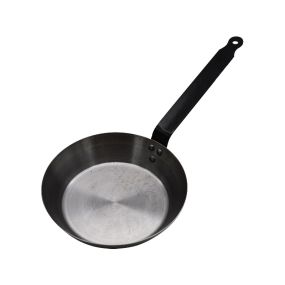
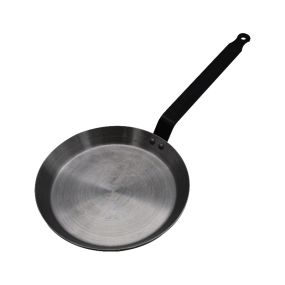
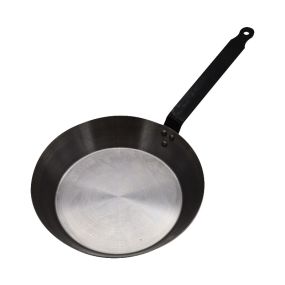
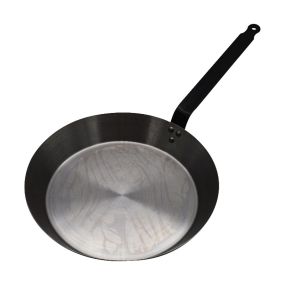
| Black Iron | Very Good | High | Tarka, slow-cooked meats, flatbreads |
| Non-stick (Teflon) | Good | Low | Dosas, omelettes, uttapams |
Aluminium Pans: The Industry Standard for a Reason
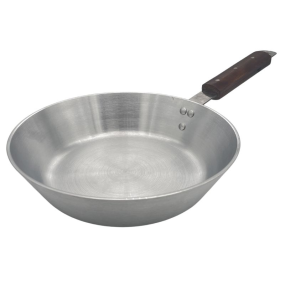
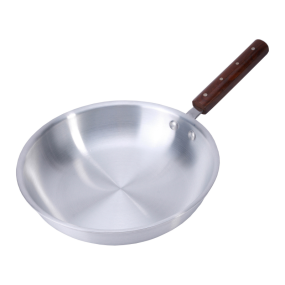
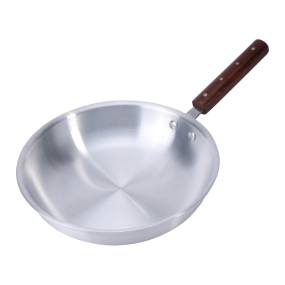
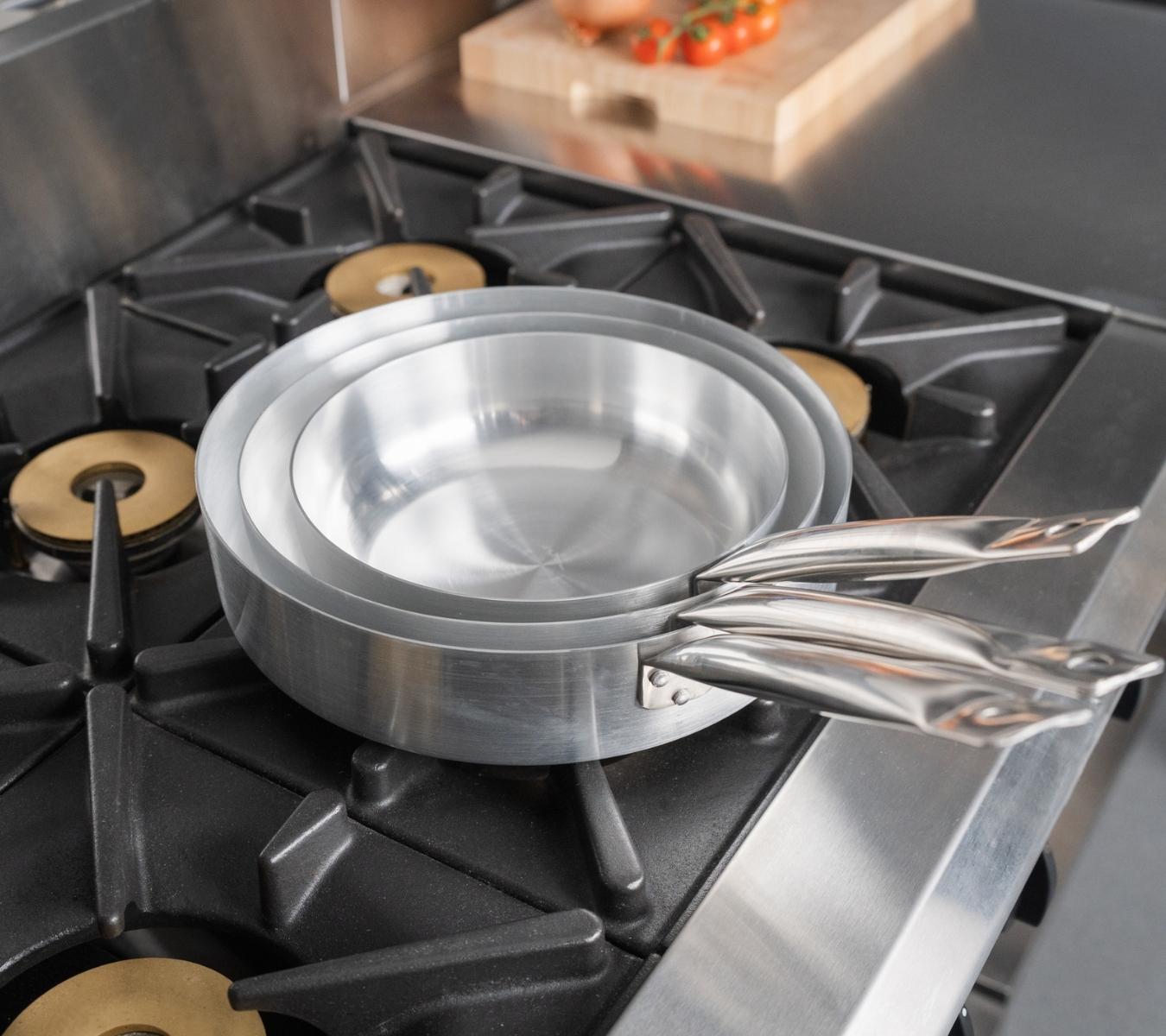
Walk into the kitchen of almost any British Indian restaurant, and you'll find bare aluminium frying pans stacked by the stove. They are, by a considerable margin, the most widely used pans in this style of cooking, and experienced chefs will tell you they are difficult to replace. If you're looking for the best frying pan for curry, bare aluminium is almost always where the conversation starts.
Why Indian Chefs Reach for It
The reasons come down to two things: heat response and weight. Aluminium frying pans heat exceptionally well, meaning the pan reacts almost instantly when you adjust the flame. For the fast, high-heat techniques central to BIR (British Indian Restaurant) cooking, blasting a gravy base, frying off onions and garlic at speed, or cooking a masala until the oil separates, that immediate response is essential. You are using the pan as an extension of the flame itself.
There is also a technical point worth understanding. Bare aluminium allows ingredients to adhere slightly to the pan base. This is not a flaw; it is a feature. That gentle sticking and scraping action is what builds the caramelisation that gives an authentic curry its depth. Non-stick surfaces prevent this entirely.
Pros & Cons
Pros:
- Exceptional, even heat distribution across the entire surface
- Instantly responsive to flame changes, ideal for BIR-style high-heat cooking
- Lightweight, reducing chef fatigue during a long service
- Promotes caramelisation through the "stick and scrape" technique
- Wide-based designs aid rapid moisture evaporation for sauce consistency
- Cost-effective and easy to stock in multiples, a practical choice for catering frying pans UK-wide
Cons:
- Not induction-compatible, gas or traditional electric hobs only
- Softer metal that scratches and pits with metal utensils
- Reacts with highly acidic ingredients over prolonged cooking
Best For
Single-portion curries, base gravy cooking, bhuna masala, and onion-garlic-ginger frying.
Cooksmill Picks
Our Deep Aluminium Frying Pan 24cm is the ideal all-rounder for single-portion dishes, while the Deep Aluminium Frying Pan 32cm suits larger batch cooking.
Stainless Steel Pans: The Reliable Addition for Professional Kitchens
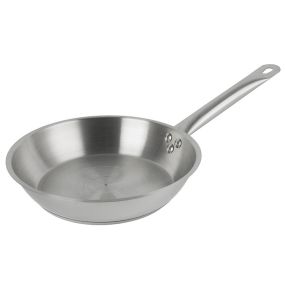
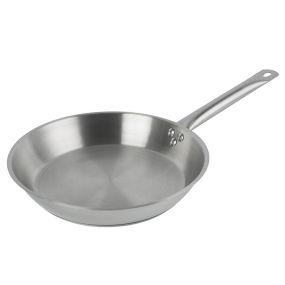
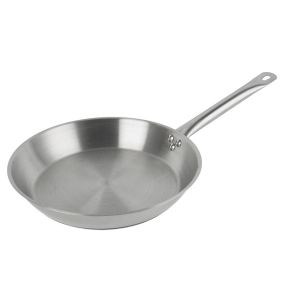
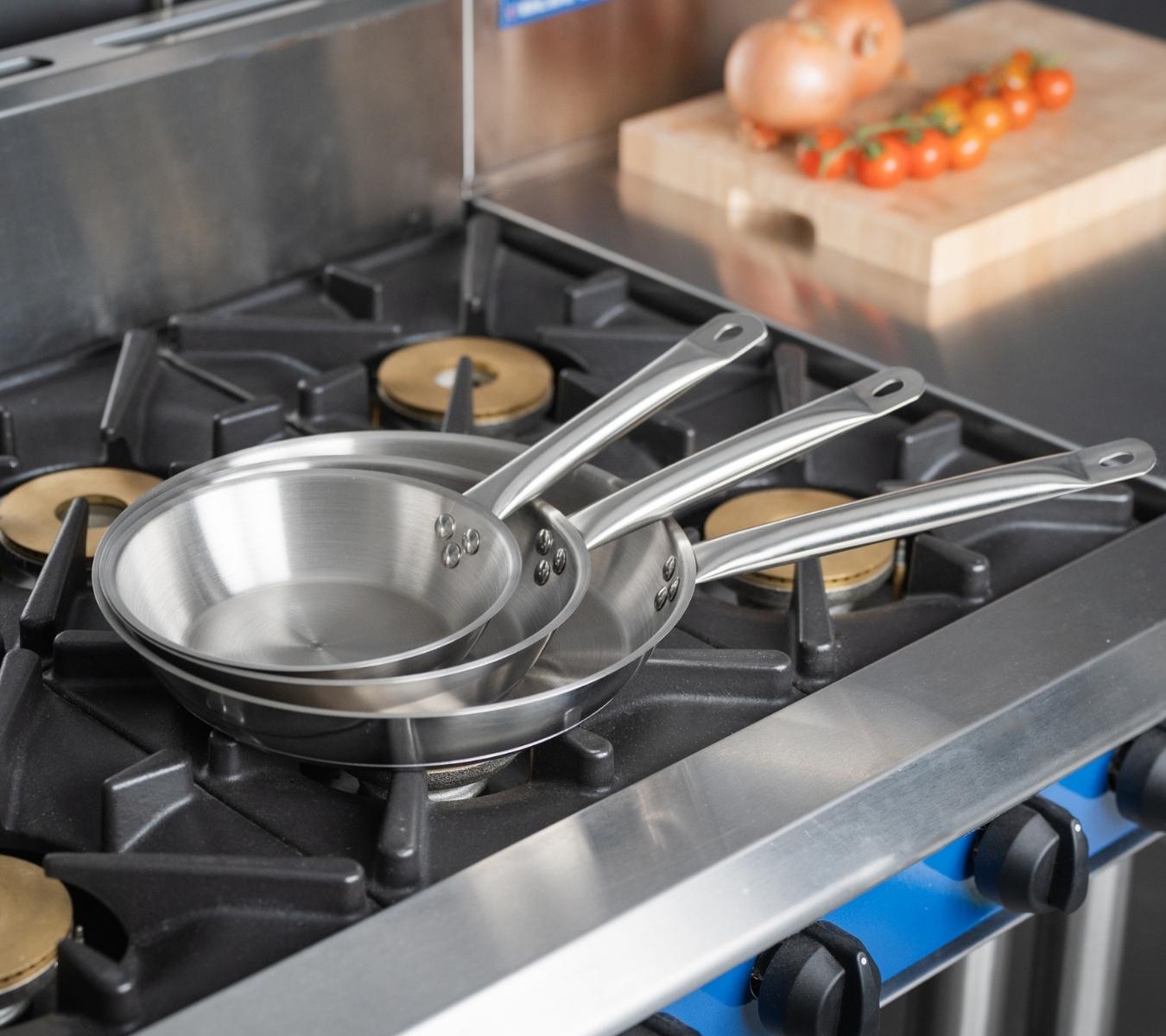
A stainless steel frying pan for catering is a strong alternative to bare aluminium in professional Indian restaurant kitchens. Tougher, more scratch-resistant, and far easier to sanitise, it is built for the demands of commercial kitchens subject to rigorous health and safety standards.
Why Indian Chefs Reach for It
Stainless steel handles aggressive stirring with metal ladles without issue. It holds its shape under sustained high temperatures, resists warping, and cleans up easily enough for fast turnarounds between services. Some stainless steel frying pans are also induction-compatible, but always check the individual product listing to confirm hob compatibility before buying.
Pros & Cons
Pros:
- Extremely durable, resists scratches, dents, and rust
- Non-porous surface that is hygienic and easy to sanitise
- Dishwasher safe, saving time in busy kitchens
- Warp-resistant under high heat and sudden temperature changes
- Some models are induction-compatible; check individual listings
Cons:
- Slower heat response than aluminium
- Requires more oil to prevent sticking
- Heavier than aluminium, it can cause fatigue over a long service period
- Burnt-on curry requires significant effort to clean
Best For
Sauce building, searing meats, high-volume service, and kitchens requiring heavy-duty durability.
Cooksmill Picks
Our TriPly Stainless Steel Frying Pan 30cm combines a stainless steel exterior with an aluminium core for even heat distribution, ideal for chefs who want the durability of steel with better thermal consistency.
For straightforward commercial use, the Professional Stainless Steel Frying Pan 12" 30cm is a proven pan built from robust 18/4 stainless steel and is suitable for induction, gas, and electric cooking.
Black Iron Pans: The Traditional Choice for High-Heat Techniques
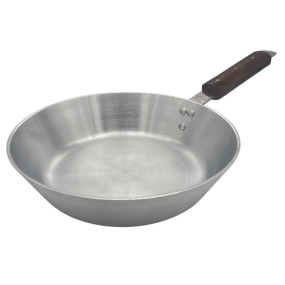
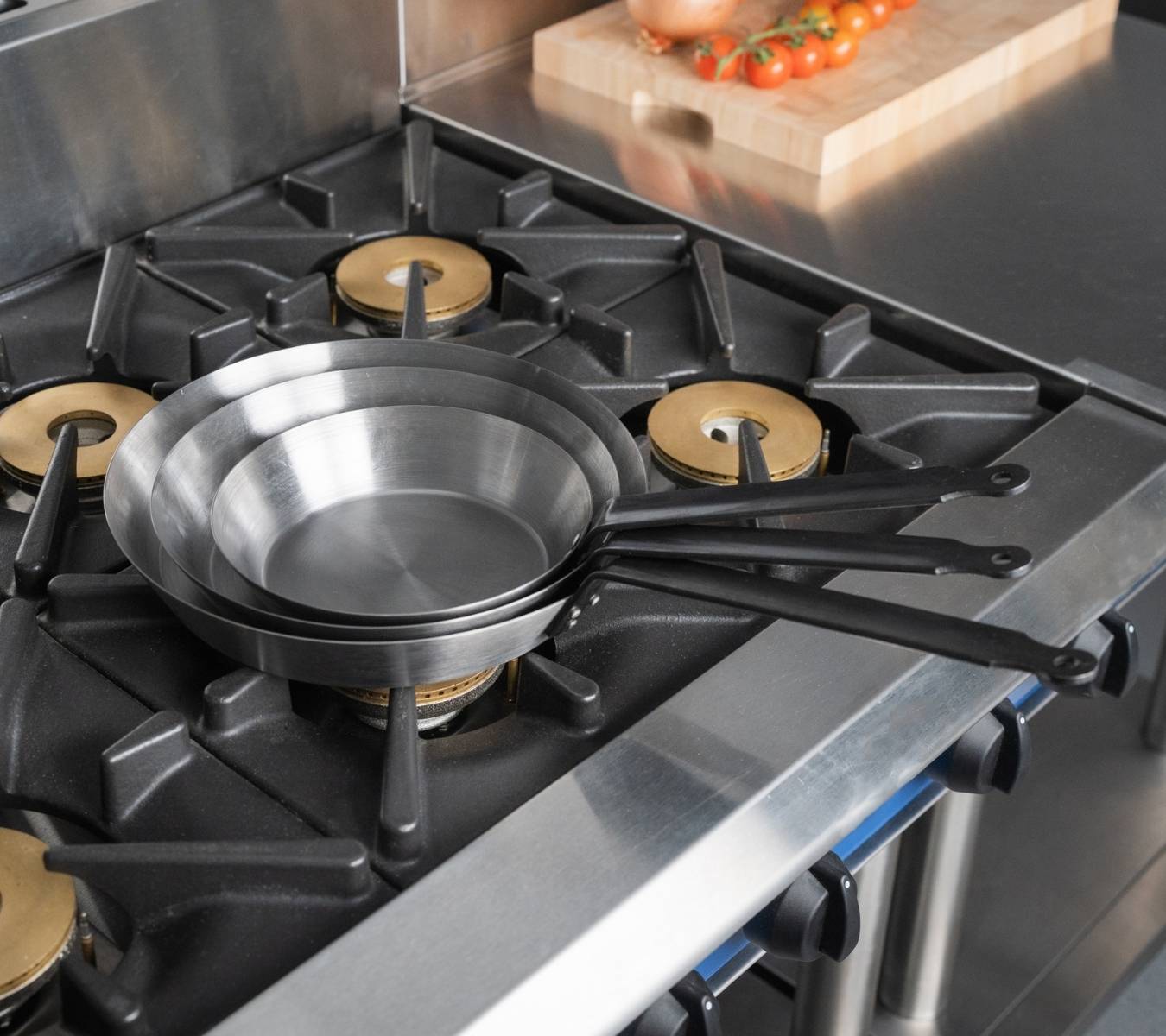
Black iron frying pans occupy a middle ground that suits some of the most demanding techniques in Indian cooking. They retain heat better than aluminium, making them well-suited to dishes requiring sustained high temperatures.
Why Indian Chefs Reach for It
With regular seasoning and care, black iron develops a natural non-stick patina over time, making it excellent for items like aloo tikki or crispy parathas where a good sear matters.
Pros & Cons
Pros:
- Superior heat retention for sustained high-temperature cooking
- Develops a natural non-stick surface with seasoning
- Ideal for tarka, bhuna, and slow-cooked meat dishes
- Cooking in iron can subtly increase the iron content of food
Cons:
- Heavier than aluminium, it's harder to toss and manoeuvre during service
- Requires consistent seasoning and maintenance to prevent rust
- Reacts with acidic ingredients such as tomatoes, and can strip seasoning
- Heats unevenly, hot spots can form directly above the flame
Best For
Tarka (tempering spices), slow-cooked meat curries, flatbreads, shallow-frying, aloo tikki.
Cooksmill Picks
Browse our full range of Black Iron Frying Pans in multiple sizes and depths to find the right fit for your kitchen.
Non-Stick Pans: Useful in the Right Hands, Limited in Others
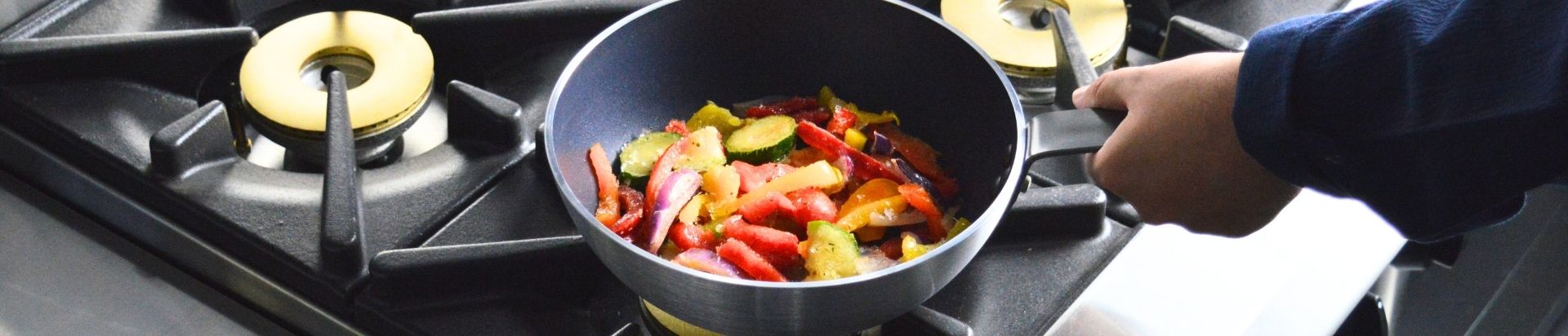
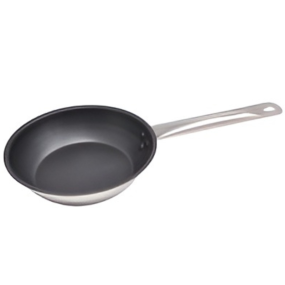
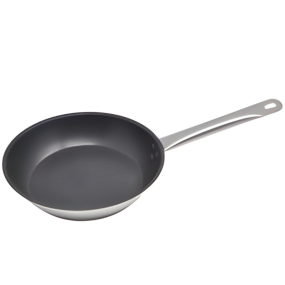
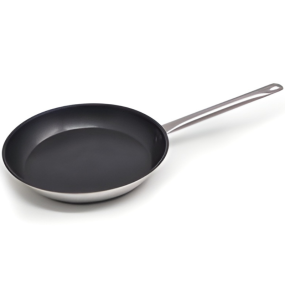
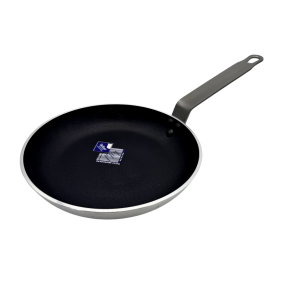
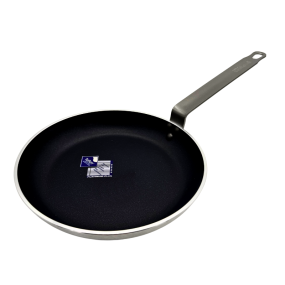
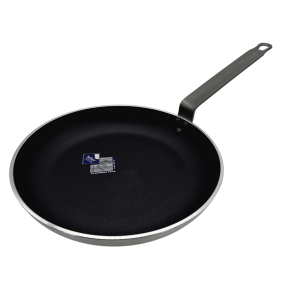
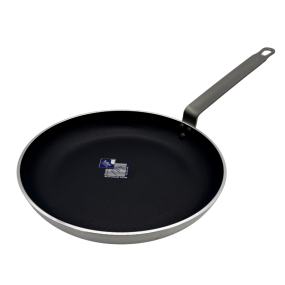
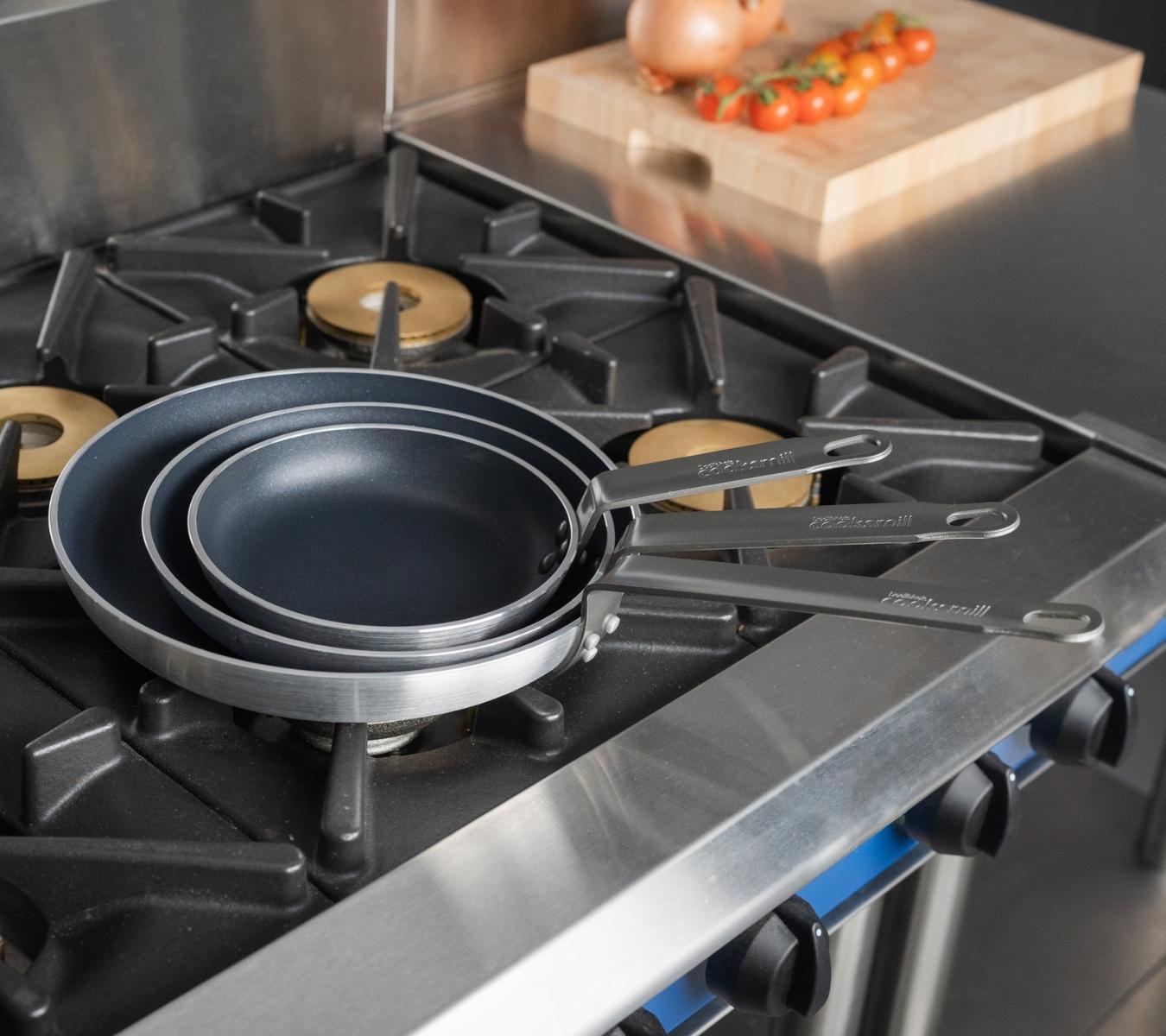
A commercial non-stick frying pan is generally not the first choice for cooking heavy Indian restaurant curries. The coating prevents the caramelisation that is central to authentic flavour development, and the high-heat techniques involved can push non-stick surfaces beyond their safe operating limits.
Why Indian Chefs Reach for It
That said, they have a clear and practical role. Dosas, masala omelettes, uttapams, and other delicate preparations benefit enormously from a quality non-stick surface; these are dishes where sticking or tearing ruins both presentation and texture.
Pros & Cons
Pros:
- Effortless food release, ideal for delicate Indian dishes
- Minimal oil required, supporting healthier cooking
- Fast and easy to clean after service
- Even heat distribution with a quality aluminium base
- No seasoning required, ready to use immediately
Cons:
- Prevents caramelisation, not suitable for bhuna or base gravy cooking
- Coating degrades quickly under the high heat of Indian restaurant cooking
- Incompatible with metal utensils, a significant limitation in professional kitchens
- Shorter lifespan than bare metal pans in commercial use
Best For
Dosas, uttapams, masala omelettes, egg dishes, and any delicate preparation requiring low-to-medium heat.
Cooksmill Picks
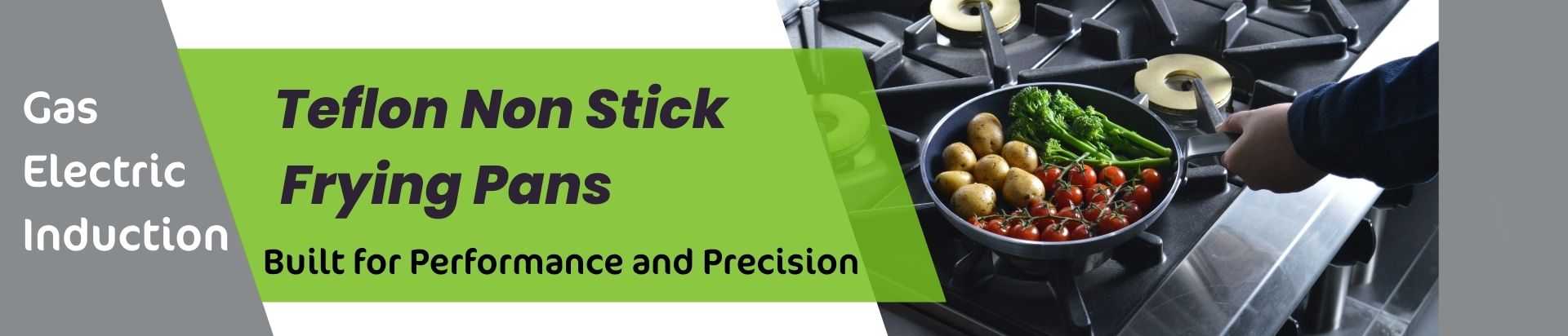
Our Cooksmill Aluminium Teflon Non-Stick Induction Frying Pan 28cm features a Platinum Plus Teflon coating, the highest grade available, and is confirmed suitable for both gas and induction hobs.
For larger cooking surfaces on gas hobs, the Aluminium Teflon Non-Stick Frying Pan 32cm or 36cm versions offer more room. For compact starter-station work, the Professional Non-Stick Stainless Steel Frying Pan 8" 20cm is dishwasher safe and suitable for induction, gas, and electric cooking.
How to Choose the Right Pan for Your Indian Restaurant Kitchen
No single pan does everything. The most practical approach is to think about your hob type first, then match the material to the specific techniques at each station. Always check individual product listings for confirmed hob compatibility before purchasing.
Kitchen Setup
Recommended Pans
| Cooking Style / Hob Type | Recommended Pan |
|---|---|
| Gas hobs, BIR-style curry cooking | Bare aluminium (24–26cm) |
| Induction hobs, high-volume service | Stainless steel (check product for induction spec) |
| High-heat searing, slow-cooked meats | Black iron |
| Dosas, omelettes, delicate dishes | Non-stick aluminium |
| Induction hobs, non-stick needed | Cooksmill Non-Stick Induction Pan 28cm |
At Cooksmill, we stock the full range across all four categories, and our team understands the demands of a working commercial kitchen. Browse our complete Frying Pan range to find what you need, or visit us in store in Bradford or Salford to see the pans in person before you buy.
Cooking Curries with Cooksmill
At Cooksmill, we stock the full range of restaurant cooking equipment that UK kitchens rely on. Cookware in an Indian restaurant kitchen is rarely glamorous; it gets battered, blasted, and stacked in a corner at the end of a long shift. But the chefs who care about what goes in the pan also tend to care deeply about what pan they're using. The right choice makes the work easier, the food more consistent, and the whole service run more smoothly.
When it comes to Indian restaurant cooking, no single pan type wins outright. The best-equipped Indian restaurant kitchens tend to run a combination: bare aluminium at the curry station, stainless steel where durability and hygiene take priority, a seasoned black iron pan for high-heat searing and tarka, and a dedicated non-stick for the dosa or breakfast station. Each material earns its place.
Whether you're setting up a new kitchen from scratch, replacing worn-out stock, or simply trying to understand why your curries cook differently in different pans, our team is happy to help. Cooksmill has been supplying professional kitchens across the UK for years, and there's very little we haven't been asked about.