If you work in a busy commercial kitchen, you already know that prep is where the most time is spent. Slicing, dicing, grating, blending, it's relentless, it's labour-intensive, and it happens every single day before any plate of food is served. Robot Coupe equipment exists to solve that problem, and as one of the UK's leading catering equipment suppliers, it's a brand we at Cooksmill know and stock well.
In this guide, we're covering the two pieces of Robot Coupe kit that make the biggest difference in a restaurant kitchen: the CL50 vegetable preparation machine and the Robot Coupe immersion blender range. We sat down with Richard, a Robot Coupe expert chef and representative, to get the answers that actually matter, real figures, practical disc guidance, troubleshooting advice, and how to choose the right machine for your kitchen.
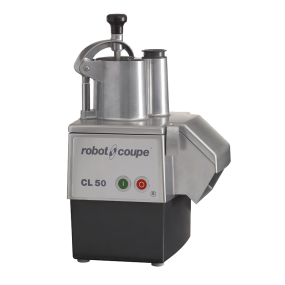
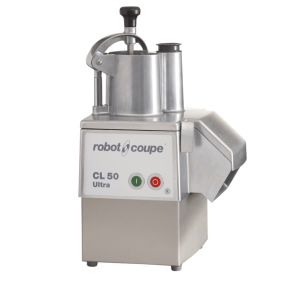
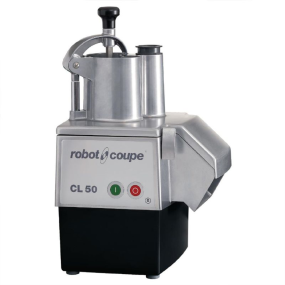
The Robot Coupe CL50 - Veg Prep at Speed
What Is the CL50 and Who Is It For?
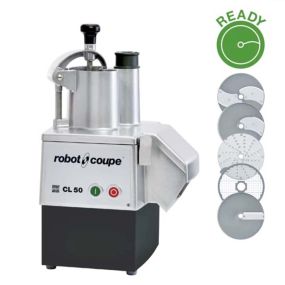
The CL50 is Robot Coupe's continuous feed vegetable preparation machine, built for high-volume commercial kitchens. It slices, dices, grates, and julienne cuts at a speed that makes hand prep look almost pointless.
The CL50 is best suited to kitchens doing significant volume. If you're regularly prepping large quantities of fresh vegetables for service, for garnishes, for bulk production, the CL50 is the machine that removes the bottleneck. For smaller operations doing up to 50–70 covers, a Robot Coupe food processor like the R301 may be sufficient. But once volume climbs, the CL50 is where the real return on investment kicks in.
How Much Time Does the CL50 Actually Save?
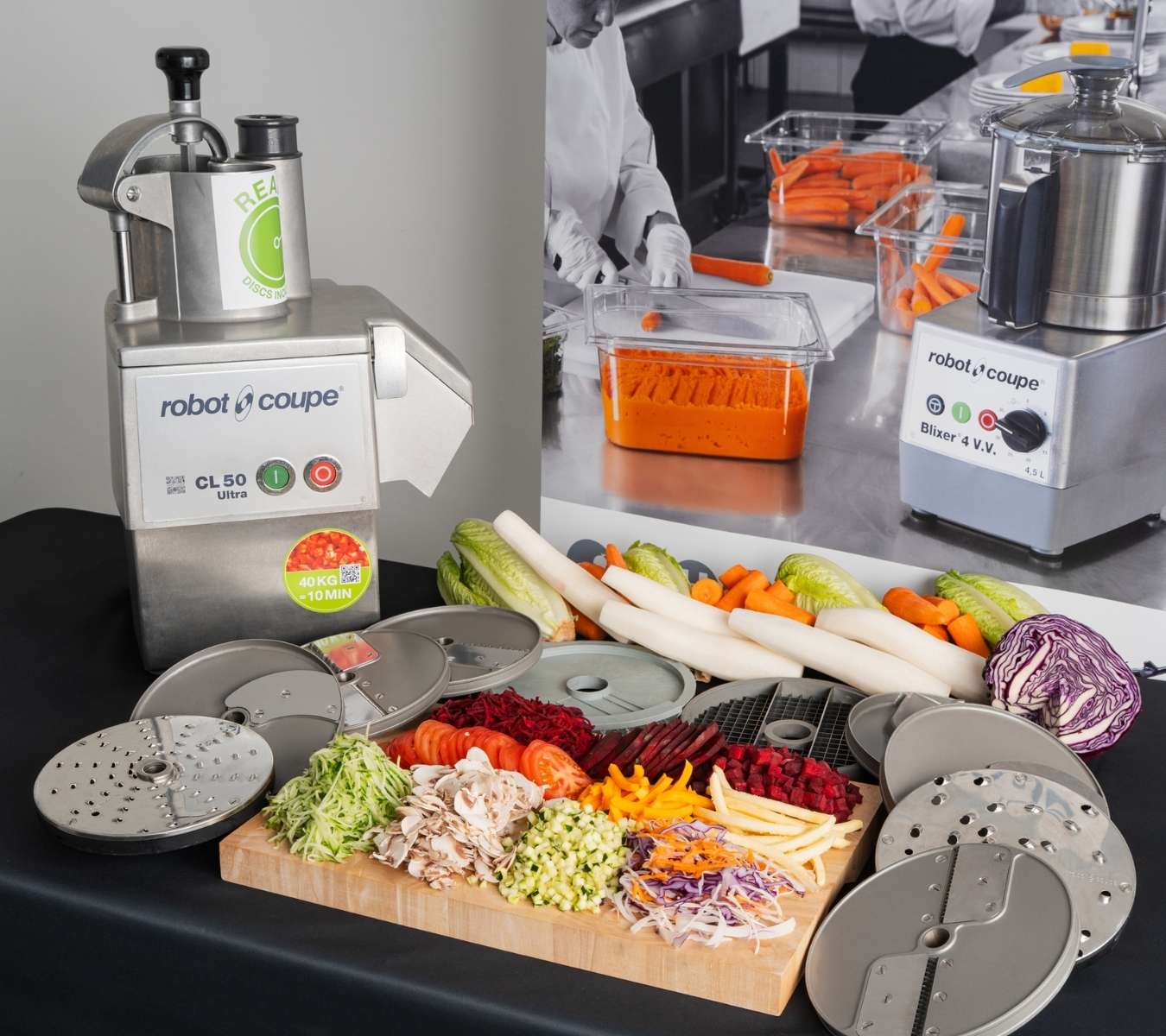
This is the question every chef asks, and Richard answers this by using carrots as an example: by the time a professional chef has prepared 100g of carrots by hand, the CL50 has already processed over a kilo. That's roughly a 90% increase in productivity compared to hand cutting.
And the wider CL range scales up significantly from there:
Which CL Series Model Is Right for You?
| Model | Output per Hour | Best For |
|---|---|---|
| CL20 | Up to 50kg | Small to medium operations, cafés, small restaurants, or occasional prep work |
| CL50 | Over 50kg | Busy restaurant kitchens with moderate to high daily preparation needs |
| CL52 | Up to 120kg | High volume operations, larger restaurants, hotels, and catering services |
| CL55 | Around 400kg | Very high-volume production, industrial kitchens, central production facilities, and large-scale catering |
NB. The CL52 is a notable step up from the CL50. It moves from a half moon hopper to a full moon hopper, more than doubling the input capacity in a single change.
The CL50 Disc Guide: Which Disc Does What?
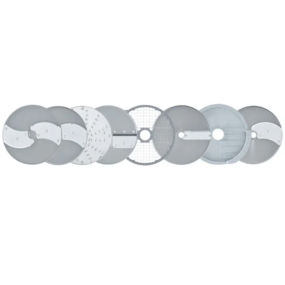
Disc choice is one of the most searched topics among CL50 users, and for good reason. The wrong disc is the most common reason results disappoint. The CL50 is an extraordinarily capable machine, with over 12 different slicing cuts ranging from 0.6mm to 14mm, 12 grating options, ripple cuts in 2mm, 3mm, and 5mm, an extensive julienne range from matchstick to ribbon cut, and 10 dicing cuts.
There is also a CL50 Gourmet model, which adds brunoise cutting at 2mm, 3mm, and 4mm, a cut Richard describes as next to impossible to achieve consistently by hand.
The CL50 Ready package includes what Robot Coupe consider the most essential discs for a commercial kitchen:
Which Disc Is Right for Your CL Series?
| Disc | Image | Best Used For |
|---|---|---|
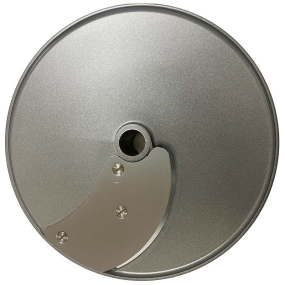
| 2mm Slicer (28063) |  |
Fine shredding, precise thin slicing for garnishes, coleslaw, or delicate vegetables |
| 5mm Slicer (28065) |  |
Sliced lemons for the bar, tomato and cucumber for sandwiches and salads, onions, and other medium-thickness cuts |
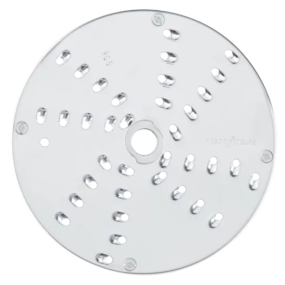
| 5mm Grater (28059) |  |
Grated cheese, grated carrot for coleslaw, potatoes, courgettes, and a wide range of grated applications across different cuisines |
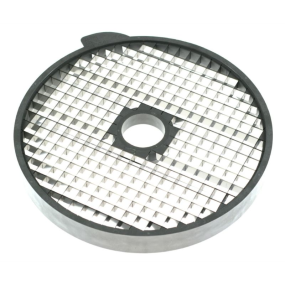
| 10mm Dicing Kit |  |
Dicing onions, courgettes, tomatoes, peppers, aubergines, and cucumbers for uniform cubes. Can also be separated and used as a 10mm slicer |
Richard's tip: The 10mm dicing kit is the most-used disc in his experience. It handles a huge range of vegetables and doubles as a slicer, making it one of the most versatile discs in the range.
A further practical note worth knowing: Robot Coupe introduced a Mineral Plus surface treatment to their expert discs around two years ago. The CL50's discs are now fully dishwasher safe, with the treatment protecting against the chemical and heat reaction of the machine while improving hygiene standards.
Troubleshooting: Common CL50 Problems and How to Fix Them
Question: Why won't my CL50 start?
Answer: Work through this checklist before calling for support:
- Check the power supply: confirm the machine is plugged in and the lead has no visible damage or breaks
- Check the three safety cutoff points: the CL50 has safety features built into the hopper, the housing, and the lid. If any of these three are not perfectly aligned, the machine will not run. This is an intentional safety feature, not a fault. Realign all three and try again
These two checks will resolve the vast majority of startup issues.
Question: Why is my CL50 not cutting properly?
Answer: Poor cutting performance almost always comes down to one of three things:
- Wrong disc for the product: refer to the disc guide above and confirm you're using the right disc for the vegetable and the cut required
- Product too soft: Some produce is too delicate for certain discs and will compress rather than cut cleanly
- Incorrect feed technique: applying uneven pressure on the pusher or overloading the feed chute can both affect the quality of the cut.
Question: Why are my vegetables coming out unevenly?
Answer: Uneven cuts are typically caused by inconsistent pressure on the pusher, the wrong disc choice for that product, or incorrect feed technique. Applying steady, even pressure and keeping the feed chute loaded correctly make a significant difference in cut consistency.
Cleaning the CL50
Keeping the CL50 clean is straightforward, but it needs to be done properly and regularly. There are two levels of cleaning to be aware of: a quick clean between uses, and a full deconstruction clean, which is where pin removal comes in.
Quick clean between uses: The CL50 is designed to be turned around quickly during a busy service. Remove the disc, rinse the bowl and feed head components, and wipe down the exterior. This keeps the machine hygienic between prep sessions without taking it fully apart.
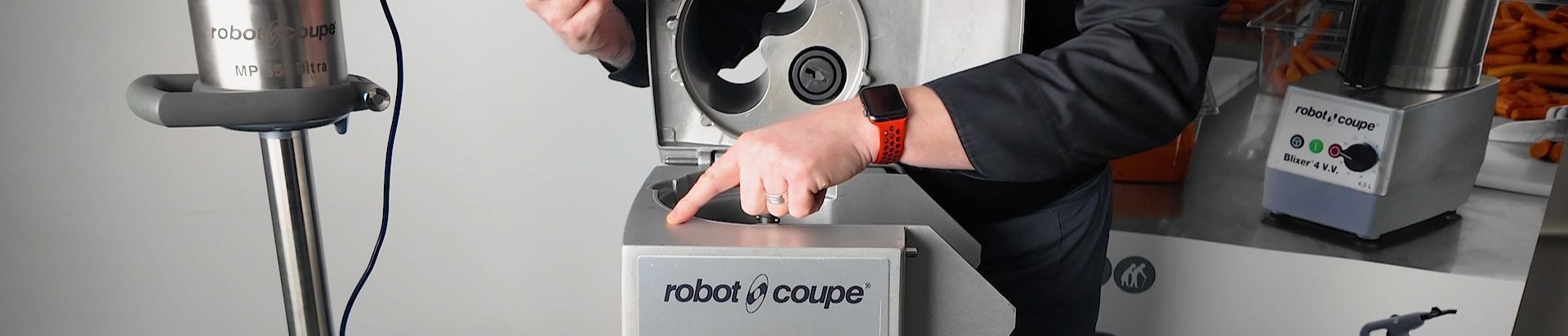
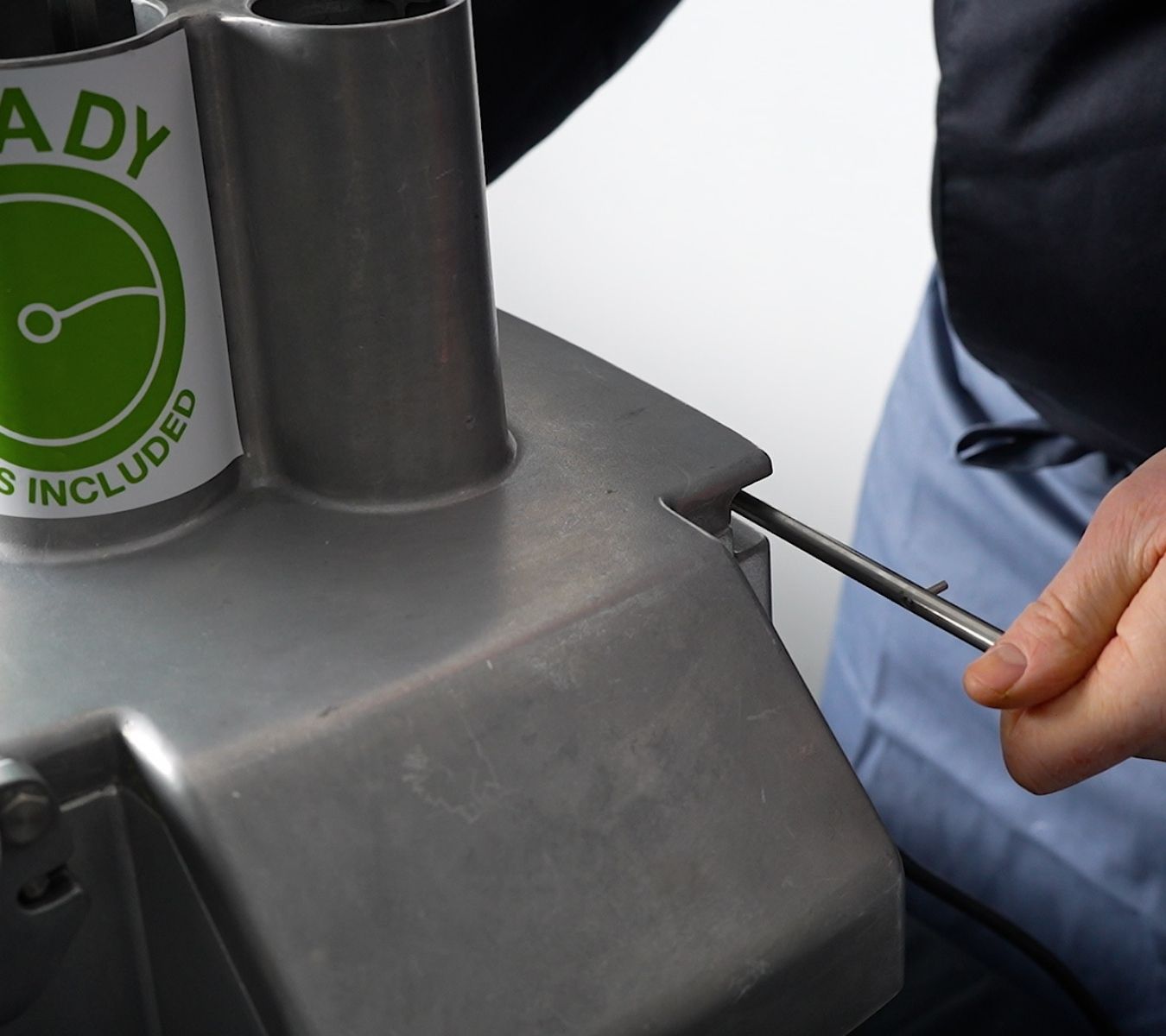
Full deconstruction clean: For a thorough clean, which should be carried out regularly as part of your kitchen's hygiene routine, the CL50 needs to be fully deconstructed. This is where the pin comes in. Removing the pin allows the machine to detach completely from the base and be taken apart so every component that comes into contact with food can be cleaned properly. Full details on how to do this are covered in the pin removal section below.
One thing worth noting: with the Mineral Plus treatment now standard on all CL50 expert discs, every removable disc can go straight through the dishwasher. The motor base should never be immersed in water; wipe it down only with a damp cloth.
How to Replace a Robot Coupe CL50 Pin
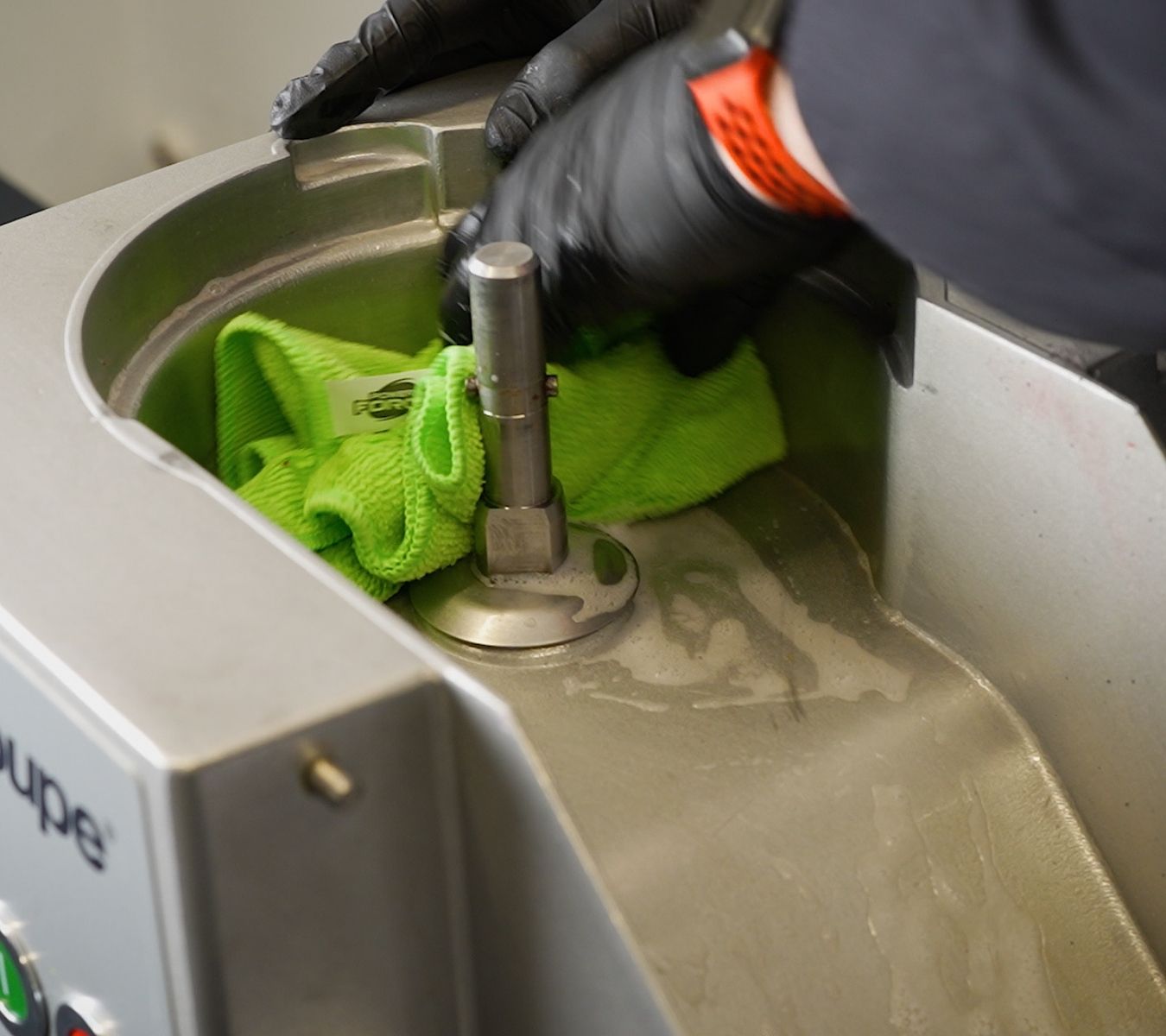
The pin on the CL50 is what holds the machine together when it's assembled and in use. Removing it is the key step that allows the machine to be fully deconstructed for a thorough clean. This is something that should be done regularly as part of your kitchen's hygiene routine.
Here's the process:
- Lift the machine from the base: the CL50 separates from its motor base, allowing the upper components to be handled independently.
- Remove the pin: once the pin is out, the machine can be fully taken apart, separating all the components that come into contact with food.
- Clean all components: wash each part thoroughly, ensuring no food residue is left in any joints or contact points
- Reassemble: once fully dried, put the components back together, reinsert the pin to secure everything, and reattach to the base
It's a straightforward process after you've done it once, and it means there's no reason for food debris to build up in hard-to-reach areas over time.
See our video below to see how it's done.
Before You Buy a CL50: What to Check
Before committing to a CL50, there are three practical things to confirm:
- Space and clearance: the CL50 needs adequate vertical clearance between the worktop and any shelving above it to operate fully and open the feed chute. Make sure you've measured this before ordering.
- Power supply: the CL50 runs off a standard UK plug socket, so power is rarely a blocker. However, if your kitchen has three-phase power available, a three-phase version of the machine is also available. This delivers more torque, meaning the blades move through denser vegetables more easily.
- Your volume: if you're doing up to around 50–70 covers, a smaller processor may be sufficient. The CL50 comes into its own at higher volumes, and the CL52 upwards for serious production requirements.
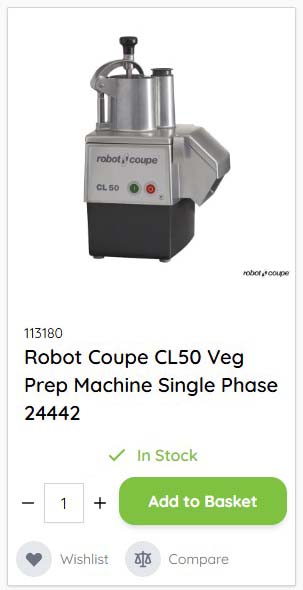
You can buy your Robot Coupe CL50 vegetable preparation machine from Cooksmill for competitive pricing and expert catering advice.
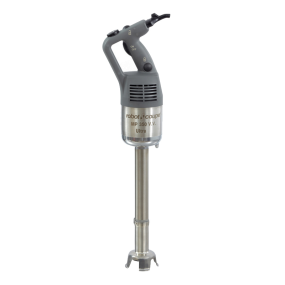
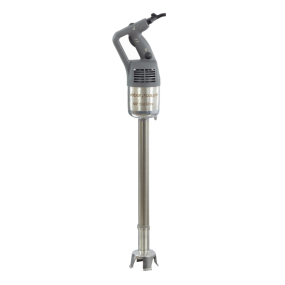
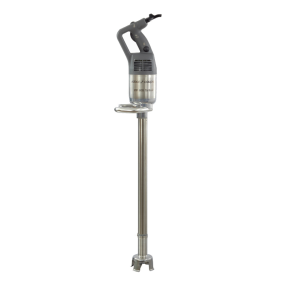
Robot Coupe Immersion Stick Blenders - Soups, Sauces and the Right Model
What Immersion Blenders Are Actually For - and What They're Not
This is one of the most important things Richard raised, and it's worth addressing directly. Immersion blenders are designed to be submerged in liquid at all times during use. The four-point blade is built for blending sauces, gravies, soups, and liquids, not for making garlic paste, ginger paste, or dense vegetable purees with little to no liquid content.
Using an immersion blender for dry or near-dry applications is one of the most common causes of premature wear in commercial kitchens.
Correct use cases:
- Tomato sauce, white sauce, gravy, curry sauce
- Blending vegetables into a liquid sauce to thicken and intensify flavour
- Soups and broths with adequate liquid content
Avoid:
- Garlic paste, ginger paste
- Dense roasted or boiled vegetable purees with minimal liquid
How to Choose the Right Immersion Blender Model
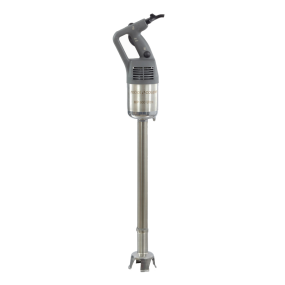
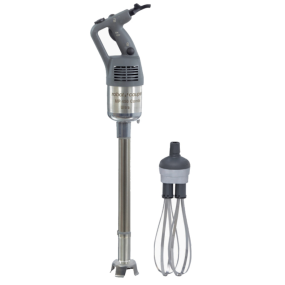
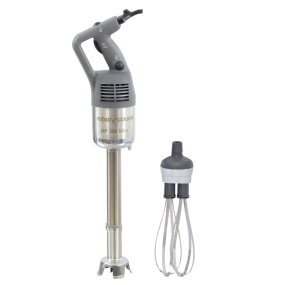
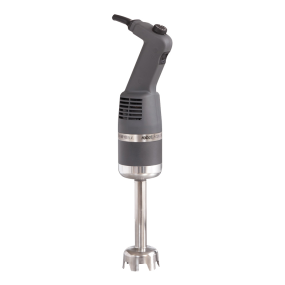
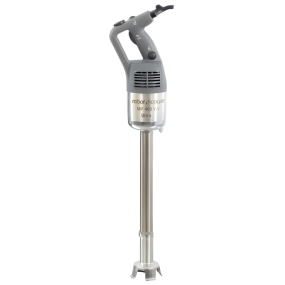
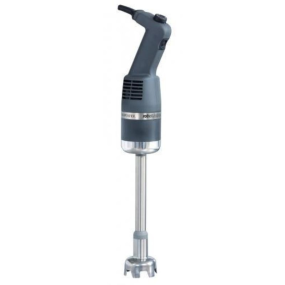
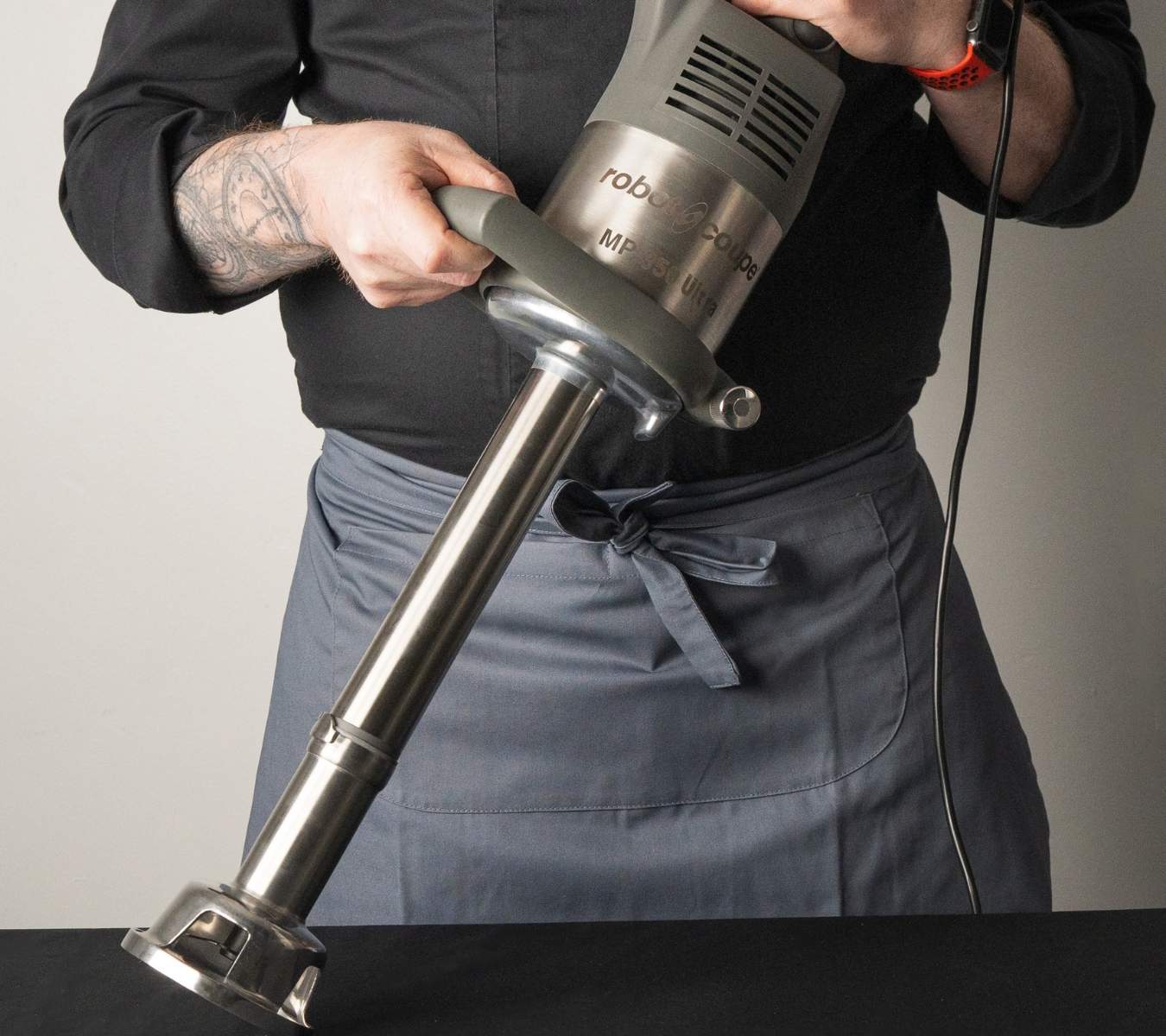
The Robot Coupe immersion stick blender range is built around one key variable: pan volume. Each model is designed to work in a specific pan size, with the range covering up to 30 litres, 50 litres, and 100 litres, as well as smaller micro mix units for compact saucepans.
Which Immersion Stick Blender Is Right for You?
| Model Type | Pan Volume | Best For |
|---|---|---|
| Micro Mix | Small saucepans | Small batch sauces, single portions |
| Standard range | Up to 30 litres | Smaller kitchens, lighter blending use |
| Mid range | Up to 50 litres | Busy restaurant kitchens, daily soup and sauce production |
| Heavy duty | Up to 100 litres | High-volume operations, large batch cooking |
To identify the right model for your kitchen, Robot Coupe's approach is to understand your operation in detail. Not just your menu, but your volume at both quiet and peak service. As Richard explains, peak volume is what matters for machine selection. If you average 80 covers on a Tuesday but 250 on a Saturday, spec the machine for 250, not 80.
The best route to a precise recommendation is speaking directly with a Robot Coupe expert, checking the Robot Coupe website, or referring to the product brochure, all of which map each model to the appropriate use case.
How to Clean a Robot Coupe Immersion Stick Blender
Proper cleaning after every use is one of the most important habits for extending the lifespan of your immersion stick blender. Here is the correct process:
After every use:
- Unplug the machine before doing anything else.
- If you have been blending a hot mixture, cool the bottom of the tube in cold water before disassembling.
- Remove the bell from the tube, then carefully remove the blade.
- Clean the bell and blade in warm water with diluted detergent using a cloth. Rinse and dry thoroughly with a separate cloth before reassembling.
- Wipe down the motor housing with a damp cloth lightly soaked in diluted detergent. Never immerse the motor housing in water, and ensure water does not get into any vents or electrical components.
- Dry the housing fully with a separate cloth.
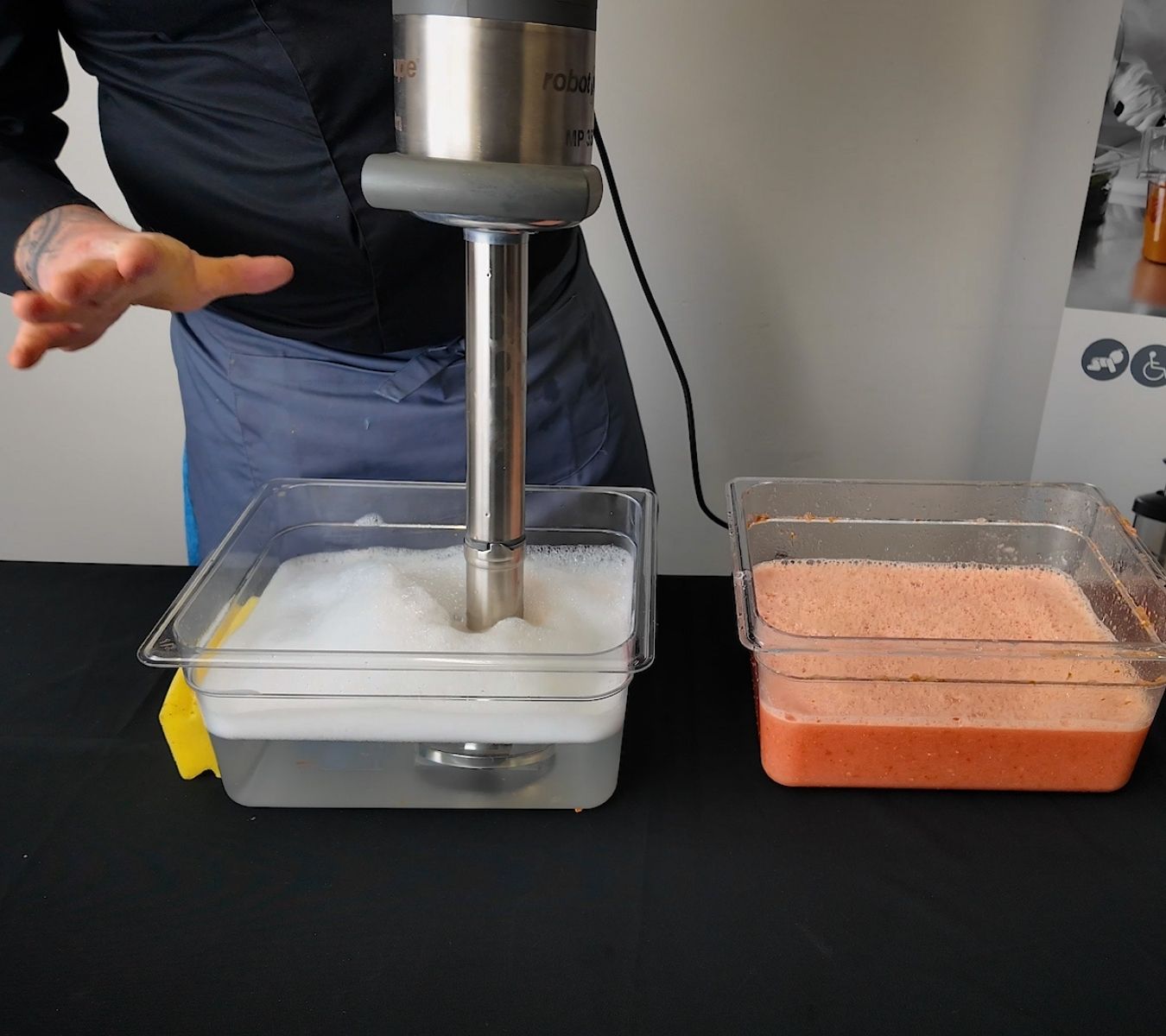
Quick clean between uses: If you need a fast clean between uses during service, immerse just the bell and the bottom portion of the tube in clean water and run the machine for 3–5 seconds. Never submerge the motor housing.
Storage: Hang the machine on the wall bracket provided after every use, in a safe location away from walkways. Coil the cord carefully and correctly. A machine stored loosely under a counter with equipment dropped on top of it will not last.
What Shortens the Lifespan of an Immersion Stick Blender?
Beyond using it for the wrong applications, the other main causes of premature wear are:
- Not cleaning it properly after every use.
- Leaving it dirty overnight, the residue hardens quickly and causes long-term damage.
- Poor storage, dumping it under the bench rather than hanging it up.
- Careless cord handling, the cord should always be coiled correctly, not wrapped tightly or left tangled.
Keeping Your Robot Coupe Equipment Running
What is the Most Important Maintenance Habit?
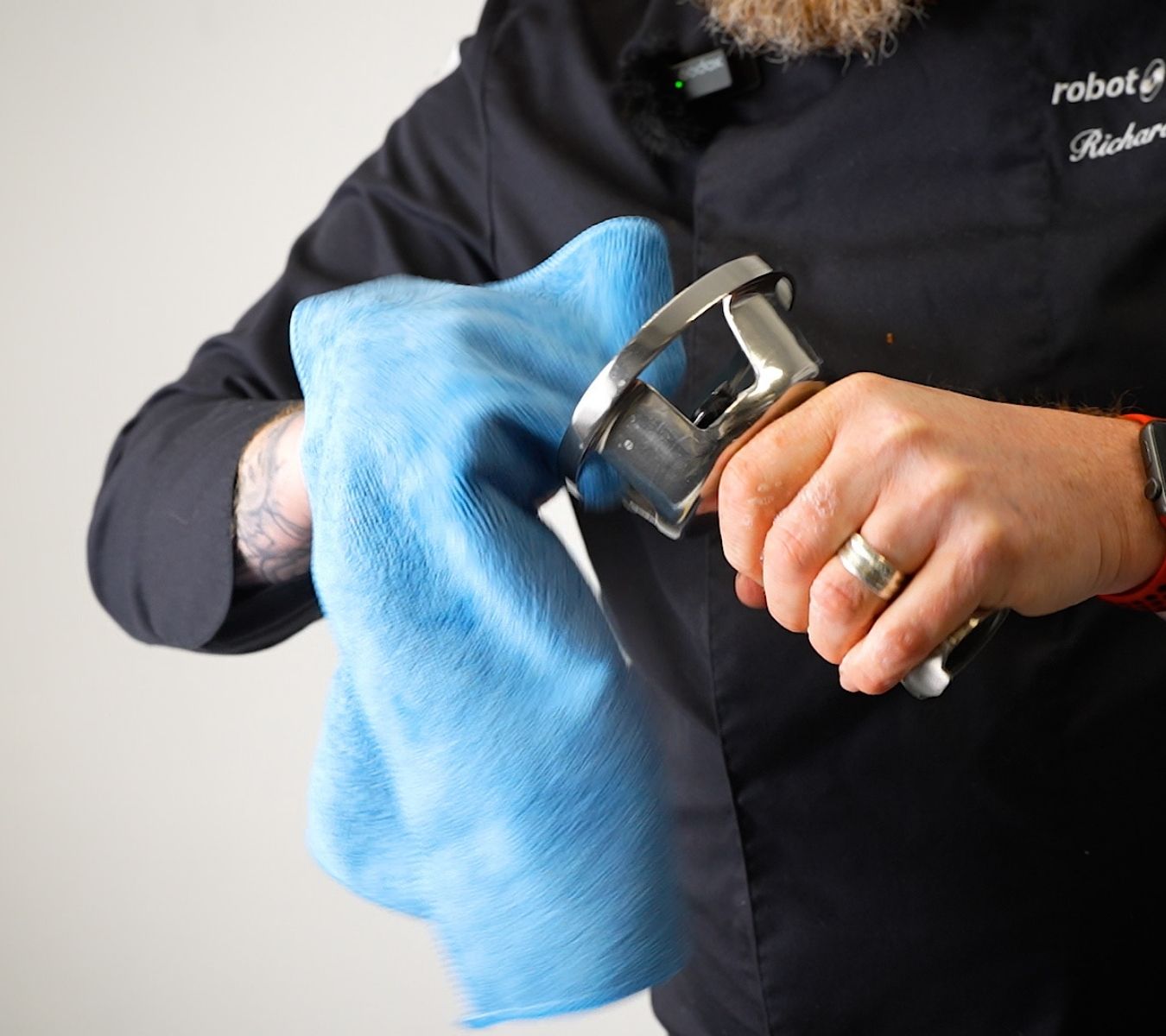
Richard's answer is direct: hygiene. Clean your equipment correctly after every use, maintain it properly, and it will outperform a human consistently for a very long time. Neglect it, and no machine will hold up regardless of build quality.
When You Need Parts or a Service
Robot Coupe's after-sales process starts with your supplier. To get support quickly, have your machine's serial number ready:
- CL50: found on the underside of the machine
- Immersion blenders: found inside the handle
With the serial number, Robot Coupe can identify exactly when and where your machine was manufactured. From there, their aftersales platform provides a full parts diagram for your specific model, and individual components can be ordered directly. As Richard notes, 100% of every Robot Coupe machine can be replaced part by part; nothing is designed to be thrown away.
Buy Robot Coupe Equipment from Cooksmill
At Cooksmill, we stock a wide range of Robot Coupe products, from the CL50 and the wider CL vegetable preparation family to the immersion blender lineup. Whether you know exactly which machine your kitchen needs or you're still weighing up the options, our team can help you make the right choice for your volume, menu, and budget.
Browse the full Robot Coupe range at Cooksmill and get the equipment your kitchen deserves.