Hard water is one of those things that quietly costs catering businesses money every year. It affects your coffee machines, dishwashers, glasswashers, kettles, and water boilers, often without anyone making the connection between declining performance and the water coming out of the tap.
The start of a new financial year is a practical time to get on top of it. This guide covers UK water hardness, what limescale actually is, whether it's harmful, and the most effective ways to treat hard water and remove limescale from commercial kitchen equipment.
What Is Hard Water?
Hard water is water that contains a high concentration of dissolved minerals, primarily calcium and magnesium. These minerals are picked up naturally as water moves through rock such as chalk and limestone on its way to the water table. By the time it comes out of your tap, it carries mineral content that, when heated, forms the deposits we know as limescale.
Hard water is not unsafe to drink. The minerals it contains are harmless, and in some cases, they're considered beneficial. The problem is entirely about what those minerals do to your equipment, your glassware, and the quality of the drinks you're producing.
Hard water vs soft water:
- Hard water - high mineral content, forms limescale, leaves white marks on surfaces and glassware, produces less lather with soap and detergent
- Soft water - low mineral content, does not form limescale, produces better lather, gentler on appliances

UK Water Hardness: Are You in a Hard Water Area?
Understanding UK water hardness starts with knowing where the problem areas are. Water hardness is determined by the area that the water passes through before it reaches your taps. In areas with chalk and limestone bedrock, water picks up high concentrations of calcium and magnesium, making it hard.
UK Water Hardness by Region
| Region | Water Hardness |
|---|---|
| South East England | Very hard |
| East Anglia | Very hard |
| East Midlands | Hard |
| Yorkshire | Moderately hard |
| North West England | Soft to moderate |
| South West England | Soft to moderate |
| Scotland | Soft |
| Wales | Soft to moderate |
Yorkshire water hardness is worth a specific mention. Yorkshire sits in a moderately hard category, not the worst in the UK, but hard enough to cause meaningful limescale build-up in appliances over time, particularly in commercial settings where equipment is running continuously.
If your business is in the Midlands or south of England, the problem is more severe. But any business outside of Scotland, Wales, and parts of the South West will be dealing with some degree of hard water.
Signs You Have Hard Water in Your Kitchen
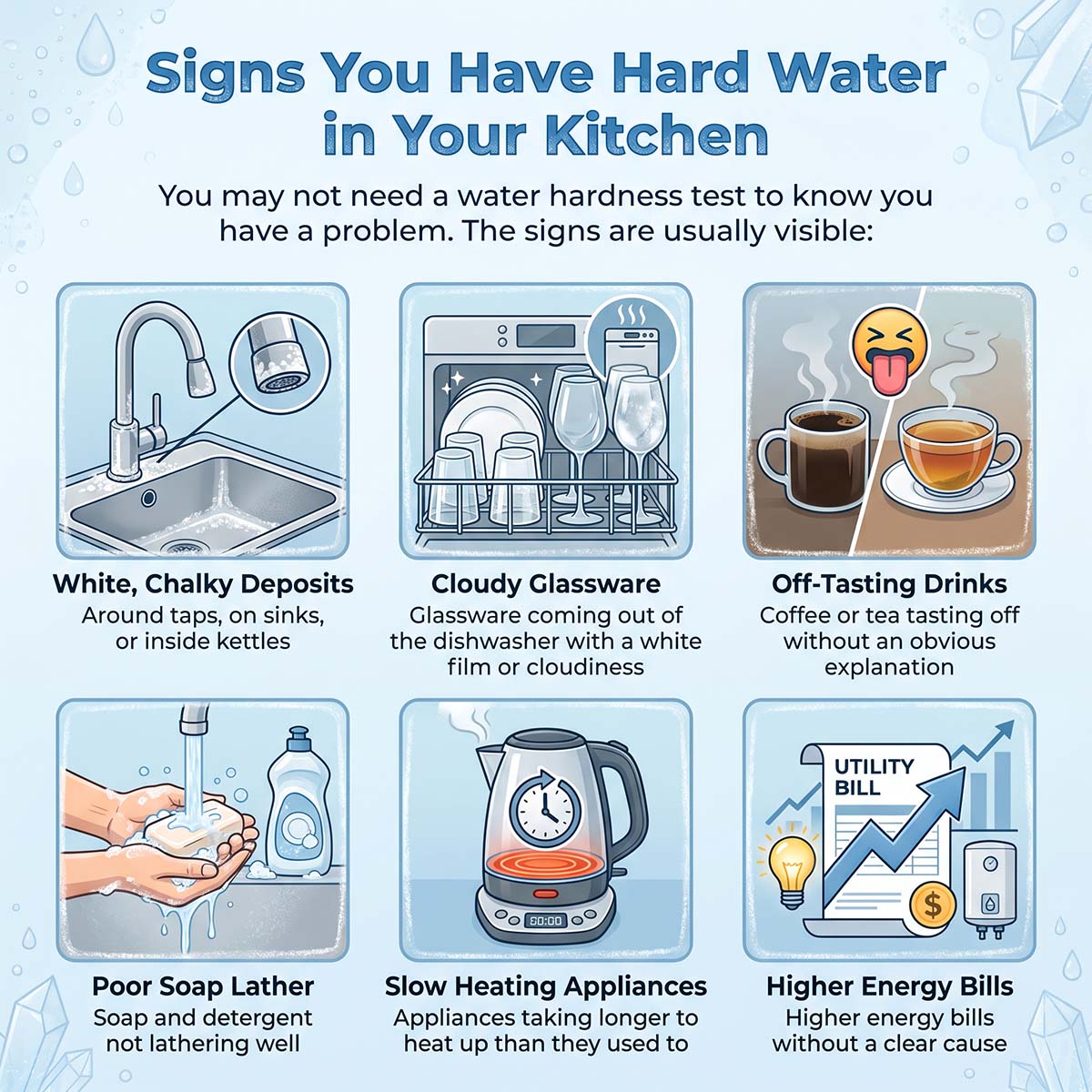
You may not need a water hardness test to know you have a problem. The signs are usually visible:
- White, chalky deposits around taps, on sinks, or inside kettles
- Glassware coming out of the dishwasher with a white film or cloudiness
- Coffee or tea tasting off without an obvious explanation
- Soap and detergent not lathering well
- Appliances taking longer to heat up than they used to
- Higher energy bills without a clear cause
If any of these sound familiar, you're dealing with hard water, and it's worth acting on sooner rather than later.
What Is Limescale?
Limescale is the white, chalky deposit that forms when hard water is heated. When water temperature rises, the dissolved calcium and magnesium minerals it contains crystallise and bond to whatever surface they're in contact with, heating elements, pipes, spray arms, taps, and the internal components of appliances.
It builds up gradually. You might not notice it for weeks, but over time, it becomes harder to remove and increasingly damaging to your equipment.
Where limescale forms in a commercial kitchen:
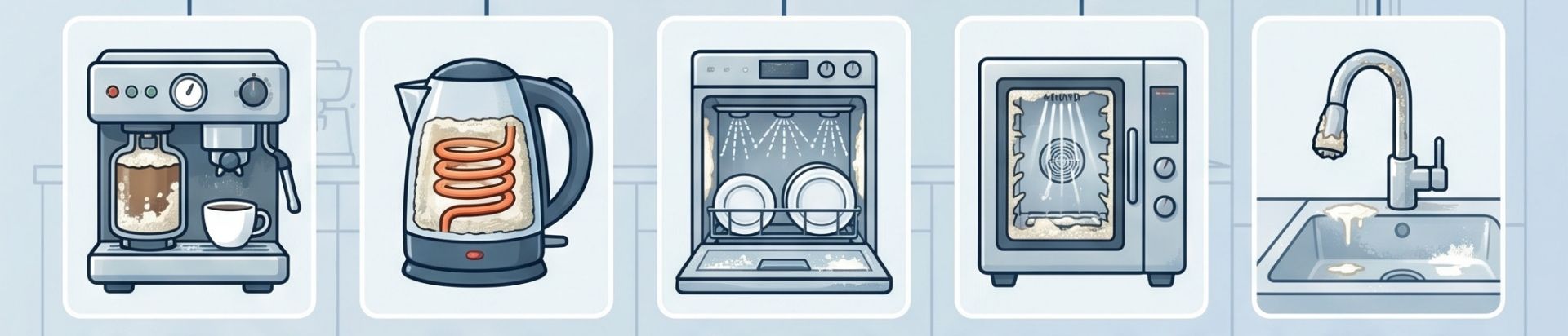
- Inside coffee machines and espresso boilers
- On heating elements in kettles and water boilers
- Inside dishwashers and glasswashers
- In steam generators and combination ovens
- On taps, sink surfaces, and spray heads

Is Limescale Bad for You?
This is a question that comes up regularly. Is limescale bad for you? The short answer is no, limescale itself is not harmful to health. It's made up of calcium and magnesium carbonate, both of which are naturally occurring minerals. Drinking water containing these minerals, or consuming drinks made with hard water, does not pose a health risk.
However, limescale is bad for your equipment, your energy bills, and the quality of what you're serving:
- Coffee machines - scale restricts water flow and affects temperature consistency, producing weaker, worse-tasting espresso
- Glasswashers and dishwashers - hard water leaves a white film on glassware that looks dirty to customers
- Kettles and water boilers - limescale on heating elements uses significantly more energy to heat the same volume of water
- Steamers and combination ovens - scale blocks, injectors, and restrict the steam output
So while limescale won't make anyone ill, it will make your business less efficient, and your drinks taste worse.

How to Soften Hard Water
The most effective long-term answer to how to soften hard water in a commercial setting is a water softener. A water softener removes the calcium and magnesium ions from the water supply before they ever reach your appliances, eliminating the source of scale rather than treating the symptoms.
How water softeners work:
Water passes through a resin tank containing sodium or potassium ions. The calcium and magnesium ions in the hard water swap places with the sodium ions, producing soft water that passes through to your appliances without depositing scale.
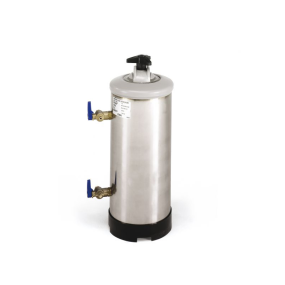
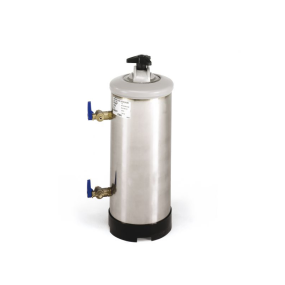
Cooksmill stocks commercial water softeners specifically designed to supply coffee machines, dishwashers, glasswashers, and small boilers:
- 8-litre water softeners are suited to lower-volume operations and single-machine supply
- 12-litre water softeners are designed for higher-volume commercial use
For businesses in hard water areas, fitting a water softener is one of the best maintenance investments available. It extends appliance lifespan, cuts energy costs, and removes the time spent dealing with limescale

How to Eliminate Hard Water Effects Without a Softener
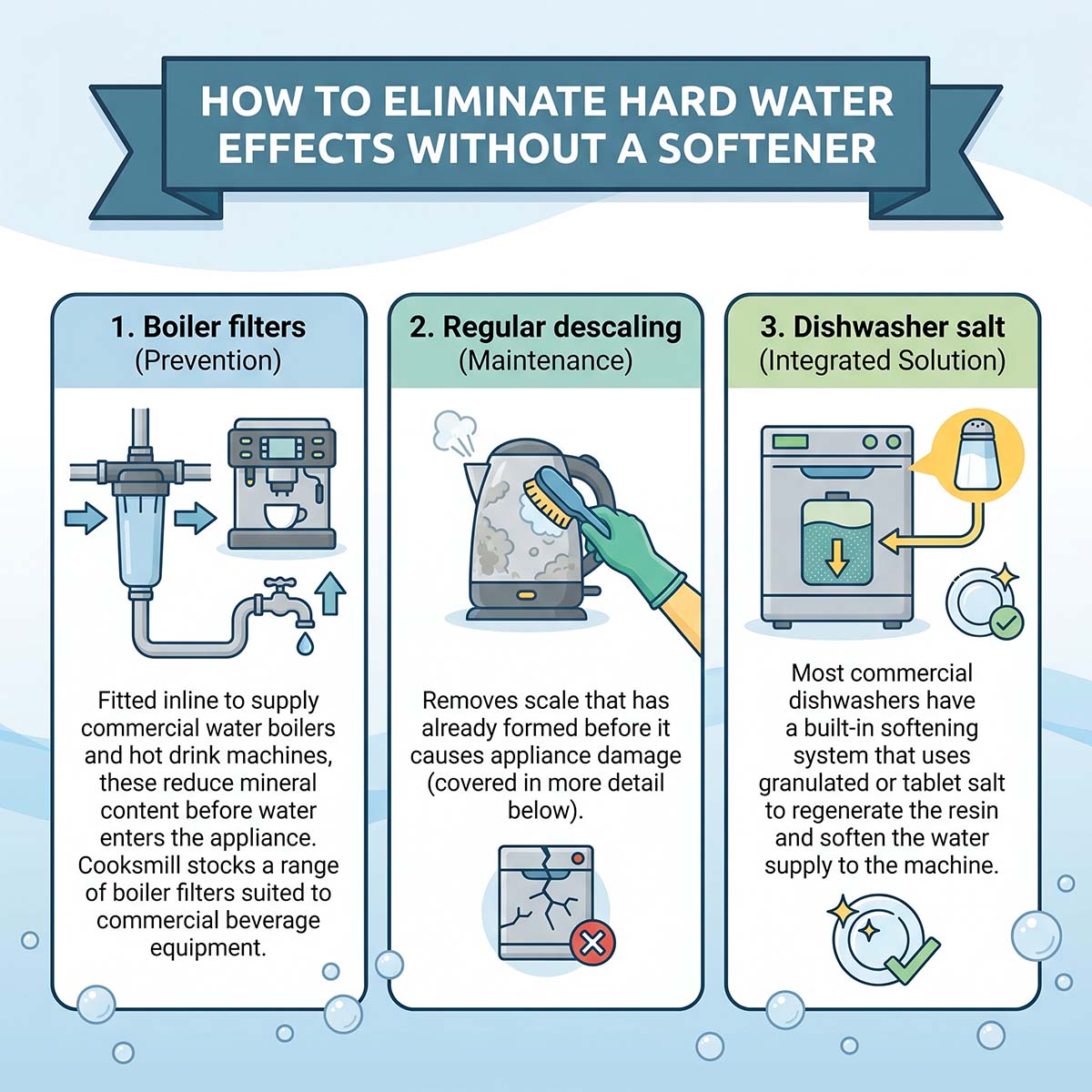
If a full water softener isn't practical for your setup, there are other ways to eliminate hard water problems:
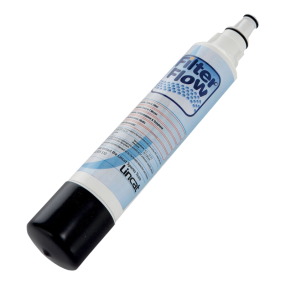
- Boiler filters - fitted inline to supply commercial water boilers and hot drink machines, these reduce mineral content before water enters the appliance. Cooksmill stocks a range of boiler filters suited to commercial beverage equipment.
- Regular descaling - removes scale that has already formed before it causes appliance damage (covered in more detail below)
- Dishwasher salt - most commercial dishwashers have a built-in softening system that uses granulated or tablet salt to regenerate the resin and soften the water supply to the machine.
How to Treat Hard Water: A Practical Schedule
Knowing how to treat hard water is one thing; building it into your routine is another. Here's a practical maintenance schedule based on equipment type and water hardness:
Equipment Descaling Schedule
| Equipment | Hard Water Area | Moderate Water Area |
|---|---|---|
| Commercial coffee machine | Descale every 1–2 months | Descale every 3 months |
| Commercial kettle/water boiler | Descale monthly | Descale every 2 months |
| Dishwasher/glasswasher | Descale monthly | Descale every 2–3 months |
| Steam combination oven | Descale monthly | Descale every 2 months |
| Taps and surface fixtures | When visible | When visible |
How to Remove Limescale from Catering Equipment
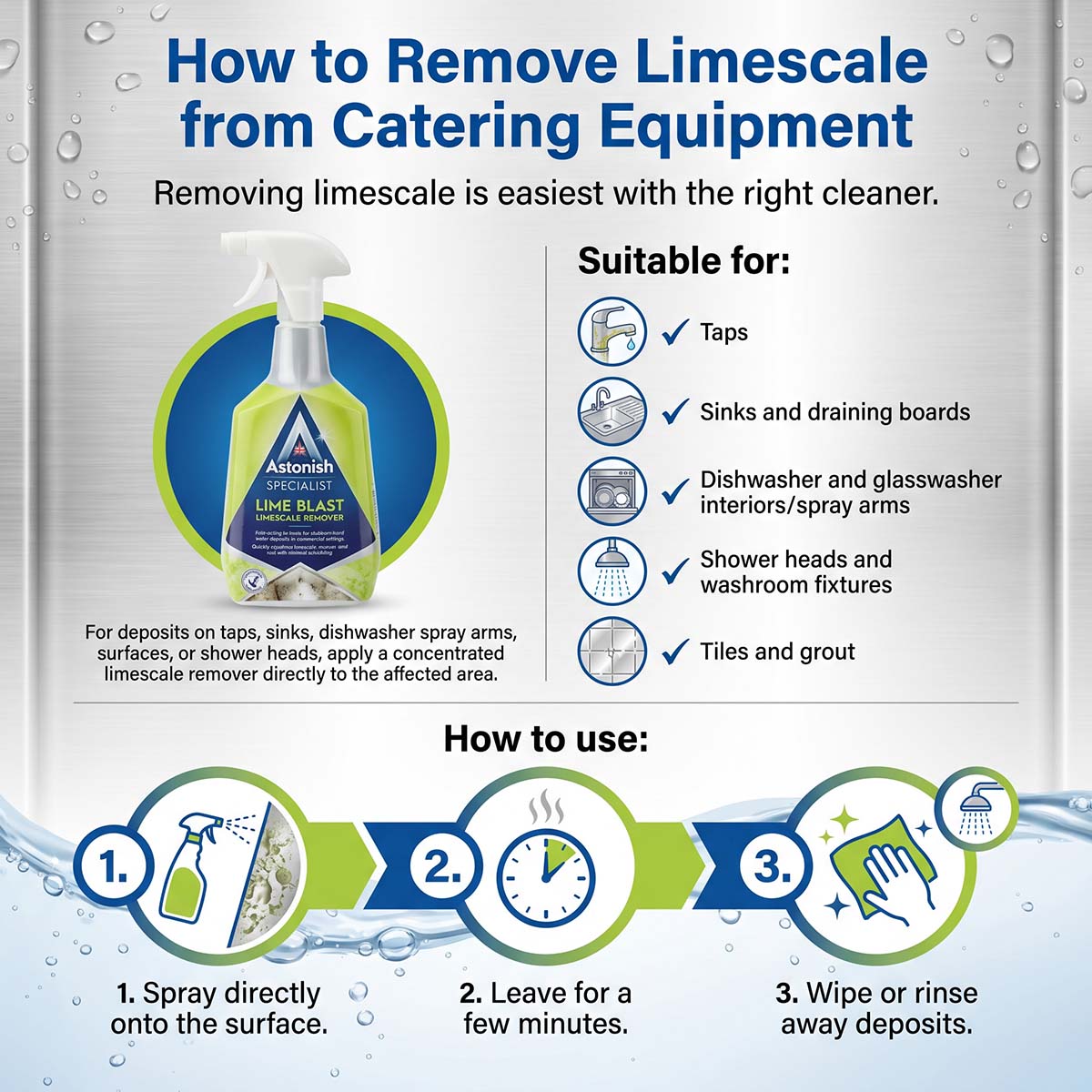
How to remove limescale effectively comes down to having the right product for the job. Whether it's a build-up on taps and sinks, a white film around dishwasher spray arms, or deposits on kitchen surfaces and shower heads, a concentrated limescale remover applied directly to the affected area is the most straightforward solution.
Astonish Specialist Lime Blast Limescale Remover is a fast-acting, concentrated limescale cleaner designed specifically for the kind of stubborn hard water deposits that build up in busy commercial environments. It works on contact, dissolving limescale, calcium, and rust deposits without heavy scrubbing.
What it works on:
- Taps
- Sink surfaces and draining boards
- Dishwasher and glasswasher interiors and spray arms
- Shower heads and washroom fixtures
- Tiles and grouting in the kitchen and washroom areas
How to use it:
- Spray directly onto the affected surface
- Leave for a few minutes to allow the formula to break down the deposits
- Wipe or rinse off
For heavier build-up, leave for longer before wiping. On equipment like spray arms or tap heads, soaking in a diluted solution overnight gives the best results.
As a limescale remover, it's versatile enough to cover most surfaces in a commercial kitchen and washroom in one product, which keeps things simple when you're putting together a cleaning kit or a maintenance schedule.
Descaling Coffee Machines and Espresso Equipment
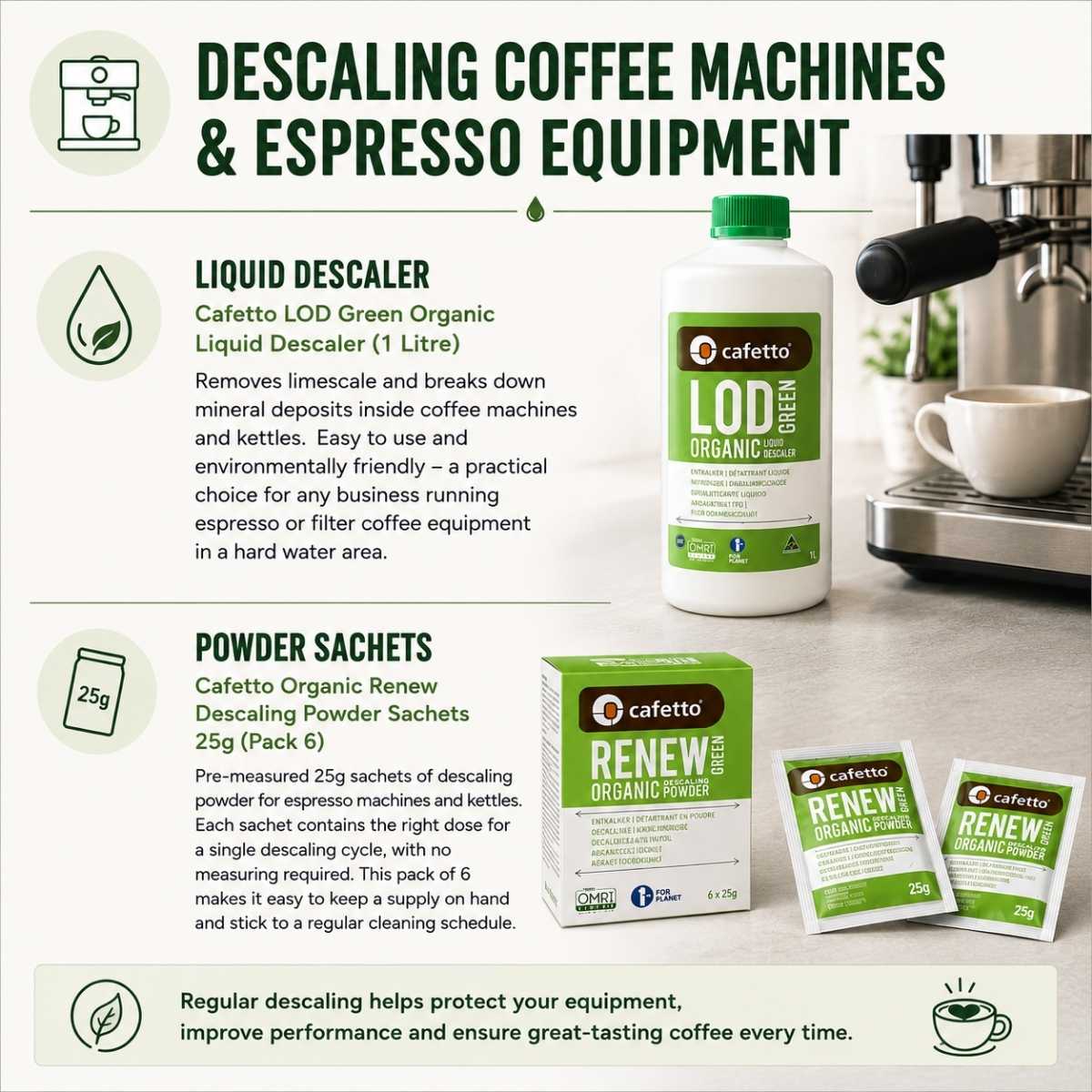
For coffee machines and espresso equipment specifically, a dedicated machine descaler is the right tool. Cafetto produce two reliable options, one liquid and one powder sachet, both designed for professional and home use.
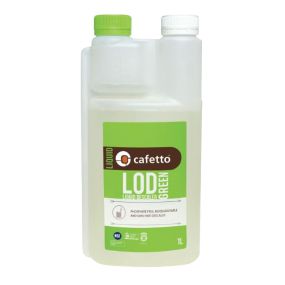
The Cafetto LOD Green Organic Liquid Descaler (1 Litre) is a liquid descaler that removes limescale and breaks down mineral deposits inside coffee machines and kettles. Easy to use and environmentally friendly, it’s a practical choice for any business running espresso or filter coffee equipment in a hard water area.
The Cafetto Organic Renew Descaling Powder Sachets 25g (Pack 6) are pre-measured 25g sachets of descaling powder for espresso machines and kettles. Each sachet contains the right dose for a single descaling cycle, with no measuring required. This pack of 6 makes it easy to keep a supply on hand and stick to a regular cleaning schedule.
The Cost of Ignoring Hard Water
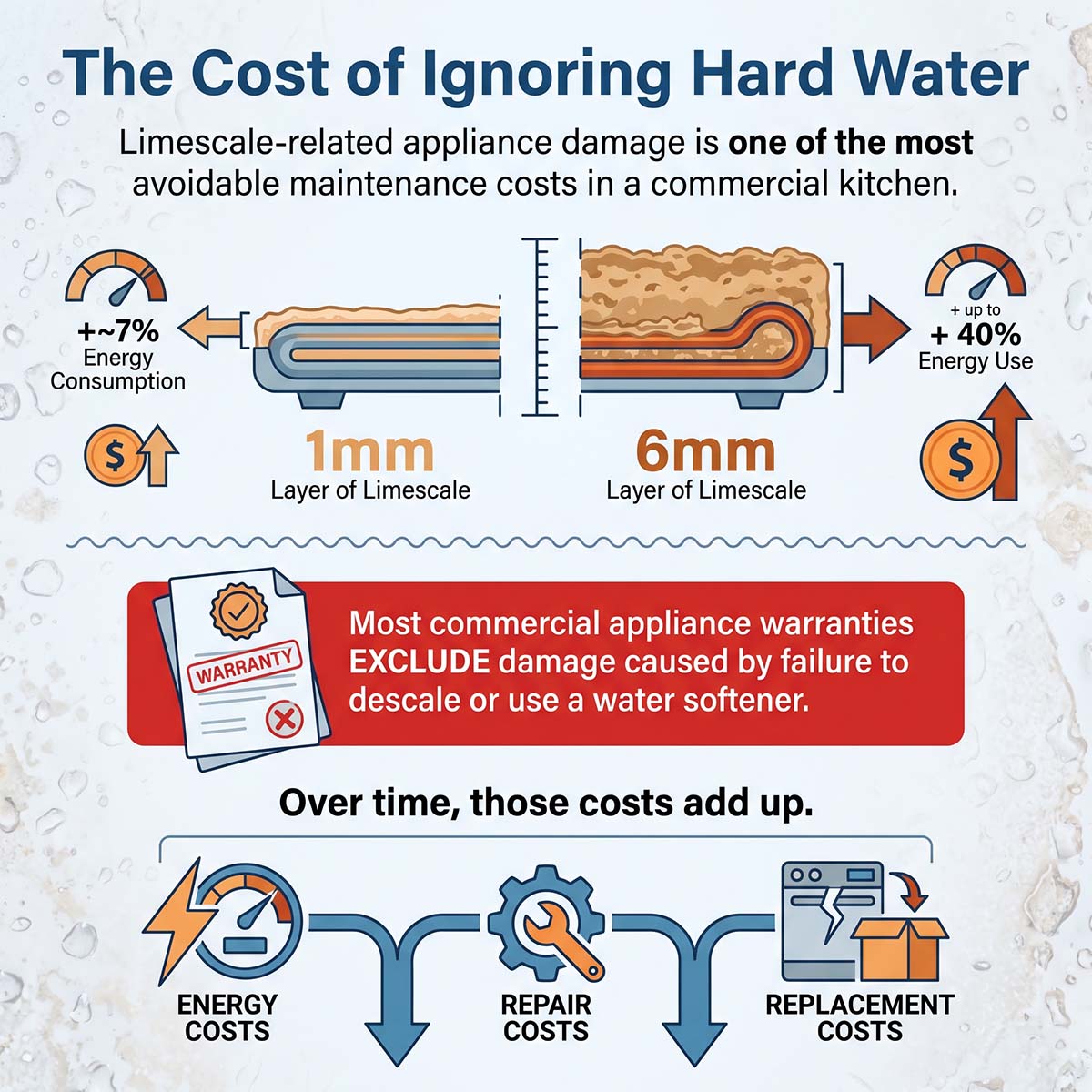
Limescale-related appliance damage is one of the most avoidable maintenance costs in a commercial kitchen. A few specific numbers are worth keeping in mind:
- A 1mm layer of limescale on a heating element increases energy consumption by approximately 7%
- A 6mm layer can increase energy use by up to 40%
- Most commercial appliance warranties exclude damage caused by failure to descale or use a water softener
Over time, those costs add up in energy, in repairs, and eventually in replacements.
Managing Hard Water with Cooksmill
Hard water is something most UK catering businesses are dealing with to some degree, whether they realise it or not. The good news is that it's one of the more straightforward maintenance challenges to get on top of. Understanding your local water hardness, knowing what limescale is and where it forms, and having the right products and a simple routine in place is genuinely enough to protect your equipment and keep running costs under control.
If you're in a hard water area, a water softener from Cooksmill is the most effective long-term investment you can make. It removes the problem at the source rather than managing the symptoms. Combine that with a good limescale cleaner for surfaces and a regular schedule for appliances, and the issue largely takes care of itself.