If you're running a catering operation, whether that's a street food stall, a school canteen, a busy takeaway, or an events catering business, disposable plates are one of those things you probably buy on autopilot. But the options have changed significantly in recent years. Bagasse plates have moved from a niche eco product to a practical, everyday catering essential. If you haven't looked at them properly yet, it's worth taking a few minutes to understand what they actually are and how they compare to the paper and plastic plates you might currently be using.
This guide covers everything from what bagasse is, how bagasse plates are made, whether they're safe and microwave-friendly, and how they stack up against the alternatives in a real catering environment.
What Is Bagasse?
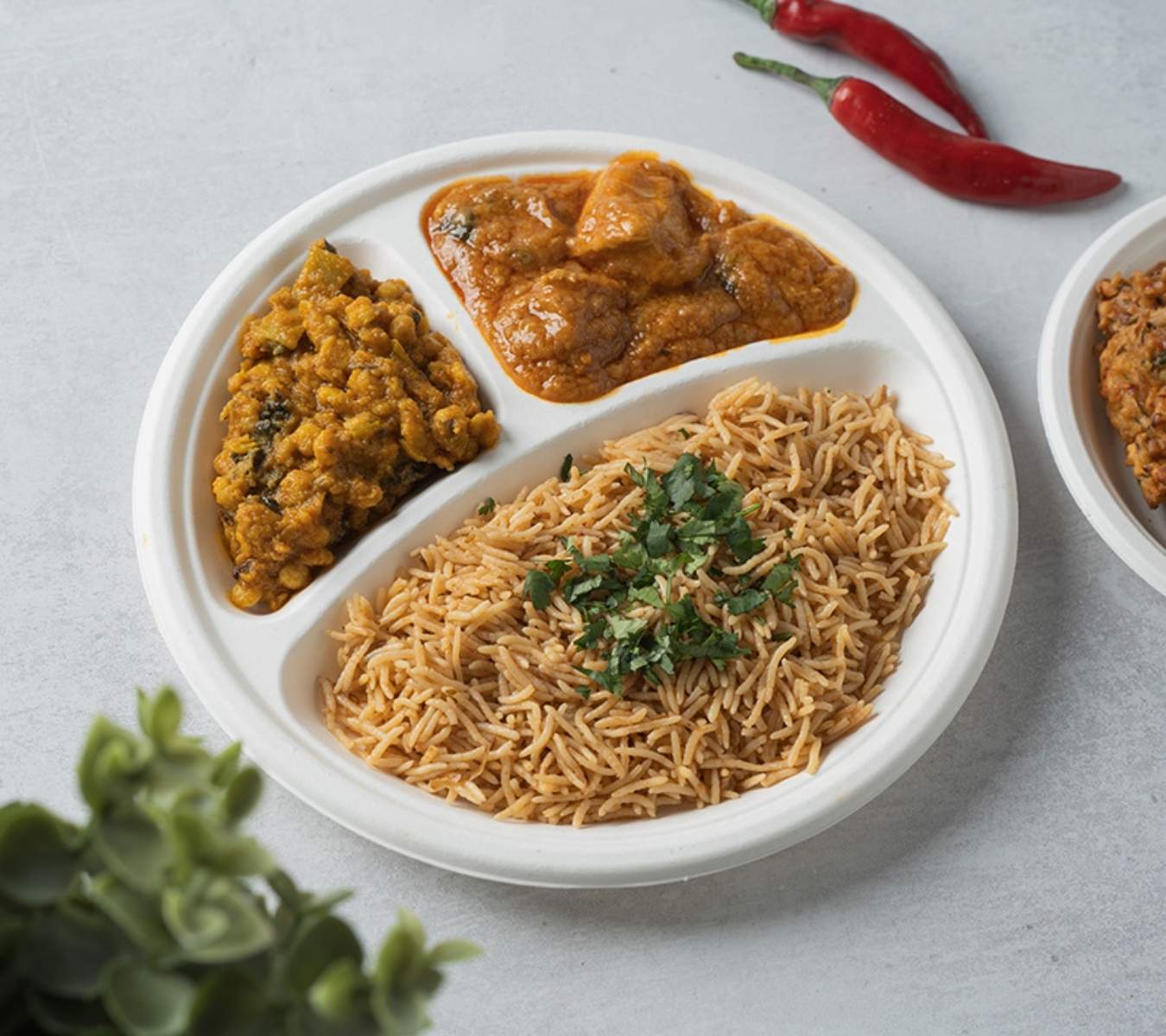
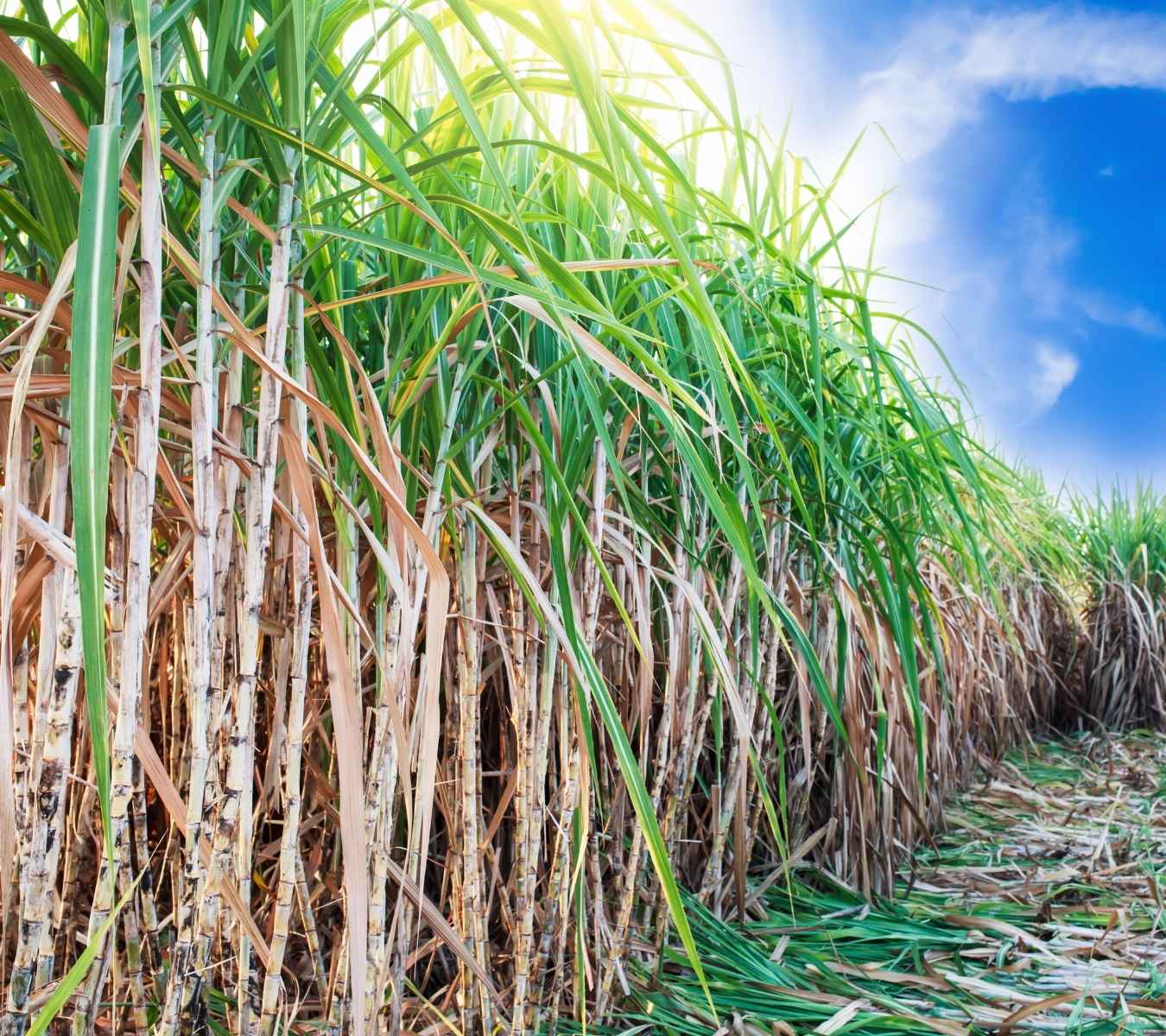
Bagasse (pronounced ba-gas) is the fibrous pulp left behind after sugarcane stalks are crushed for juice extraction. In sugar production, this would traditionally be burned or discarded as agricultural waste. Over time, manufacturers found a much better use for it by pressing it into food-safe, fully compostable tableware.
Though bagasse is widely popular today, many people are still unsure about what bagasse is used for. Most commonly, it's used for plates, bowls, trays, cups, and food containers that perform like conventional disposables but without the environmental baggage.
It's worth noting that bagasse is a by-product. No extra land or crops are needed for its production. The sugarcane is grown for sugar; the bagasse is what's left over. That's a meaningful difference compared to products made from virgin materials.
What Are Bagasse Plates Made Of, and How Are They Made?
Bagasse plates are made entirely from compressed sugarcane fibre. Here's the basic process:
- Sugarcane is harvested, and the juice is extracted for sugar production.
- The remaining pulp (bagasse) is collected and cleaned.
- It's mixed with water into a slurry, then pressed into moulds under high heat and pressure.
- The plates are dried, trimmed, and inspected before packaging.
It uses no plastic coatings or synthetic resins. The result is a rigid, smooth-surfaced plate that looks clean and professional, making it quite different from a standard paper plate. It handles hot, wet, and saucy food without any of the usual problems.
Is Bagasse Safe?
Yes, bagasse plates are fully food-safe and approved for direct contact with food. A few specific things are worth knowing:
- They're free from PFAS (the "forever chemicals" that have raised concerns with some food packaging coatings)
- They don't leach anything into food, even with hot or acidic dishes
- They don't transfer flavour, which matters if you're serving delicate food
- They're heat-resistant up to around 120°C
As with any catering supply, buy from a reputable supplier to make sure the products meet UK and EU food safety standards.
Are Bagasse Plates Microwave Safe?
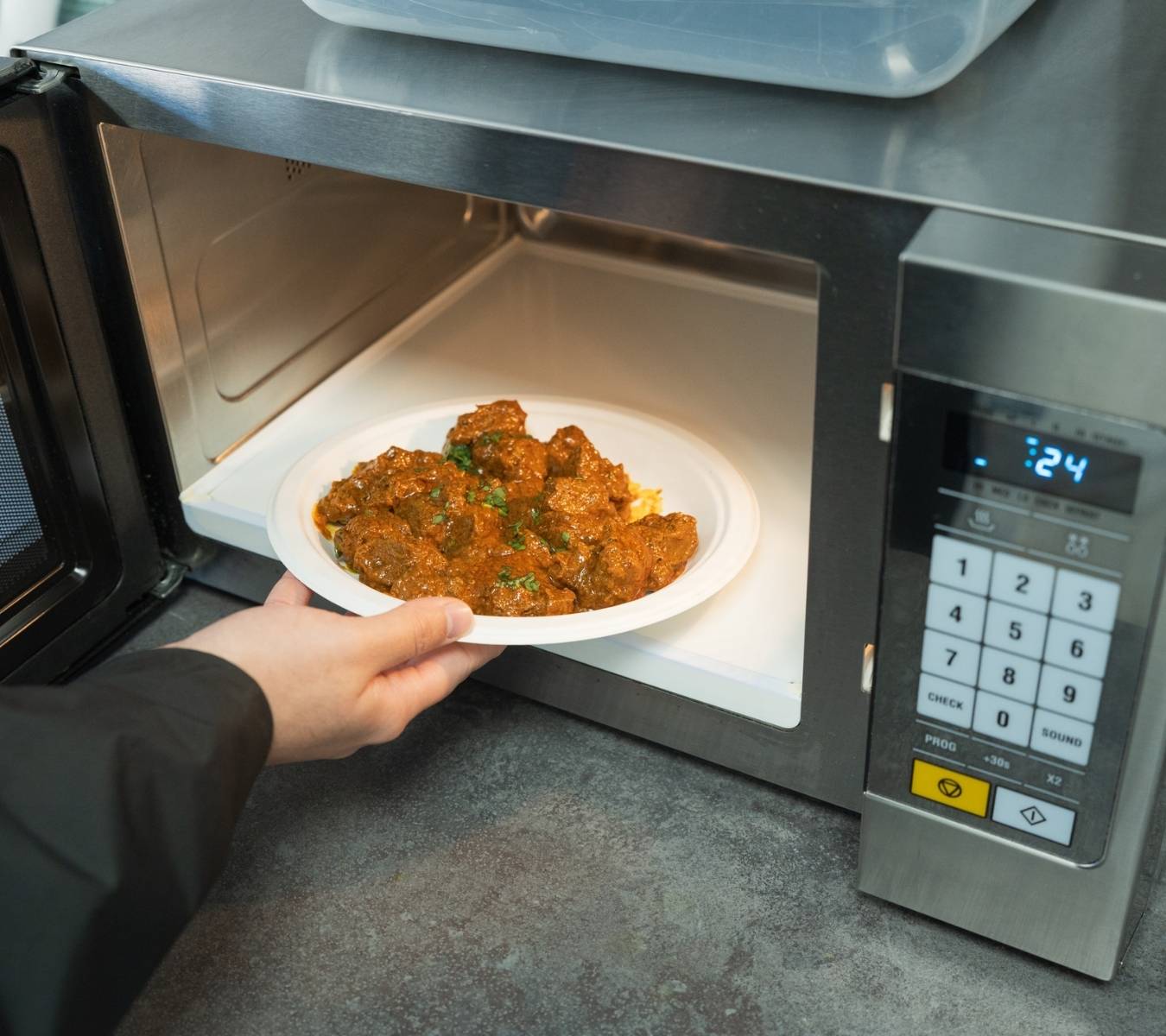
Being microwave-safe is one of the most practical things about them. Bagasse handles microwave heating very well. It doesn't warp, it doesn't release anything into the food, and it stays structurally sound.
That makes it genuinely useful for caterers who need to heat food in the plate itself, or for hot-hold catering situations where food is going straight from prep to microwave to service. Many plastic plates aren't microwave-safe, and standard paper plates tend to go soft under heat. Bagasse doesn't have either of those problems.
Are Bagasse Plates Strong?
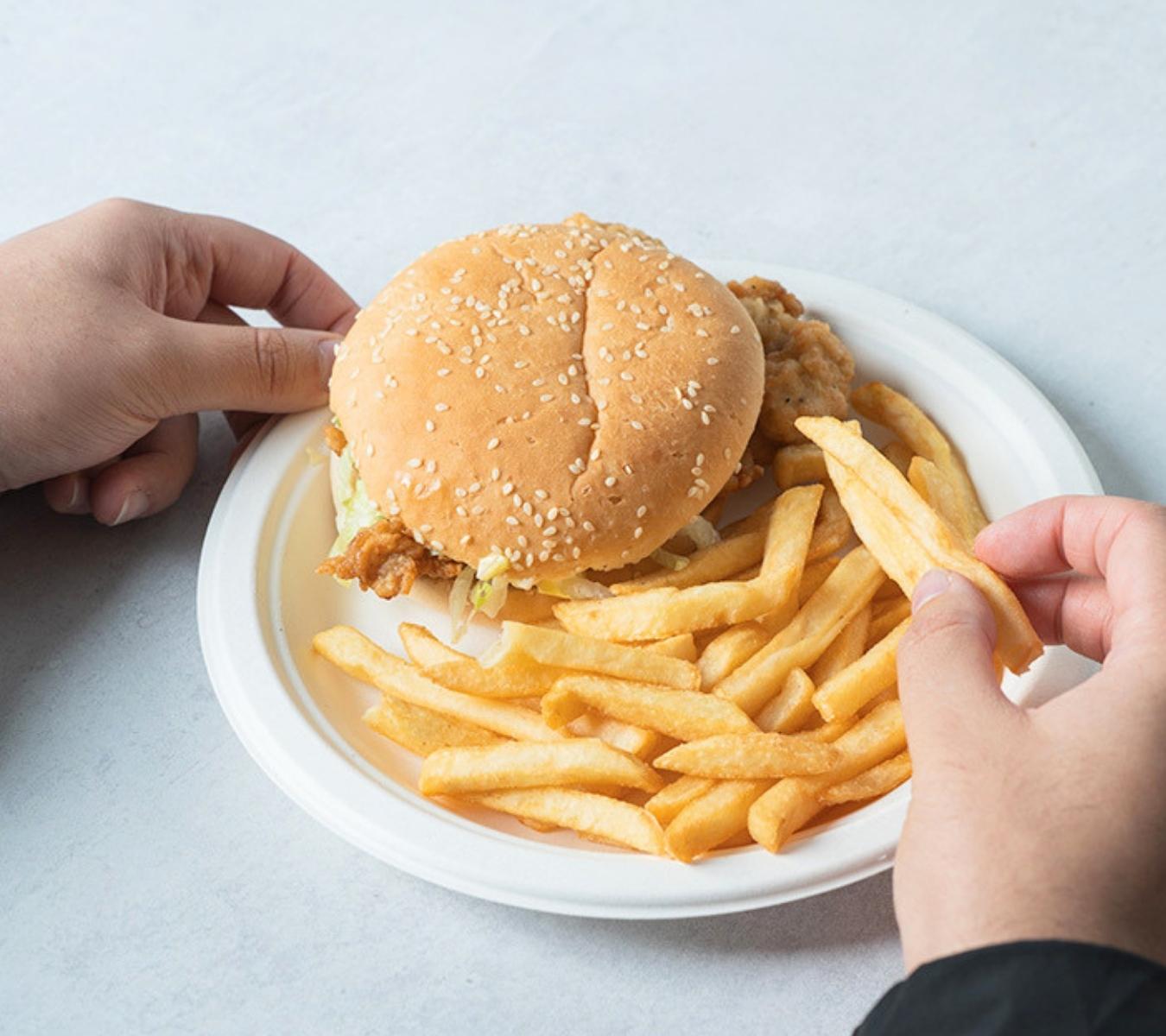
This is the question that matters most in a busy service environment, and the honest answer is yes, significantly stronger than paper, and broadly comparable to plastic for most catering applications.
What sets bagasse apart from paper plates specifically:
- It won't buckle when you cut through food with a knife
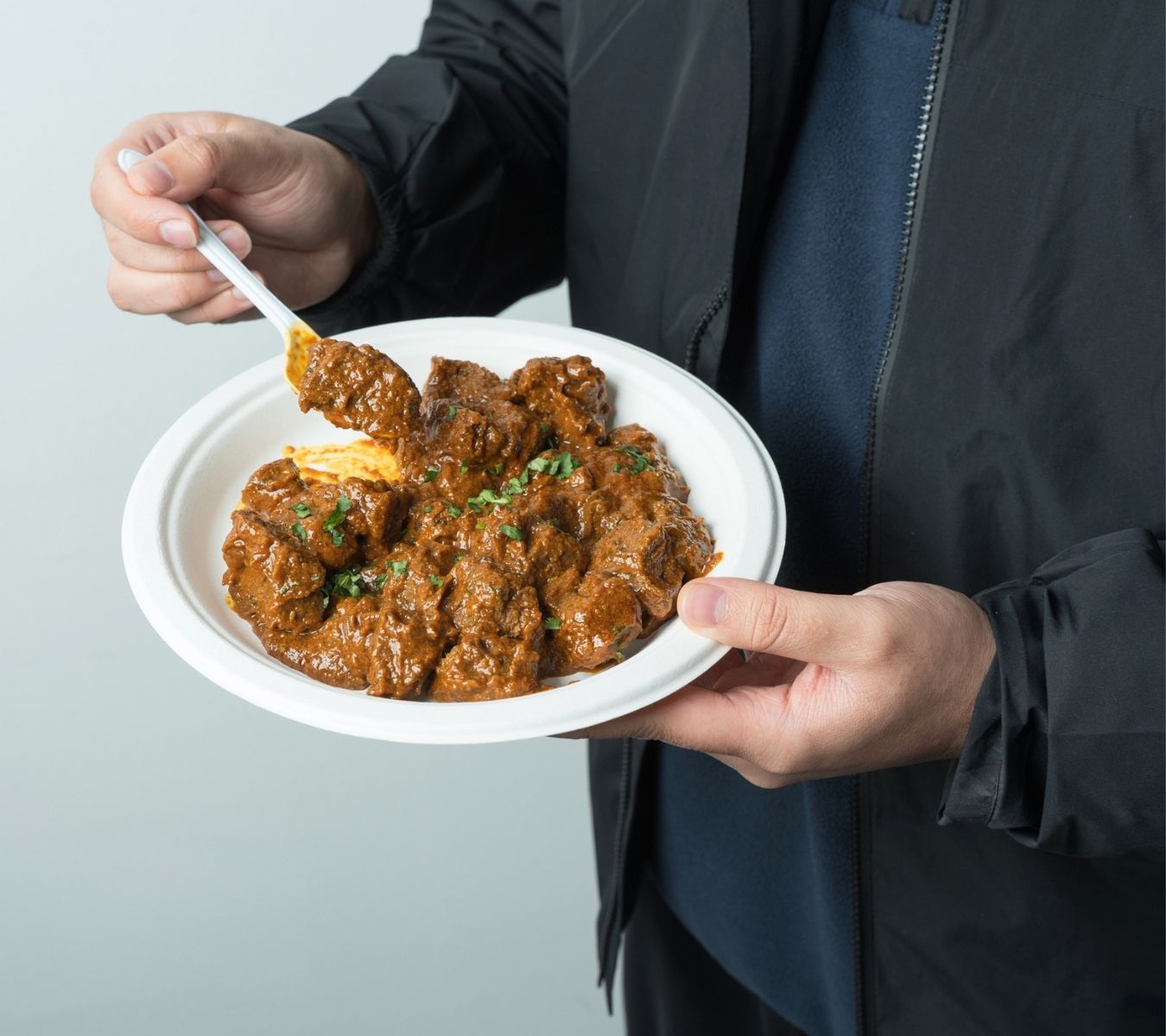
- It holds its shape under sauces, gravies, and wet food, no going soggy
- It can carry a full hot meal without bending or flexing
- It stacks cleanly and doesn't collapse under the weight of a full stack in storage
If you've ever served curry or stew on a paper plate and watched the whole thing start to give way, you'll understand why this matters.
Are Bagasse Plates Compostable and Biodegradable?
Biodegradable bagasse plates will break down naturally without leaving microplastic contamination behind. Most are certified for industrial composting and will break down in a commercial composting facility within around 90 days.
Can bagasse be recycled? Not through standard kerbside recycling. Clean bagasse can go into organic or compostable waste streams; food-contaminated bagasse should go into food waste.
For businesses looking to reduce their environmental footprint, or those serving customers who care about this, bagasse is comfortably ahead of both plastic and conventional coated paper when it comes to what happens to the plate once the meal is finished.
Bagasse vs Paper vs Plastic Plates
Here's how the three options compare across the things that actually matter when you're running a catering operation.
Bagasse vs Paper vs Plastic Plates: The Full Comparison
|
Bagasse Plate |
Paper Plates |
Plastic Plates |
|
|
Material source |
Sugarcane by-product |
Virgin or recycled wood pulp |
Petroleum-based |
|
Biodegradable? |
Yes |
Yes |
No |
|
Compostable? |
Yes |
Only if uncoated |
No |
|
Microwave safe? |
Yes |
Limited |
Not usually |
|
Handles wet food? |
Yes |
No |
Yes |
|
Suitable for wet food? |
Yes |
Limited |
Check grade |
|
Reusable? |
No |
No |
Some grades |
|
Presentation quality |
High |
Basic |
Variable |
|
Eco friendly |
***** |
*** |
* |
|
Unit cost |
Mid |
Low |
Low-mid |
The Honest Pros and Cons
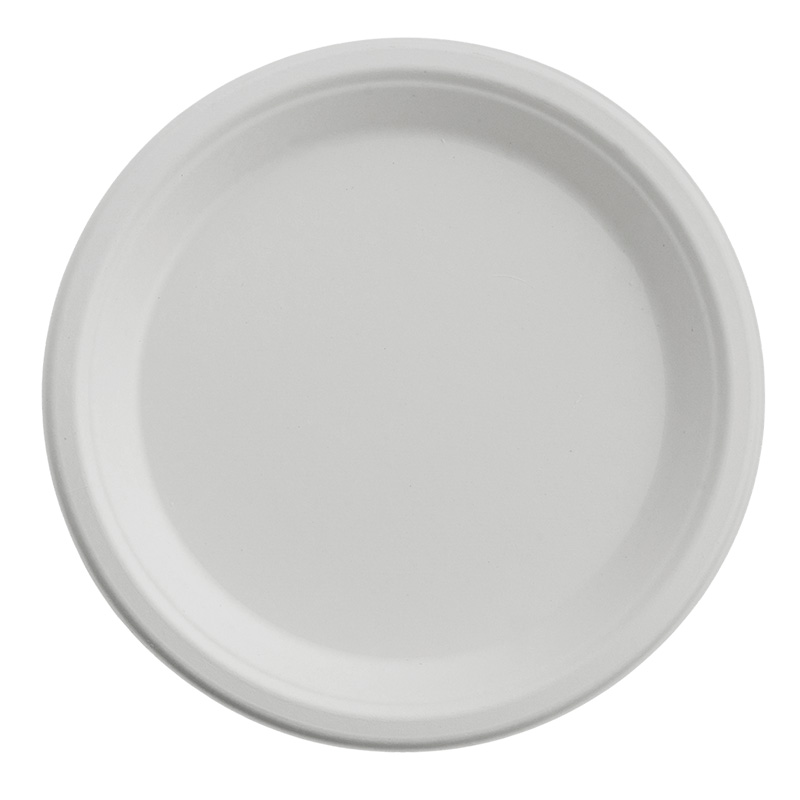
Bagasse Plates
The pros:
- Made from agricultural waste, no new resources required
- Fully biodegradable and compostable
- Microwave safe and heat-resistant to 120°C
- Strong, rigid, and moisture-resistant, it works with any food type
- Looks professional, suitable for events and hospitality settings
- Available in multiple sizes and compartment configurations
- No plastic coatings or harmful chemical additives
The cons:
- Costs more per unit than basic paper plates
- Composting typically requires access to commercial composting facilities
- Cannot go in standard kerbside recycling
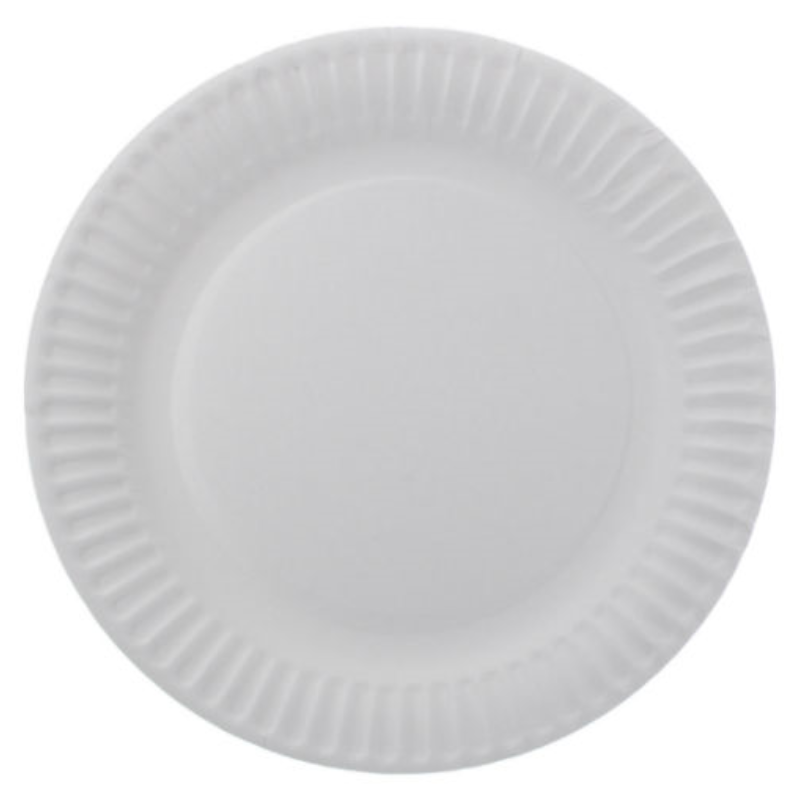
Paper Plates
The pros:
- Very low cost, widely available
- Lightweight and easy to transport and store in bulk
- Biodegradable if uncoated
The cons:
- Weak and prone to bending under heavier portions
- Goes soggy quickly with any moisture
- Not reliable for hot food
- Often coated with plastic or wax, which makes composting difficult
- Not suitable for events or any setting where presentation matters
Plastic Plates
The pros:
- Durable and reusable in heavier grades
- Moisture resistant
- Low cost per unit at volume
- Good for cold or ambient food service
The cons:
- Not biodegradable and contributes to long-term plastic waste
- Most lightweight grades are not microwave-safe
- Increasingly restricted under UK single-use plastics legislation
- Some cheaper grades crack or split under heavier food
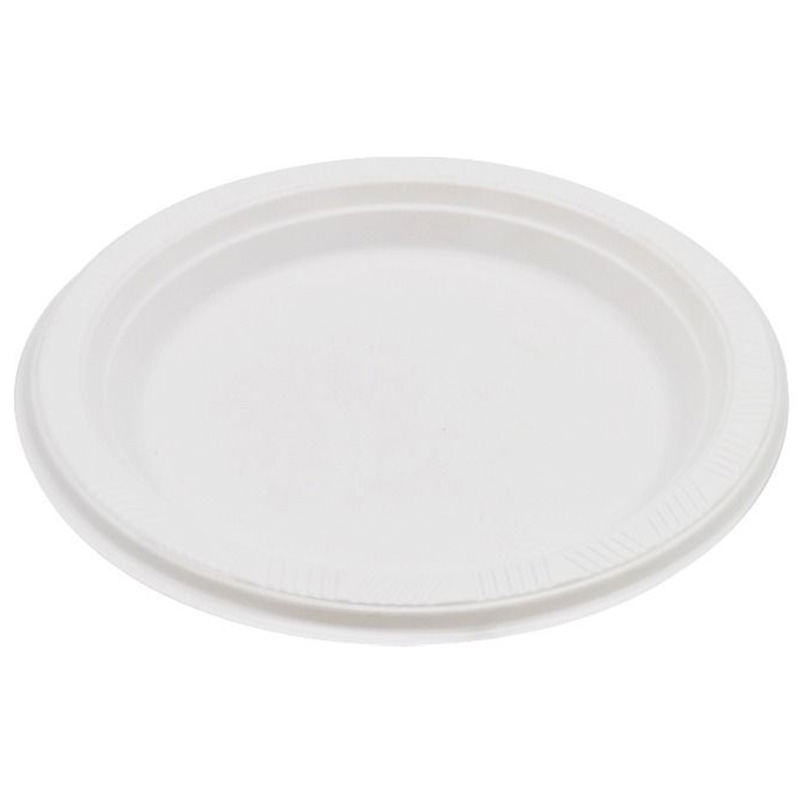
Which Plate Is Right for Your Business?
|
Usage |
Best Option |
|
Hot food service, canteens, school meals |
Bagasse |
|
Street food, festival catering |
Bagasse |
|
Weddings, events, hospitality |
Bagasse |
|
Thali and multi-portion serving |
Bagasse compartment plate |
|
Cold buffet, ambient food |
Bagasse or reusable plastic |
|
High-volume, low-cost, ambient only |
Paper (with caveats on strength) |
|
Reusable service on a budget |
Heavier-gauge plastic |
Your Questions on Bagasse Answered
What is bagasse?
Bagasse is the fibrous pulp left over after juice is extracted from sugarcane. Rather than being discarded as agricultural waste, it's compressed into eco-friendly disposable tableware.
What are bagasse plates made of?
Sugarcane fibre is pressed under heat and pressure into shape. It has no plastic coatings or synthetic additives.
Are bagasse plates microwave safe?
Yes. They handle microwave heating without warping or leaching anything into food.
Are bagasse plates strong?
Yes. They're significantly stronger than paper plates, rigid, cut-resistant, and moisture-proof. Comparable to plastic for most hot food applications.
Are bagasse plates compostable?
Yes, they are industrially compostable. They'll break down in a commercial composting facility within around 90 days.
Are bagasse plates biodegradable?
Yes. As a natural plant fibre, bagasse degrades without leaving microplastic residue.
Can bagasse be recycled?
Not through standard kerbside recycling. Food-contaminated bagasse goes into food or compostable waste; clean bagasse can enter organic waste streams.
Is bagasse safe for food contact?
Yes. Fully food-safe, free from harmful coatings, and approved for direct food contact.
Bagasse at Cooksmill
For most professional catering operations, bagasse plates represent the most practical and forward-thinking choice available right now. They're strong enough for any food type, microwave-safe, compostable, and made from material that would otherwise be thrown away. They also look the part, which matters if you're serving guests rather than just clearing a canteen.
If you're running a food business and you haven't thought about using bagasse, now is a good time to do it, especially with our own Cooksmill-branded range now available. Browse our full range of Food Serving Biodegradables and find everything you need.
Cooksmill's Bagasse, Paper, and Plastic Plate Range
Our bagasse tableware is available directly from our website and stores. If you've been thinking about making the switch, or you're simply stocking up, here's what's available.
Cooksmill Bagasse Plates and Bowls
A compact 7-inch plate ideal for starters, snacks, side portions, or children's meals. Rigid, clean white finish, and fully food-safe.
Our full-size 10-inch main course plate. Holds a complete hot meal, including saucy dishes, without flexing or going soft. A practical workhorse for any busy service.
A 3-compartment version of the 10-inch plate. Useful for street food, school meals, or any service where you want to keep components separate without serving in multiple dishes.
Deep-sided and sturdy. Well-suited to soups, curries, desserts, and snacks. Retains heat well and holds its structure with wet food.
A 6-compartment thali plate, ideal for Indian and South Asian cuisine. Keeps rice, dals, chutneys, and accompaniments neatly separated in the traditional format, without the washing up.
Cooksmill Paper Plates
A reliable choice for cold buffets, dry food, and high-volume catering where cost is the priority and moisture isn't a concern.
The smaller format for appetisers, nibbles, and lighter portions.
Cooksmill Reusable Plastic Plates
A lighter reusable plate for settings where single-use isn't the objective and cold or ambient food is the norm.
Full-size reusable plates suited to canteen and institutional catering, where durability matters over disposal.