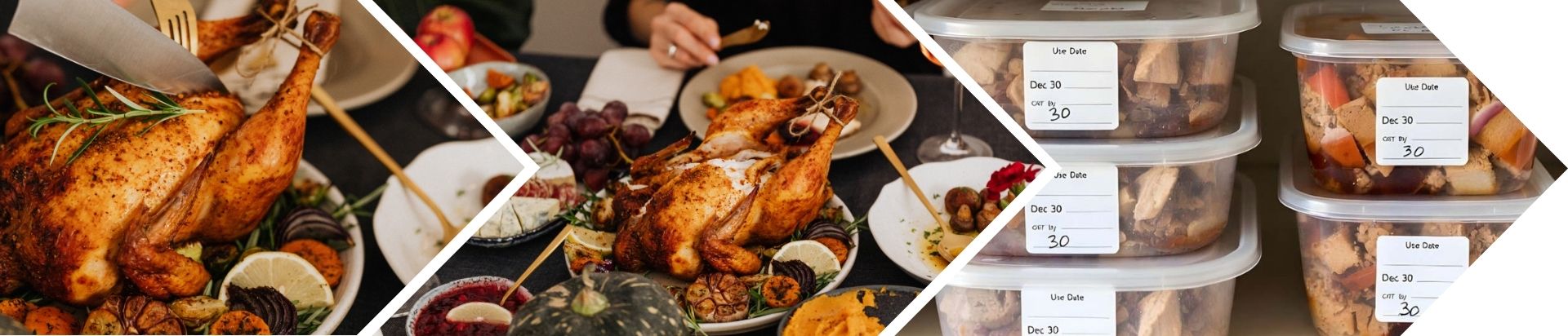
A large winter roast leaves behind more than a full dinner table. Once the plates are cleared, you’re left with the real challenge: managing the mix of cooked meats, vegetables, potatoes, stuffing, mash and trimmings in a way that is safe, efficient, and genuinely enjoyable to eat again. While most people default to simple reheating, professional kitchens take a different approach. Leftovers (those that didn’t make it to the table and remained untouched) are treated as ingredients and transformed using specific techniques that preserve quality and minimise waste.
This guide combines practical home cooking with restaurant logic, helping you understand how long leftovers last, whether you can reheat them twice, and how to create fresh meals from leftovers such as turkey, chicken, lamb, beef, roast potatoes, mashed potatoes, and stuffing. With support from durable Cooksmill cookware, storage containers and prep tools, you can bring the same disciplined workflow into your home kitchen.
Storage & Safety for Winter Roast Leftovers
Food safety is the backbone of all leftover cooking. Before thinking about recipes or creative reuse, it’s essential to understand how to handle cooked food properly.
How long can you leave leftovers in the fridge?
The general guideline for cooked meat, potatoes, vegetables, stuffing and mash is 2–3 days when stored correctly. Getting this right begins with the cooling process. Leftovers should move from the table to containers as soon as practical, ideally within an hour. Allowing food to linger at room temperature increases the risk of bacterial growth.
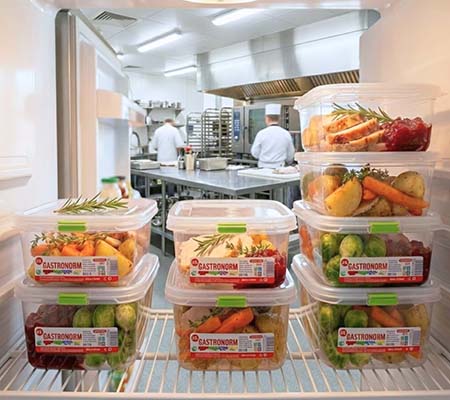
Restaurants prefer shallow containers because they cool food more quickly and evenly. At home, the Plasticforte Food Storage Container & Lid offers the same advantage. Its flat profile reduces cooling time, while tight-fitting lids help prevent odours from circulating through the fridge. (Very important when it comes to sprouts.) These containers also stack neatly, which matters when your fridge fills up after a winter feast.
Labelling containers with the date of storage, easily done using Cooksmill Removable Use by Label, helps you keep track of what needs using first and ensures nothing gets forgotten behind a shelf.
If you want to keep leftovers longer, freezing is still perfectly safe. Foods like turkey, roast beef, lamb, stuffing and potatoes freeze well when portioned into Aluminium Foil Containers with secure lids. Because these trays move safely from freezer to oven, they simplify batch cooking and reheating without extra washing up.
Can you reheat leftovers twice?
This is one of the most common questions after any roast. The safest and most widely recommended approach is not to reheat leftovers more than once. Every cooling and reheating cycle creates an opportunity for bacteria to multiply. It also breaks down the texture of the food, making it drier or denser each time.
The restaurant solution is portioning. Instead of storing a large container of sliced turkey or a full tray of roast potatoes, divide them into smaller servings. Cooksmill Microwaveable Containers and Round Microwaveable Container are ideal here. They’re compact enough for individual portions, microwave-safe, and easy to stack.
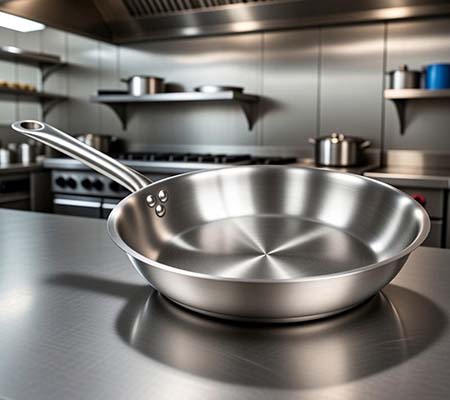
When reheating, aim for even, thorough heat. Stainless steel cookware, such as Cooksmill saute pans and saucepans, warms food evenly and avoids the cold spots that microwaves sometimes leave behind in thicker dishes.
With these fundamentals in place, leftovers stop feeling like an obligation and start becoming a resource.
How Chefs Transform Leftover Turkey, Chicken, Lamb & Beef
Chefs don’t rely on dozens of individual recipes. They rely on techniques. Once you understand the three core methods used in professional kitchens, rehydrating, reforming and re-texturing, you can apply them to any protein.

Rehydration Technique (Ideal for leftover turkey, lamb, and roast beef)
Turkey, roast beef and lamb all risk drying out once sliced and chilled. Gentle cooking in a liquid reverses that. Rehydration works by allowing moisture from broth, stock or sauce to absorb back into the fibres of the meat. This is why soups, stews and slow-simmered dishes work so well for winter roast leftovers.
A pot of shredded turkey simmered with leftover carrots, parsnips and greens becomes a hearty new meal. Roast beef takes beautifully to a creamy mushroom base, where the sauce restores tenderness. Lamb, with its distinctive flavour, transforms easily into a mild curry or stew, especially when reheated slowly and carefully in a stock pot, which distributes heat evenly from base to rim.
This approach gives you control. Instead of reheating slices and watching them dry out, you build a fresh dish that feels intentional.
Reforming Technique (Perfect for leftover turkey, chicken, stuffing & mash)
Reforming is about reshaping ingredients rather than simply reheating them. By altering their structure (turning turkey into a pie filling, chicken into croquettes, mash into fritters or stuffing into crisped bites), you create entirely new meals from familiar components.
Stuffing becomes particularly versatile once it dries slightly in the fridge. Pressed into a thin layer in a baking tray, it bakes into a crunchy sheet that can be crumbled over soups or casseroles. Mashed potatoes, which behave like a thick dough, give structure to patties, shepherd’s pies or filled dumplings. Turkey and chicken, when shredded, mix easily with sauces or vegetables to produce pies, bakes or hand-held snacks.
Reforming is how you avoid repetition. The ingredient remains the same, but its purpose and form change.
Re-Texturing Technique (Best for leftover roast chicken, beef slices, lamb, and potatoes)
When chefs talk about giving a dish “life,” they’re usually referring to texture. Crisp edges, browned surfaces and caramelised bites add contrast, and leftovers are particularly well-suited to this kind of transformation.
Leftover roast chicken, when sliced thin and cooked quickly in a hot pan, becomes perfect for stir-fries. Roast beef, cut finely, develops a new flavour profile when seared briefly at high heat. Lamb also responds well to rapid re-heating, particularly when folded into warm flatbreads or grain bowls.
If you look for leftover roast potato recipes, most will rely on crisping, as this is when they taste their best. Potatoes regain their best qualities in a cast-iron skillet, where a hot surface encourages browning. From there, they can become hash, topping for pies, fillings for wraps or the base of bubble and squeak.
Understanding these three methods lets you adapt any meat to the dish you want to create, even without a recipe.
Using Leftover Roast Potatoes, Stuffing & Mash
Sides often determine the success of your leftover cooking. Their textures, starch levels and moisture content influence how they behave when reheated or transformed.
Leftover roast potato recipes
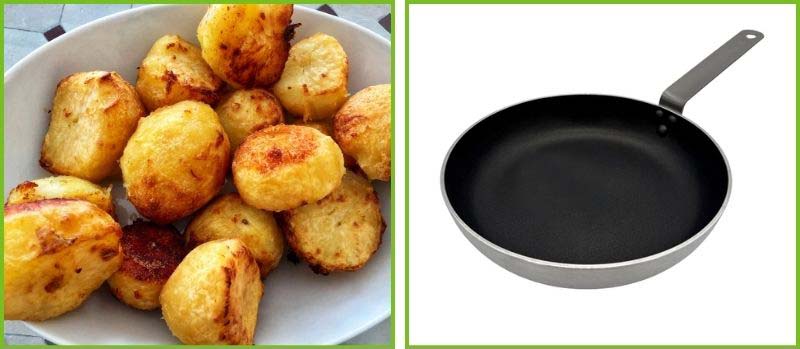
Roast potatoes rarely reheat well in the microwave, but they excel in high-heat pans. Once cooled, potatoes lose some moisture, allowing their edges to crisp even more the second time around. Cooked in a Cooksmill non-stick frying pan or cast iron skillet, they develop a golden crust that becomes the foundation for dozens of dishes.
You can turn them into hash by chopping and frying them with onions and leftover vegetables. You can fold them into frittatas for a stable breakfast dish. You can even use them as the base for loaded potato bowls, adding leftover meat or stuffing for bulk.
What to do with leftover mashed potatoes
Mashed potatoes offer structure. Their starch content and smooth consistency make them ideal for binding other ingredients. Restaurants often fold mashed potatoes into soups to thicken the consistency and add body.
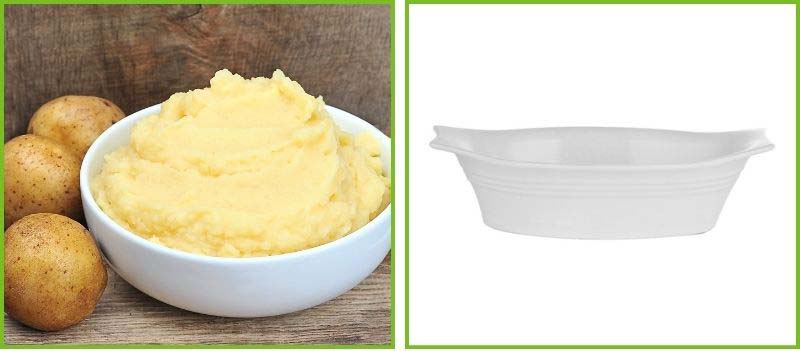
When baked in a baking dish, mash develops a crisp surface that contrasts beautifully with a soft centre. If you have leftover mash, consider using it as the top layer of a cottage or shepherd’s pie, the batter for potato pancakes, or the foundation for savoury croquettes.
Leftover stuffing recipes
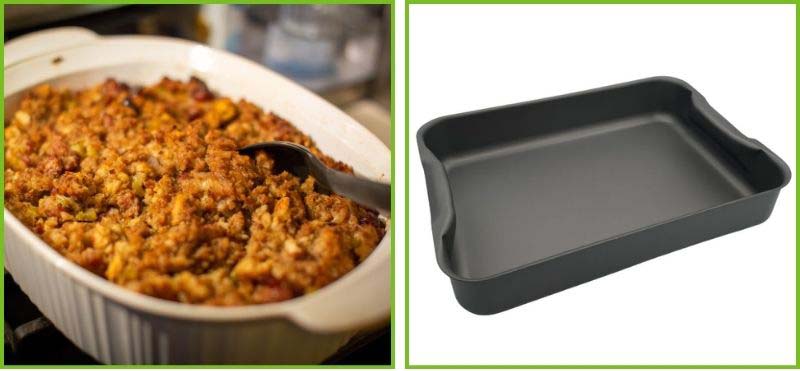
Stuffing benefits from transformation. Its mixture of herbs, bread and fat gives it excellent flavour, and once chilled, it becomes easier to shape. Rolling stuffing into balls, placing them in a baking dish and crisping them in the oven creates a crunchy side dish.
Stuffing also works well as a layer in pies or bakes, adding depth and fragrance to dishes that might otherwise feel simple.
A Restaurant-Style Workflow for Managing Leftovers
Professional kitchens follow systems that reduce waste and create consistency. Bringing some of that discipline into your home kitchen can make leftover cooking more enjoyable and less overwhelming.
Mise en place planning
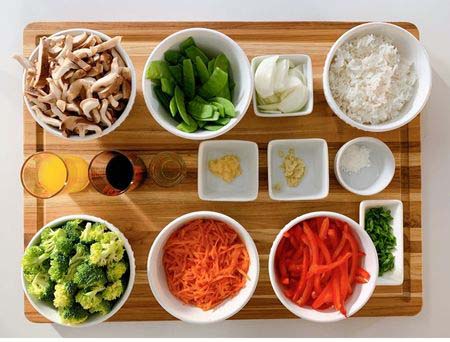
Mise en place is a French term meaning "everything in its place". It is the practice of preparing and organising all ingredients by measuring, chopping, and sorting, along with necessary tools, before cooking begins. This preparation system eliminates disruptive interruptions, ensuring that once you start cooking, your workflow is smooth and efficient. It is the foundation of professional kitchen organisation.
By having all components ready, you prevent mistakes like burning a base while rushing to chop the next ingredient. This disciplined approach reduces stress and significantly improves the quality of complex or time-sensitive recipes, allowing you to focus purely on the technique of cooking itself.
Applying this method to leftovers involves laying out and sorting all items, such as proteins, vegetables, starches, and sauces, into organised categories. This shows you exactly what you have available, transforming ingredients into clear components for planning new meals, ensuring maximum use and minimal food waste.
Assigning each ingredient a technique
The moment you categorise leftovers, the right technique becomes clearer.
- Turkey and beef often benefit from gentle rehydration.
- Roast chicken responds well to high-heat re-texturing.
- Lamb works beautifully when paired with wraps, grains or sauces.
- Potatoes usually need to be crisp.
- Mash is perfect for binding.
- Stuffing crisps up and adds flavour.
With this framework, you’re not choosing from dozens of recipes; you’re choosing the right expression for each ingredient.
Coordinating a next-day meal
Instead of a scattered table of unrelated dishes, you can build a coherent next-day meal the way a restaurant constructs a lunch service.
Think of combining a soup or stew (from turkey or beef), a crispy element (from potatoes or stuffing), and a fresh or quick-cooked component (like chicken or lamb). Plated together on a beautifully presented platter, these dishes feel planned rather than improvised. The result is a meal that doesn’t taste like leftovers.
Turn Leftovers into a Kitchen Advantage with Cooksmill
Leftovers from a winter roast can feel like a challenge or an opportunity. When handled with the same logic used in professional kitchens, careful storage, thoughtful reheating, and technique-driven transformation, they become some of the most versatile ingredients in your fridge.
Whether you’re wondering how long you can leave leftovers in the fridge, whether you can reheat leftovers twice, or simply looking for ideas for leftover meat, poultry or sides, the key is to think in terms of methods rather than lists.
With reliable tools from Cooksmill, from airtight containers to stainless steel pans and ceramic baking dishes, you can store safely, cook confidently and reduce waste, all while transforming yesterday’s meal into something entirely new.