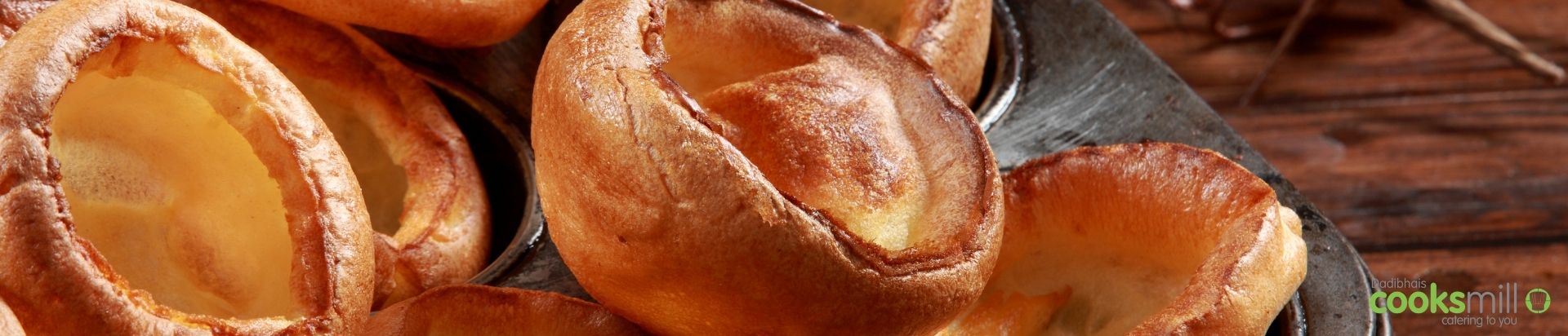
National Yorkshire Pudding Day takes place on the first Sunday of February each year. In the UK, it provides an opportunity for both domestic and professional kitchens to focus on one of the most established components of the traditional roast dinner. While Yorkshire puddings are simple in principle, consistent results rely on correct equipment, controlled heat, and preparation methods that are easy to repeat.
In commercial settings, Yorkshire puddings need to be reliable. Shape, rise and texture must be consistent across all batches, whether serving a small number or operating at volume. This makes the cookware choice as important as the recipe. This guide looks at Yorkshire pudding preparation from a practical perspective, with a focus on bakeware, utensils and kitchen equipment that support repeatable results.
Yorkshire Puddings in Professional and Domestic Kitchens
Yorkshire puddings have long been used as a cost-effective accompaniment to roast meals. Historically cooked beneath roasting meat to make use of dripping fat, they remain a staple across restaurants, carveries and catering environments.
In modern kitchens, expectations are higher. Yorkshire puddings are no longer simply “served”; they are judged. Poor rise, uneven colouring or collapsed structure are immediately noticeable. In most cases, these failures are not recipe-related but equipment-related.
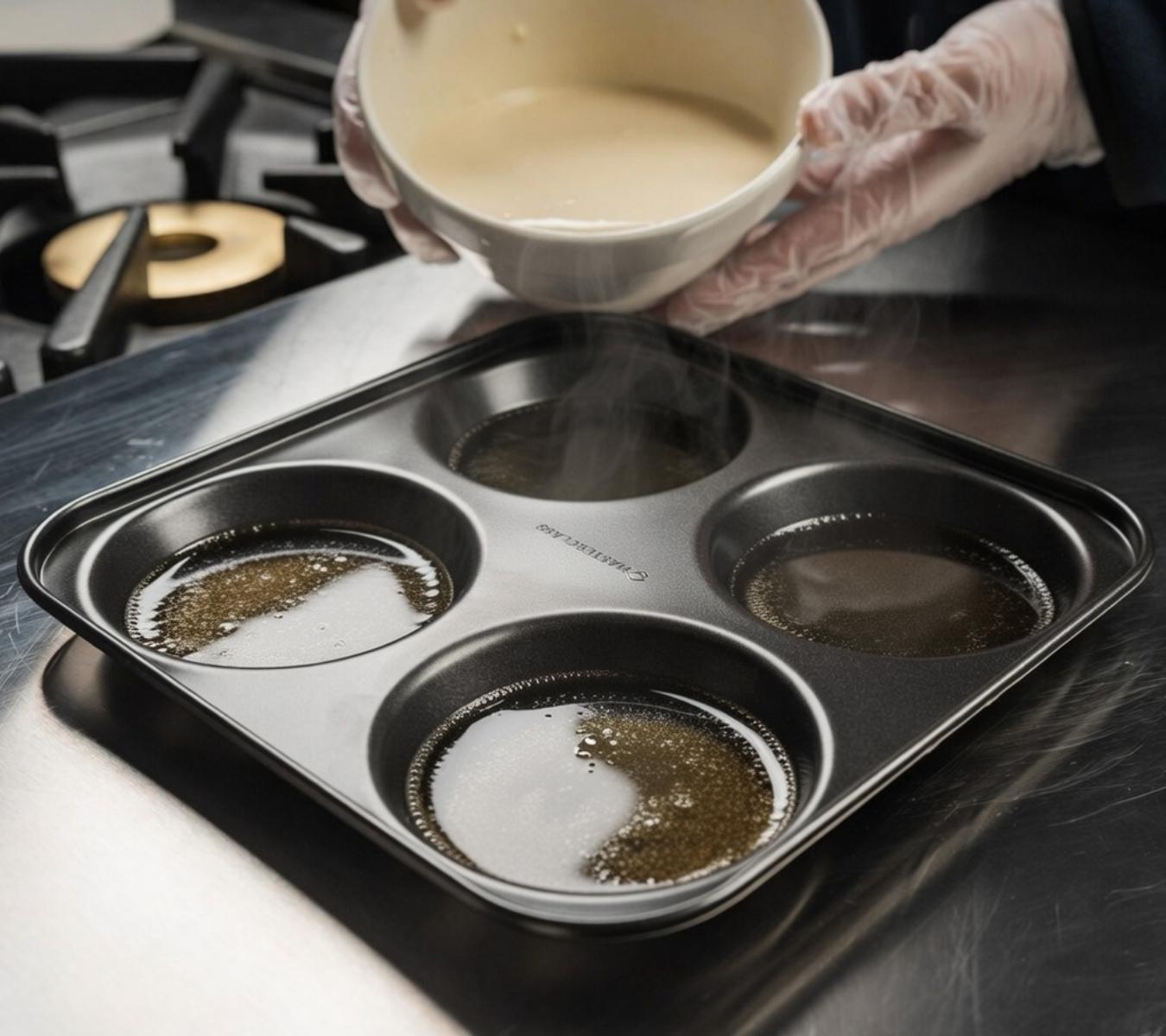
A Yorkshire pudding relies on rapid heat transfer. When batter hits hot fat in a preheated tin, steam forms quickly and forces the batter upwards. If heat is lost at any stage, the reaction weakens, and the pudding fails to rise properly.
The Role of the Yorkshire Pudding Tin
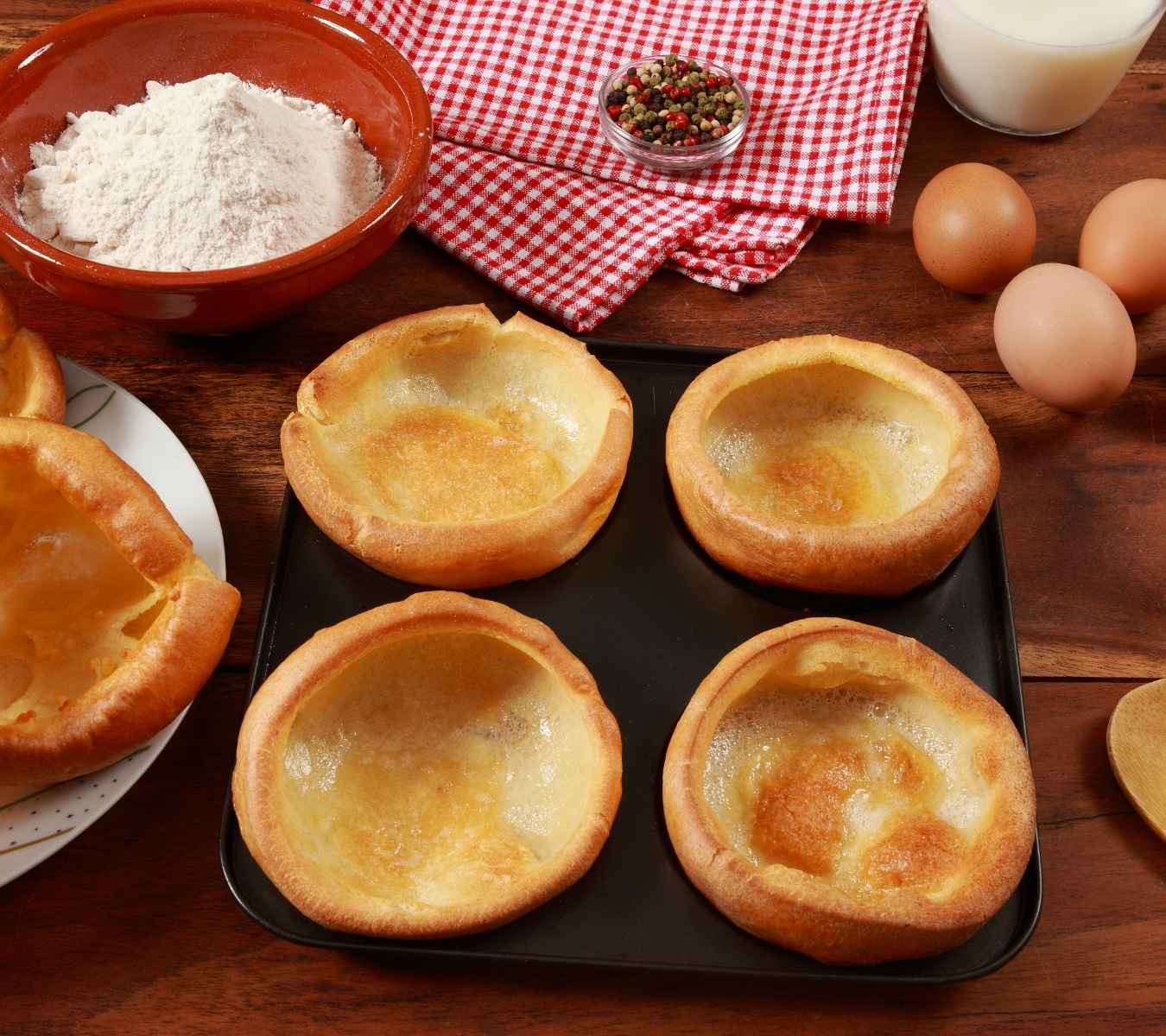
The tin is the single most important piece of equipment when making Yorkshire puddings. Thin or low-quality tins lose heat too quickly, especially when batter is added, which prevents the batter from reacting as intended.
A suitable Yorkshire pudding tin should:
- Retain heat effectively
- Distribute heat evenly
- Tolerate high oven temperatures
- Release puddings cleanly
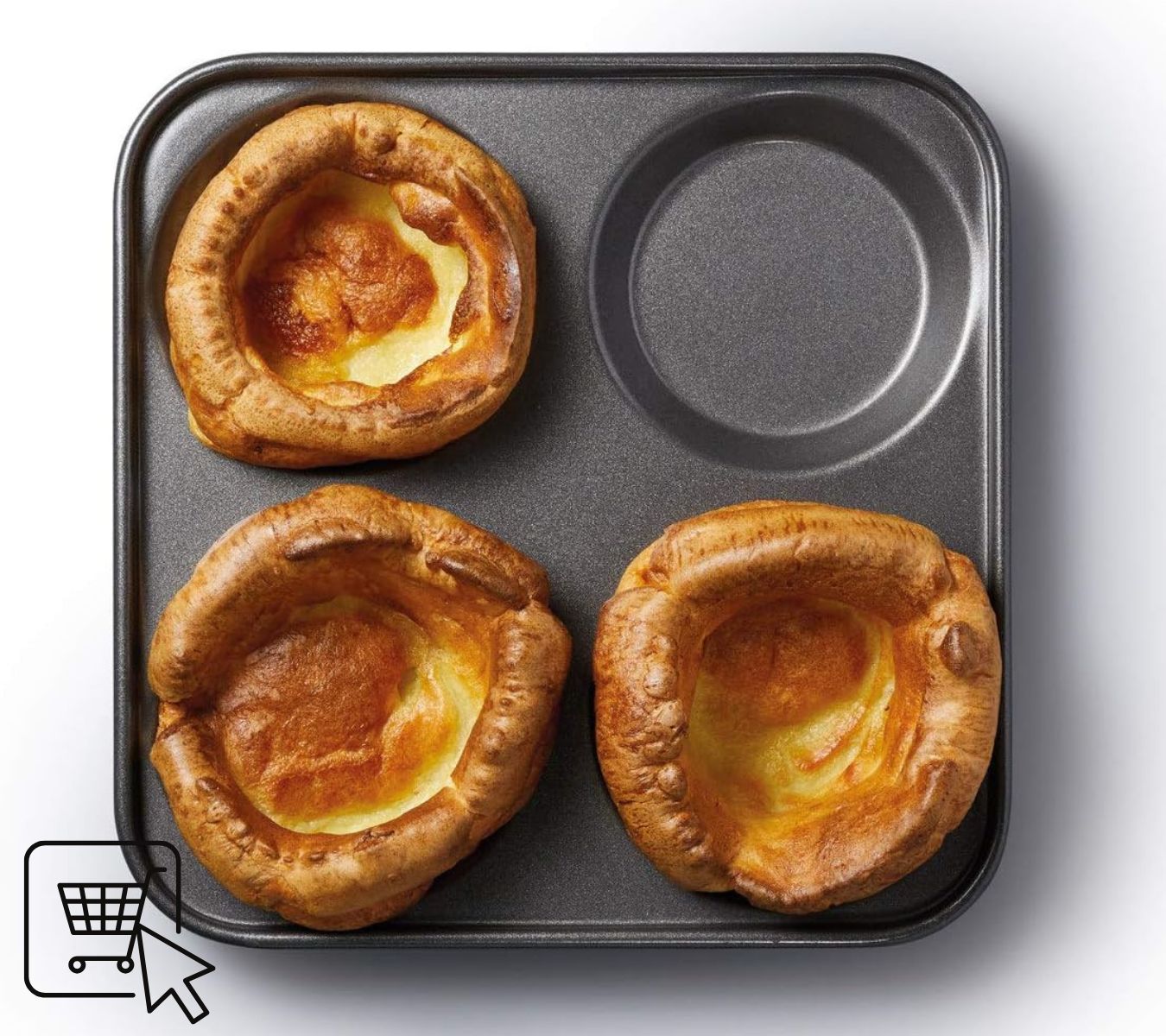
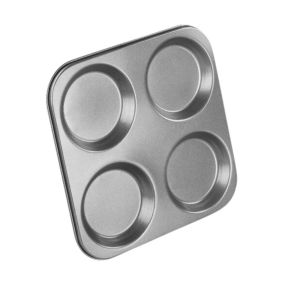
The MasterClass Non-Stick 4 Hole Yorkshire Pudding Pan (24cm) is designed specifically for this purpose. Its heavier construction helps maintain temperature when removed from the oven to add batter, while the non-stick coating supports clean release and consistent shape. This is particularly important where presentation matters. Perfect for everyday use, it offers a practical option that heats evenly and is easy to maintain. It is suitable for both domestic kitchens and lower-volume catering environments.
A Reliable Yorkshire Pudding Recipe
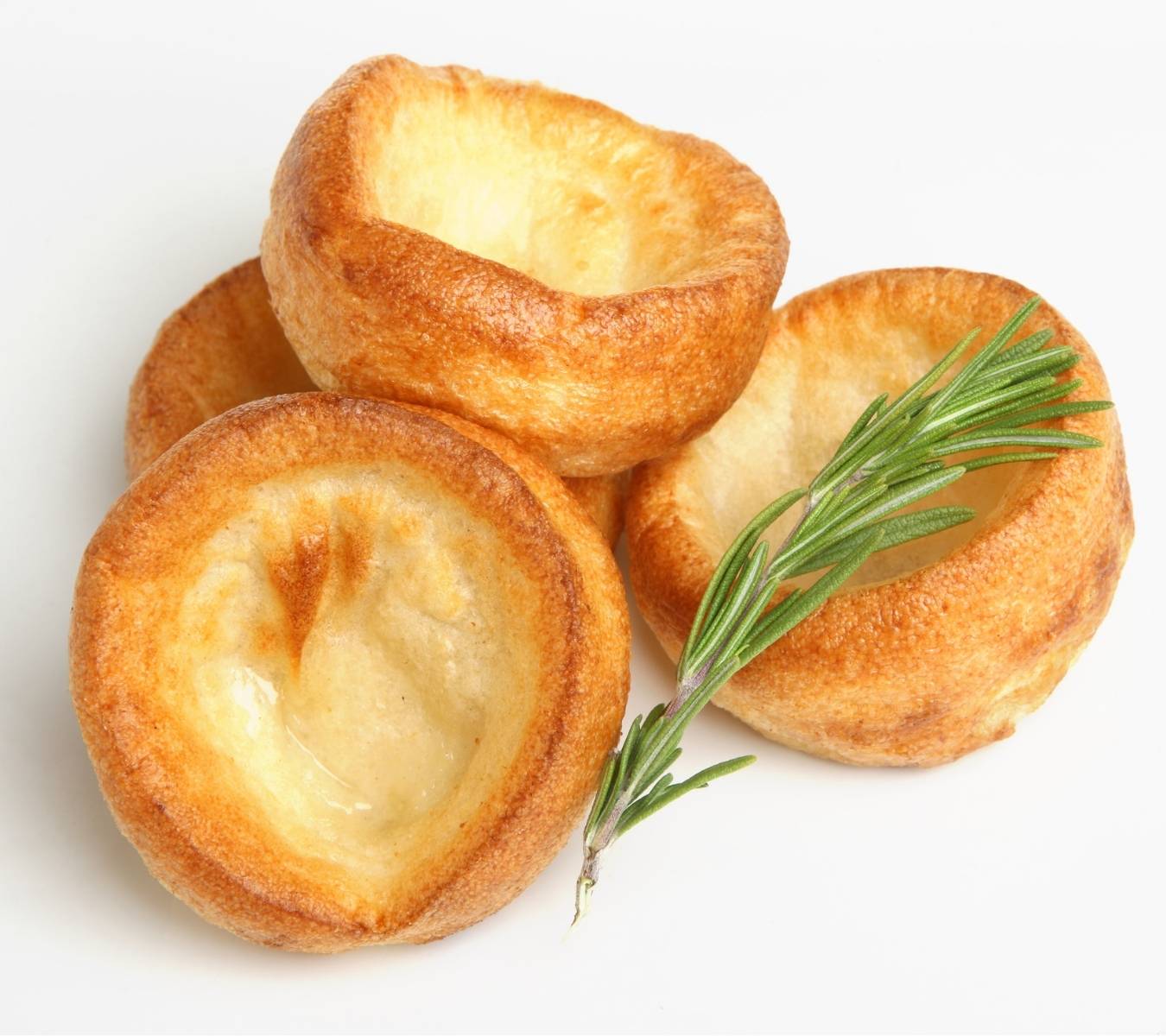
This recipe is designed to be consistent. It works in domestic ovens and scales easily for professional kitchens. This follows a simple principle: equal weight flour to liquid, with eggs providing structure.
Ingredients (makes 8 standard Yorkshire puddings)
- 100g plain flour
- 2 medium eggs
- 100ml semi-skimmed milk
- Pinch of salt
- Beef dripping or vegetable oil (for the tin)
Method
- Prepare the batter
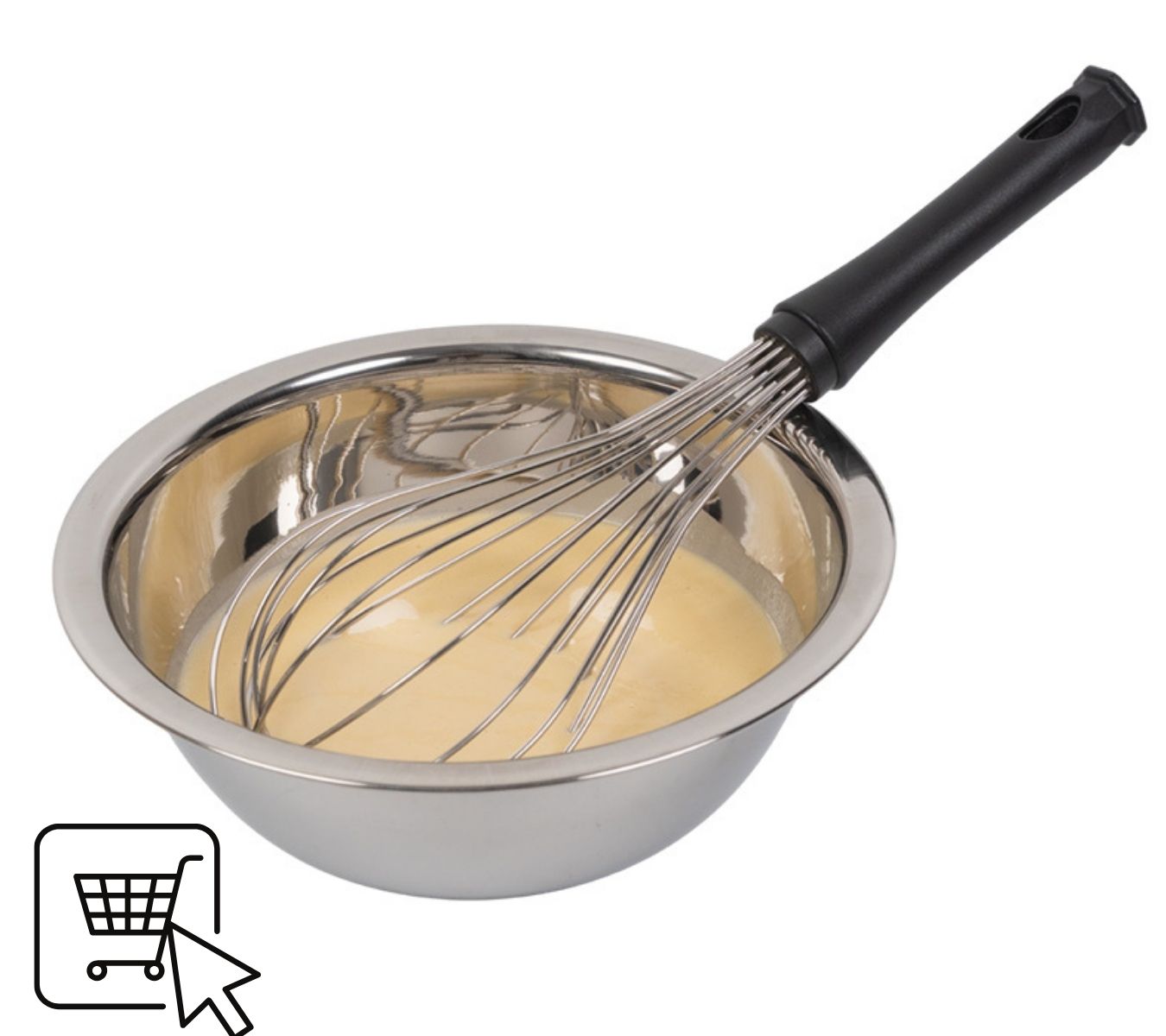
Place the flour and salt into a stainless steel mixing bowl. Make a well and add the eggs. Gradually whisk in the milk using a stainless steel balloon whisk until smooth. The batter should be pourable, similar to single cream. - Rest the batter
Cover and rest for at least 30 minutes at room temperature. In professional kitchens, resting for up to several hours is common. Resting allows the flour to hydrate fully and improves structure during baking. - Preheat the oven and the tin
Heat the oven to 220°C (fan 200°C). Place the Yorkshire pudding tin into the oven with a small amount of fat in each well. Heat until the fat is visibly hot. - Add batter carefully
Remove the tin from the oven and immediately pour batter into each well, filling them around halfway. Return the tin to the oven without delay. - Bake without disturbance
Bake for 20–25 minutes until the puddings are well risen, golden brown and crisp. Do not open the oven during cooking, as this can cause your Yorkshire puddings to collapse. - Serve immediately
Yorkshire puddings are best served straight from the oven. If holding briefly, keep them in a warm, dry environment to maintain crispness.
Yorkshire Pudding Cheat
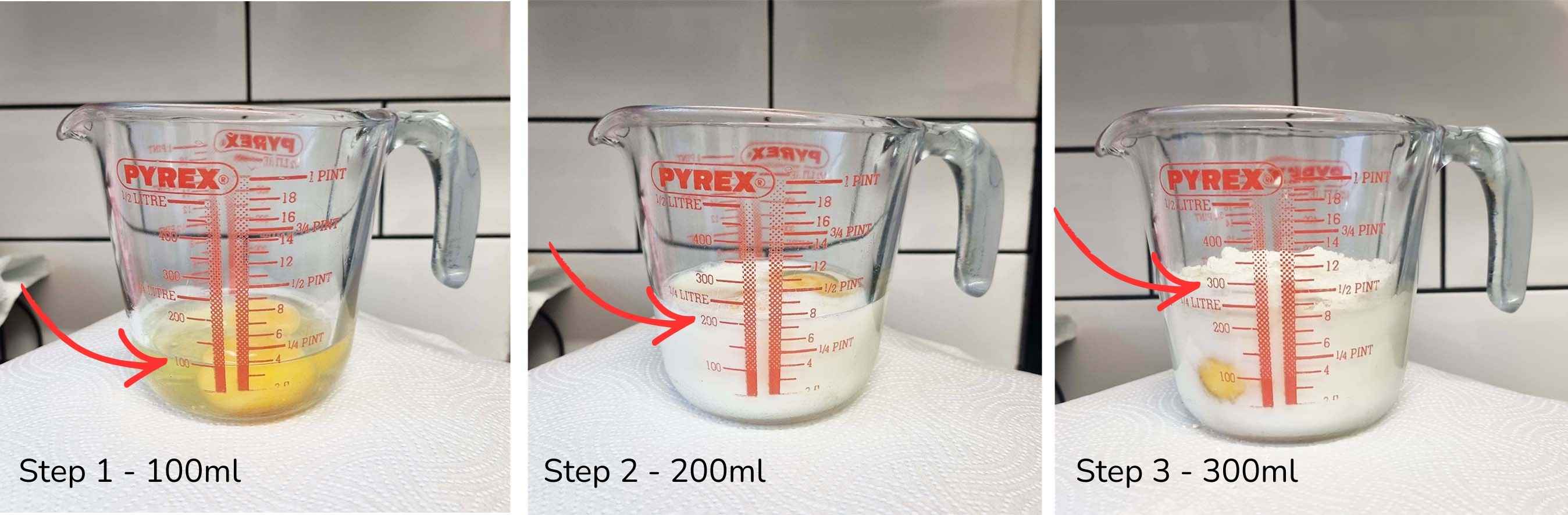
For a quick, foolproof batch at home, use the equal volume method.
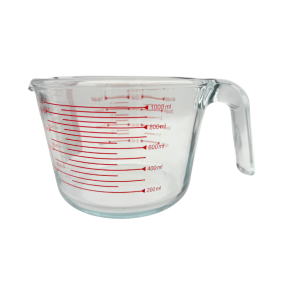
- Crack two eggs into a measuring jug and note the level
- Add an equal volume of milk
- Top it up with the same volume of plain flour
- Mix thoroughly and store in the fridge until you are ready to bake.
Common Yorkshire Pudding Mistakes
Achieving the perfect rise is all about temperature and chemistry. Here are the most common reasons why they fail:
- Using Self-Raising Flour: This creates a weak, cake-like texture that lacks the strength to hold its shape. Always use plain flour so the eggs can provide the necessary structure.
- Oven Temperature Too Low: If the oven is below 220°C, the batter won't produce steam quickly enough to lift. This results in puddings that stay flat and heavy.
- Fat Not Hot Enough: The oil must be shimmering and slightly smoking before you add the batter. If the fat is too cool, the puddings will be stodgy, dense.
- Using Warm Batter: Batter should be chilled or at room temperature. Adding warm batter to the tin reduces the "thermal shock" needed for a rapid rise, often leading to a poor, uneven shape, and will likely stick to the tin.
Batter Preparation: Consistency Over Variation
Yorkshire pudding batter does not benefit from unnecessary variation. Consistency is more important than adjusting ratios for individual preferences, particularly in commercial kitchens.
Stainless steel bowls are ideal for batter preparation as they are cool quickly, are hygienic, durable and easy to clean. Using the same bowl sizes and whisk types helps maintain repeatable results across batches.
Avoid overmixing, which can introduce excess air and weaken the structure. A smooth, rested batter performs more reliably than one mixed aggressively at the last minute.
Fat Choice and Temperature Control
Traditionally, beef dripping was used for Yorkshire puddings and remains popular for flavour and performance. Vegetable oil is also widely used, particularly where dietary requirements apply.
The key requirement is a high smoke point. Fat must be heated until very hot before the batter is added. Insufficient heat at this stage is one of the most common causes of flat Yorkshire puddings. This is why tins and trays used must tolerate high temperatures without warping or degrading.
Avoid using olive oil, as its low smoke point means it will burn and turn bitter at the high temperatures required for a successful rise. For the best results, stick to fats like beef dripping or vegetable oil that can safely reach 220°C without smoking.
Oven Management and Baking Conditions
Yorkshire puddings require a consistently hot oven. Temperatures below 200°C are unlikely to produce reliable results. In commercial kitchens, ovens are often set higher to compensate for heat loss during loading.
Avoid opening the oven door during baking. Loss of heat and airflow disruption can cause puddings to collapse before setting. Spacing tins evenly within the oven is also essential, as overcrowding restricts airflow and leads to uneven rise and colouring.
Producing Yorkshire Puddings at Scale
In catering and hospitality environments, Yorkshire puddings are often produced in large quantities. This requires durable tins, controlled batch sizes and appropriate holding equipment.
Once baked, Yorkshire puddings can be held briefly in a warm oven or reheated before service. Using aluminium baking trays or stainless steel gastronorm pans allows puddings to be stored without trapping steam, which helps preserve crispness.
Can You Make Yorkshire Puddings the Day Before and Reheat Them?
Yes, Yorkshire puddings can be made the day before and reheated successfully, provided they are cooked fully, stored correctly, and reheated using dry heat. This approach is common in catering and hospitality environments where service volume requires advance preparation.
The key is to ensure the puddings are fully baked and structurally set during the initial cook. Underbaked Yorkshire puddings will collapse when stored and soften excessively during reheating.
How to make Yorkshire puddings in advance
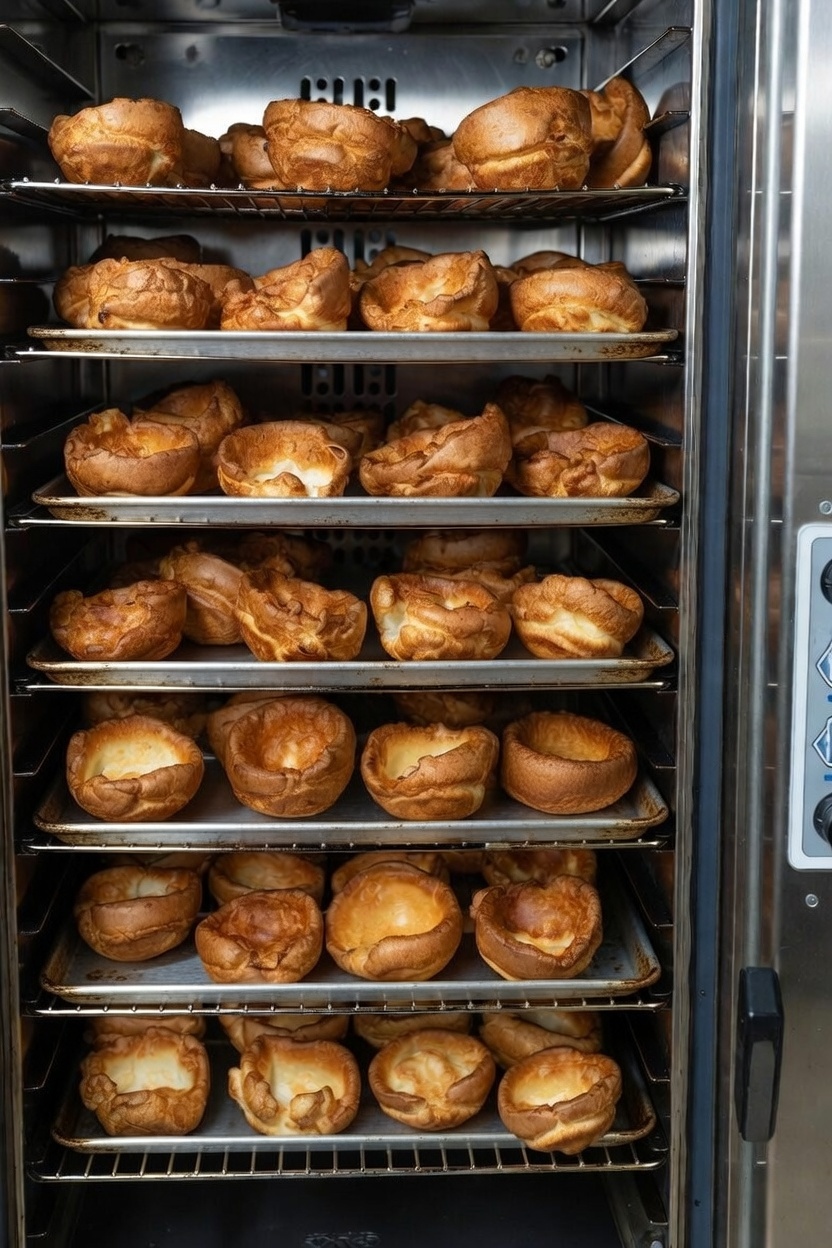
Yorkshire puddings intended for reheating should be baked until they are well risen, evenly browned and crisp on the outside. Once cooked, they should be removed from the tin promptly to prevent steam from softening the base.
Allow the puddings to cool completely at room temperature. Once cooled, store them in a breathable container or loosely covered tray. Avoid sealing them in airtight containers while still warm, as trapped moisture will affect texture.
How to reheat Yorkshire puddings
Yorkshire puddings should be reheated in a hot oven rather than a microwave. Microwaving introduces moisture and softens the structure, resulting in a rubbery texture.
To reheat:
- Preheat the oven to 200–220°C
- Place the Yorkshire puddings on a baking tray in a single layer
- Heat for 5–8 minutes until hot and crisp
Reheated Yorkshire puddings should regain much of their original texture if the initial bake was sufficient and moisture has been avoided during storage.
When reheating is not recommended
Yorkshire puddings that were pale, soft or underbaked initially do not reheat well. Similarly, puddings stored in sealed containers or refrigerated in humid conditions are more likely to become dense or chewy.
For best results, advance preparation should be limited to 24 hours, particularly where quality and presentation are important.
Cleaning, Care and Longevity of Bakeware
To ensure your Yorkshire puddings rise consistently and release easily, proper care of your bakeware is essential:
- Non-Stick Tins: Always use non-abrasive sponges and wooden or silicone tools, as harsh scrubbing can damage the coating, leading to puddings that stick and tear.
- Stainless Steel: Clean these promptly after use. Removing residue immediately prevents stubborn buildup that can affect heat distribution.
- Quality Control: In high-volume kitchens, inspect tins regularly. Replace any bakeware that is warped or has a compromised surface, as these defects will result in uneven cooking and a poor rise on your Yorkshire puddings.
Yorkshire Puddings Beyond the Roast
Yorkshire puddings are increasingly used beyond traditional roast dinners. Mini versions are popular for starters and appetisers, while larger puddings are used as bases for filled dishes.
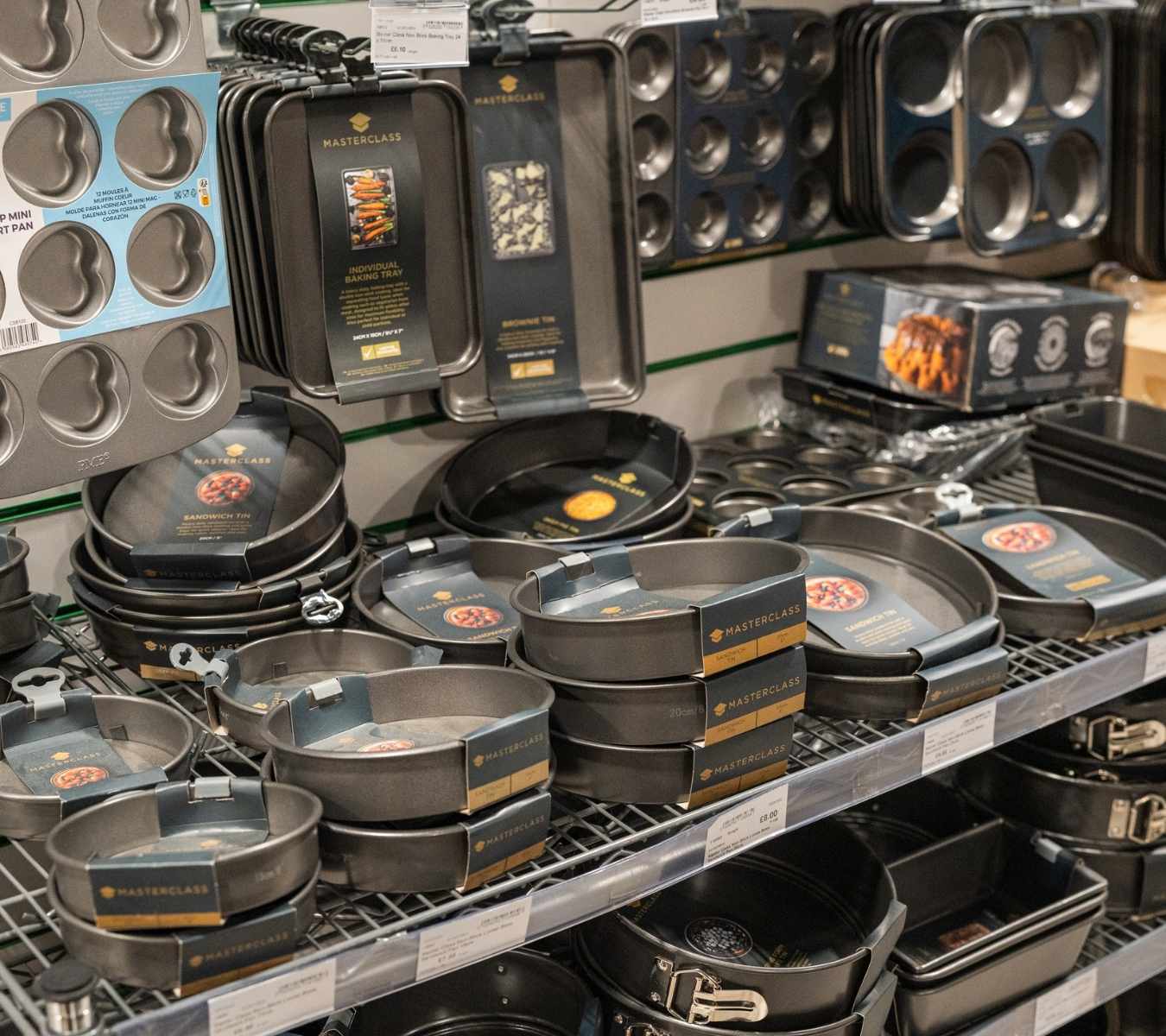
Using purpose-built tins allows kitchens to adapt portion sizes while maintaining structure and consistency.
Preparing for National Yorkshire Pudding Day with Cooksmill
National Yorkshire Pudding Day provides a practical checkpoint for kitchens that regularly serve roasts. It is an opportunity to review equipment, confirm preparation methods and ensure bakeware is fit for purpose.
For domestic kitchens, it highlights the value of using cookware designed specifically for Yorkshire puddings rather than general-purpose trays.
Whether you need Yorkshire pudding essentials for your home or commercial kitchen, Cooksmill offers everything you need to make the best Yorkshire puddings to accompany your roasts this National Yorkshire Pudding Day.