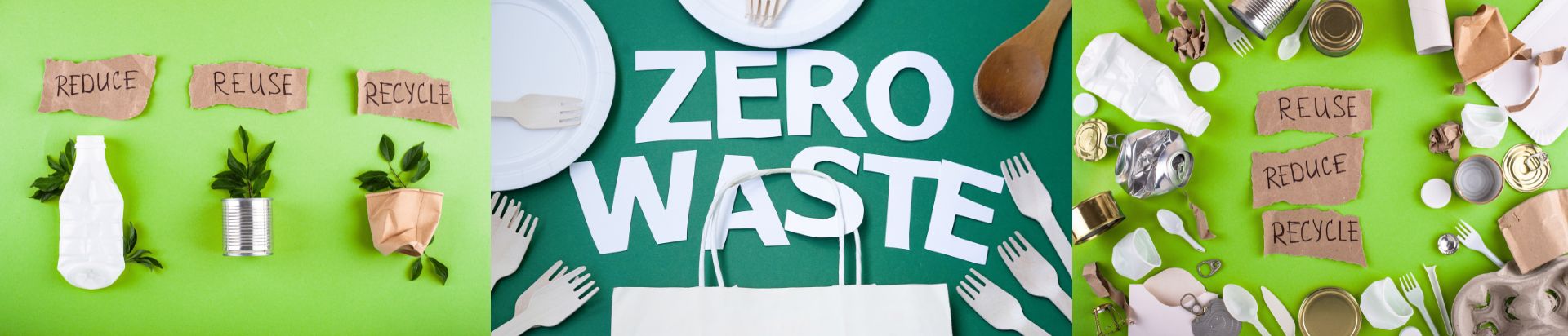
Every September, Zero Waste Week serves as a global reminder that the way we produce, consume, and dispose of goods needs urgent rethinking. What began as a grassroots campaign has grown into an international movement encouraging households, businesses, and entire communities to cut down on waste.
For hospitality businesses, caterers, and even home cooks, Zero Waste Week is more than a calendar event. It’s an opportunity to reflect on the food, packaging, and energy we consume every day and to ask a simple question: how much of this could be avoided?
Cooksmill has always been about helping kitchens run smarter. Whether that’s through robust storage solutions, clever portion control tools, or systems that make food handling safer and more efficient, we supply the products that allow chefs and operators to reduce waste without sacrificing quality. Zero Waste Week is the perfect time to explore how those small, everyday decisions in the kitchen add up to lasting change.
Understanding Zero Waste
Zero waste is fundamentally about rethinking our relationship with resources. In the food industry, this is even more critical than in other sectors, as the guiding principles of reduce, reuse, and recycle are still key.
According to WRAP, around 30% of all greenhouse gas emissions come from the food and drink industry. That means every uneaten plate of food, every spoiled tray of ingredients, and every mislabelled container doesn’t just dent profit margins, it contributes directly to climate change.
The UK hospitality and food service sector alone is responsible for an estimated one million tonnes of food waste every year. Research from NCCO highlights that roughly three-quarters of this could be avoided. The culprits are depressingly familiar: mislabelled food, missed fridge checks, poor stock rotation, and over-prepping. All are simple errors that can be prevented with smarter systems and the right tools.
For businesses, zero waste isn’t just about ethics. It’s about efficiency. Reducing waste means reducing costs, tightening operations, and improving brand reputation. Customers are more conscious than ever about sustainability, and a commitment to zero waste can be a competitive advantage.
Even at home, the principles of zero waste apply. Efficient meal prep, sensible portioning, and careful storage save money, reduce time spent shopping, and cut down on food being thrown in the bin.
Implementing a Zero-Waste Kitchen
Putting these ideas into practice in a busy commercial kitchen means creating systems that reduce waste at every stage, from delivery to storage to preparation and service.
Planning and Labelling
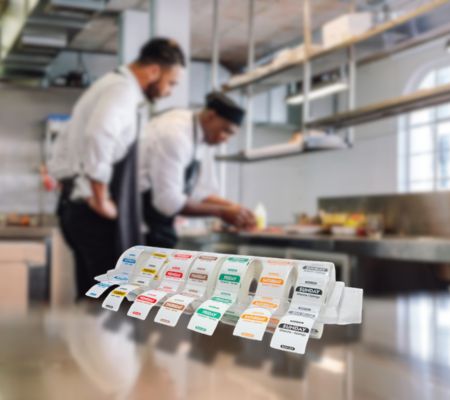
Clear labelling is one of the simplest yet most powerful steps toward zero waste. Mislabelled or unlabelled containers are a major cause of spoilage, particularly in high-volume kitchens. By investing in high-quality kitchen labels, operators can make sure ingredients are dated, identified, and rotated properly.
Cooksmill stocks a wide range of food labels suitable for both day-to-day kitchen use and specific storage systems. Whether it’s removable labels for containers, label guns, or colour-coded day dots, these small items make a big difference in avoiding unnecessary waste.
The impact of labelling also plays a crucial role in managing inventory and streamlining kitchen operations. When every item is clearly marked, staff can quickly see what ingredients are on hand, what needs to be used soon, and what needs to be reordered. This real-time visibility helps prevent over-stocking and reduces the risk of running out of essential ingredients. Ultimately, this system of organisation saves money, reduces food waste, and makes the kitchen more efficient and less stressful.
Maximising Ingredients
Zero waste doesn’t just mean throwing less away; it means getting more out of what you already have. A kitchen that makes full use of its ingredients is more profitable and more sustainable.
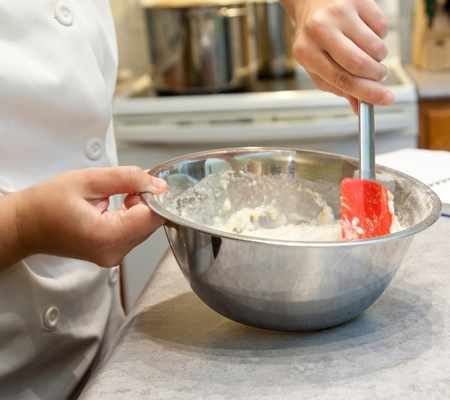
Spoodles, scrapers, and silicone spatulas are everyday heroes here. High-quality silicone spatulas and scrapers ensure every last bit of sauce, batter, or puree makes it from the mixing bowl to the plate, instead of being rinsed down the sink. Spoodles combine the function of a spoon and a ladle, making portion control precise and helping chefs measure consistently without over-prepping.
Cooksmill’s FIFO bottles add another layer of efficiency. Designed for sauces, dressings, and condiments, FIFO (First In, First Out) bottles ensure older stock is used first, preventing waste from expired products. They also reduce mess and help to maximise sauces, ensuring evey drop is used before dispensing a new batch.
By using these tools daily, kitchens can reduce prep waste and control portions accurately, ensuring dishes are served consistently while saving money on ingredients.
Proper Storage
Storage is where most kitchens win or lose the zero-waste battle. Ingredients kept in the wrong conditions spoil faster, leading to unnecessary waste.
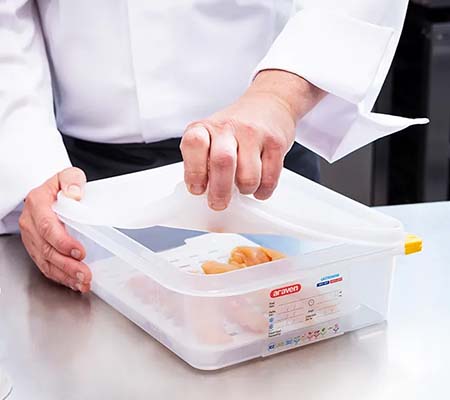
Cooksmill offers several ranges of airtight containers and storage solutions that are ideal for commercial kitchens and home use:
- Araven range – Industry-recognised leaders in airtight food containers, trusted by professionals for their durability, hygiene, and smart design.
- Polycarbonate storage containers – A Cooksmill exclusive range that offers strength and clarity, letting chefs quickly see what’s inside without opening.
The choice of material also matters. Stainless steel containers are excellent for long-term durability and easy cleaning, while plastic containers provide lightweight, transparent storage that makes fridge organisation simple.
Different foods demand different storage approaches. For example:
- For storing and preserving prepared food and sauces, Araven containers are a great option. Their secure seals lock in freshness, making them ideal for high-volume items that need to be prepped in advance, like marinades, stocks, or large batches of soup.
- Chopped vegetables for salads, pre-portioned meat, or delicate herbs store well in Cooksmill’s polycarbonate containers. With their exceptional clarity, these containers are great for storing ingredients that need to be easily identified at a glance. The transparent material allows you to monitor inventory levels without opening the lid, which helps streamline kitchen operations.
- Dry goods like flour, rice, or grains store perfectly in stainless steel containers. Known for their durability and ease of cleaning, stainless steel containers are a reliable choice for long-term storage of dry items. Their non-porous surface won't absorb odours or flavours, ensuring the integrity of your ingredients over time.
When these systems are in place, kitchens see less food wasted, fewer cross-contamination risks, and smoother service during busy hours.
Portion Control
Over-portioning is one of the leading causes of food waste in hospitality. Customers rarely eat oversized portions, and uneaten food can’t always be eaten again as leftovers. Tools like scoops and measuring jugs play a critical role when it comes to standardising portion sizes. They ensure consistency across service while preventing unnecessary waste.
Cooksmill’s range of measuring jugs, available in 3L and 5L capacities, is designed for both accuracy and durability, making them essential in prep areas. These tools ensure consistency across service while preventing unnecessary waste.
The same applies to scoops, which are essential for dry ingredients like flour, sugar, or grains. Having dedicated scoops for each container reduces contamination and ensures accurate measurements every time. Whether you're looking for aluminium or plastic scoops, we’ve got a wide range to choose from.

Beyond the Kitchen
While kitchens are at the heart of the conversation, Zero Waste Week challenges us to think bigger. Can we realistically live in a zero-waste society? The honest answer is that it’s a journey rather than an end state. Absolute zero waste may be impossible, but the steps we take collectively can dramatically cut down what ends up in landfills.
For businesses, this extends beyond food. Reducing packaging waste, implementing recycling systems, and investing in durable equipment and tools rather than disposable items all contribute to the bigger picture.
At home, the same principles apply. Batch cooking and meal prep, for instance, are effective strategies for families trying to save money and cut down on waste. Cooking larger quantities, portioning them into airtight containers, and freezing meals for later not only reduces food waste but also saves time on busy weekdays.
The broader message of Zero Waste Week is that these small, collective actions matter. Every labelled container, every measured scoop, every recycled package adds up to a significant shift in how we use resources.
Cooksmill’s Role in the Zero Waste Journey
Zero Waste Week is about reflection and action. For years, Cooksmill has supported chefs, caterers, and hospitality operators by providing the tools they need to run efficient, sustainable kitchens.
Our wide product range allows kitchens to build zero-waste practices from the ground up:
- Labels to improve stock rotation and cut down on spoilage.
- Scrapers, spatulas, spoodles and FIFO bottles to maximise ingredients.
- Araven and polycarbonate containers to keep food fresher for longer.
- Scoops and measuring jugs for precision and to standardise portions.
By adopting these everyday tools, kitchens not only reduce their environmental footprint but also enjoy tangible financial and operational benefits. Waste costs money, both in lost ingredients and in disposal. Smarter systems mean savings on both ends.
Shop Zero Waste Essentials with Cooksmill
Zero Waste Week is a call to action, but it doesn’t end after seven days. Building a truly zero-waste kitchen and moving toward a zero-waste society requires lasting change. For hospitality businesses, it’s about efficiency, reputation, and responsibility. For households, it’s about saving money and building better habits.
Cooksmill’s role is to make these changes practical. From airtight containers to scrapers, from measuring jugs to labels, we provide the tools kitchens need to waste less, save more, and operate sustainably.
Zero waste may be a journey rather than a destination, but with the right systems in place, it’s a journey every kitchen can start today.