The Ultimate Restaurant Cutlery Buying Guide: How to Choose, Compare & Care for Professional Cutlery
Cutlery is one of the most underestimated decisions in restaurant design and operations. It’s rarely discussed in depth, yet it plays a quiet yet critical role in how food is experienced, how staff operate, and how often operators find themselves reordering stock. Guests may not comment on a fork or knife, but they feel it in the weight, the balance, and the ease with which they eat.
For restaurants, cafes, and hotels, cutlery also represents a long-term investment. It must survive constant handling, aggressive commercial dishwashers, exposure to salt and acids, and inevitable loss. Choosing well isn’t about buying the most expensive range. It’s about choosing cutlery that performs consistently, looks right for your concept, and costs less over its lifetime. This guide shows you how to choose restaurant cutlery that reflects quality in every serving.
Why cutlery matters in restaurants
Cutlery influences perception long before a guest consciously notices it. A well-balanced knife makes cutting food easier. A heavier fork signals quality. A flimsy spoon does the opposite. These signals affect how guests judge value, even when the food itself is strong.
Cutlery decisions directly impact replacement costs and service efficiency. Lighter items disappear more often. Softer metals show wear sooner. Poor dishwasher resistance leads to pitting, staining, and early disposal.
The key ways cutlery affects restaurants include:
- Guest comfort and perceived quality
- Consistency of table presentation
- Frequency of replacement and reordering
- Long-term cost per cover
When viewed this way, cutlery stops being a small purchase and becomes a strategic one.

Understanding cutlery materials for commercial use
Most buying decisions focus on stainless steel grades, but material choice goes beyond simple labels.
18/10 stainless steel is known for its bright finish and strong resistance to corrosion. The nickel content gives it a smoother feel and helps maintain a polished appearance over time. This makes it a popular choice for fine dining and premium casual restaurants where presentation and quality matter.
18/0 stainless steel removes nickel from the equation. The result is a tougher, more rigid cutlery that is often better suited to high-volume service. While it doesn’t achieve the same shine as 18/10, it tends to withstand heavy use and frequent washing more reliably.
Another overlooked factor is steel hardness and construction. Harder alloys resist bending and edge wear, particularly important for knives. Softer steels polish well but may show wear faster.
18/0 vs 18/10 Stainless Steel Cutlery
Here’s a quick comparison of 18/0 vs 18/10 stainless steel cutlery to help you decide which option is best for your restaurant:
Feature |
18/0 Stainless Steel |
18/10 Stainless Steel |
| Nickel Content | None | 8-10% nickel |
| Appearance |
Slightly duller, matte over time |
Brighter, more polished finish |
| Corrosion Resistance | Good | Excellent |
| Hardness & Rigidity | Higher rigidity, less flex | Excellent |
| Weight Feel | Often feels lighter unless thicker guage | Feels heavier and smoother |
| Dishwasher Performance | Very good in high volume washing | Excellent, but requires proper detergents |
| Maintenance Requirements | Low | Moderate (polish shows wear sooner) |
| Typical Lifespan | Long in fast-paced environments | Long in guest-facing environments |
| Best For | Cafes, fast casual, banqueting, high turnover | Fine dining, premium casual restaurants |
| Cost | Lower upfront cost | Higher upfront cost |
| Guest Perfection | Functional, practical | Premium, refined |
Choosing cutlery by restaurant type
Different service styles demand different priorities. Fine dining restaurants benefit from cutlery that feels intentional and refined, such as our Balmoral or Oasis 18/10 cutlery. Guests expect weight, balance, and subtle design. Forged 18/10 cutlery with slim profiles supports this expectation and aligns with carefully plated dishes.
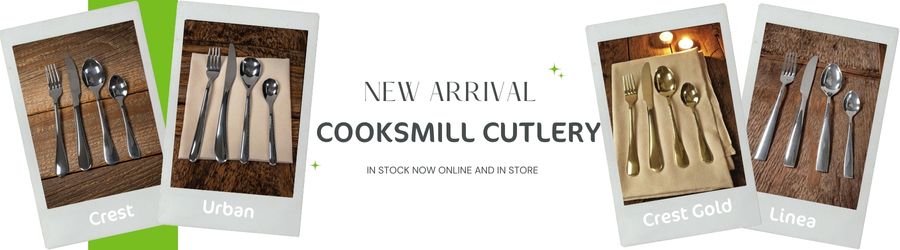
Casual dining and bistros sit in the middle ground. Durability and comfort matter as much as aesthetics. Many operators successfully combine 18/10 with tougher 18/0, such as Crest or Urban 18/0 cutlery, for high-loss items like teaspoons.
Cafes and fast casual venues prioritise resilience. 18/0 cutlery with simple shapes keeps costs under control and survives rapid turnover without looking out of place. Our wide range of Parish Pattern 18/0 Cutlery is perfect for these types of restaurants.
Hotels and banqueting operations need consistency and longevity. Cutlery must tolerate constant dishwashing and remain available in the same pattern for years to avoid mismatched sets.

How to Choose Professional Restaurant Cutlery
Step-by-step process for selecting commercial cutlery.
Step 1: Identify your service style
Determine whether you operate fine dining, casual dining, fast casual, cafe, hotel or banqueting service.
Step 2: Select the appropriate steel grade
Choose between 18/10 stainless steel for premium presentation or 18/0 stainless steel for durability and high-volume use.
Step 3: Assess durability and weight
Evaluate gauge thickness, balance and ergonomics to ensure long-term performance.
Step 4: Match your table presentation
Choose a style and finish that complements your crockery, glassware and restaurant concept.
Step 5: Plan for maintenance
Implement proper washing, drying and storage procedures to maximise lifespan.
Key buying criteria for professional cutlery
When assessing any cutlery range, these factors matter more than brand or appearance alone:
- Durability & gauge thickness: Look for a substantial gauge that won't bend under pressure or warp over time. A thicker build usually indicates a higher-quality.
- Balance & ergonomics: The best pieces feel weighted toward the base, providing a comfortable counterweight when held.
- Dishwasher performance and corrosion resistance: High-quality materials should withstand the harsh chemicals and high heat of a dishwasher without spotting or pitting.
- Budget per seat metric: Rather than looking at the total cost, break the price down by "per setting" to see the true value of your investment. This allows you to compare premium sets with budget options more easily.
- Matching with dinnerware and table theme: Your glassware and cutlery should complement the weight and visual "heft" of your plates. A thin, delicate glass can look out of place next to heavy stoneware.
If a range performs poorly in any one of these areas, it usually costs more over time.
Style and presentation: subtle but influential
Cutlery frames the plate. Even simple designs influence how food is perceived. Overly decorative patterns date quickly, while clean, timeless shapes age more gracefully in busy restaurants.
Current commercial trends favour:
- Satin and brushed finishes that hide fingerprints and scratches
- Slightly heavier handles for perceived quality
- Minimalist designs that complement modern menus
The best choice is rarely the most fashionable. It’s the one that still looks right after three years of service.

Cutlery Care and Maintenance in High-Volume Kitchens
Even the best cutlery fails early if it’s poorly maintained. Most damage doesn't happen during service, but in the wash cycle, where heat and chemicals do the most work.
Best practices include:
- Loading cutlery handles down to prevent nesting. Avoid 'nesting,' where spoons and forks stack together and block the wash. Loading them handle-down keeps the heads separated, ensuring the water and detergent can actually reach and sanitise the dirty surfaces.
- Avoiding chlorine-heavy detergents. Harsh chemicals like chlorine can strip the protective layer from stainless steel, leading to permanent pitting and rust. Opt for pH-neutral detergents.
- Rinse salt and acidic residues promptly. Leftover sauces, vinegar, and salt are surprisingly corrosive if left to sit for hours. A quick pre-rinse before the main wash prevents these acids from "eating" into the surface and causing dull spots.
- Drying immediately after washing. High-volume dishwashers often leave pieces damp, which leads to water spots and "flash rusting." Hand-drying or using a dedicated cutlery polisher ensures moisture doesn't linger in the crevices of the design.

Storage and Finishing
Proper storage is just as important as the wash cycle for preserving the life of your collection. Even high-quality metals can be damaged by poor handling and organisation.
- Separate different metals: Never soak silver-plate and stainless steel in the same tub. This causes electrolysis, a chemical reaction that can permanently discolour your cutlery.
- Avoid overcrowding: Filling trays too full leads to metal-on-metal friction. This causes unnecessary scratches and wear whenever the trays are moved or transported.
- Polish with care: Limit polishing to guest-facing sets to reduce wear and tear. Always use soft microfiber cloths to avoid stripping the protective surface layer or creating tiny scratches that trap dirt.
Sustainability and responsible cutlery choices
Sustainability in the hospitality industry is less about the material itself and more about the total lifespan of the product. While "eco-friendly" disposables are popular, high-quality, long-lasting metal cutlery almost always outperforms disposables in both long-term cost and total environmental footprint.
Key considerations include:
- Recycled stainless steel content: Look for manufacturers that prioritise high-percentage recycled content. Stainless steel is infinitely recyclable, meaning a high-quality fork can be melted down and reborn as a new tool without any loss in performance or purity.
- Reduced replacement cycles: The most sustainable product is the one you don't have to replace. Choosing a higher gauge and corrosion-resistant finish prevents the "throwaway culture" of replacing bent or rusted sets every twelve months, significantly reducing waste.
- Longer product continuity: Partnering with brands that guarantee long-term availability for specific patterns reduces the need to scrap an entire set just because a few pieces have gone missing. Maintaining a consistent, smaller inventory of versatile pieces is both efficient and eco-conscious.

For any dine-in environment, investing in durability is the most sustainable path. By choosing pieces built for a decade of service rather than a single season, you minimise the manufacturing and shipping cycles required to restock lower-quality goods.
Frequently asked questions about restaurant cutlery
What cutlery material is best for restaurants?
The best cutlery for restaurants depends on the service style. High-volume venues benefit from 18/0, while premium dining favours 18/10. 18/0 is a more budget-friendly, harder steel that stands up well to heavy-duty use, whereas 18/10 contains nickel for a softer, more mirror-like finish that stays bright under dining room lights.
Is 18/10 cutlery worth the extra cost?
Yes, where presentation and guest perception are part of the brand experience. The higher nickel content provides a significant boost in corrosion resistance and a heavier "feel" in the hand, which guests instinctively associate with a high-end establishment.
How long should restaurant cutlery last?
Typically three to five years in busy service, longer with good care. While the metal itself doesn't "expire," the effect of thousands of industrial wash cycles and constant handling will eventually lead to surface scratches that require a full set refresh to maintain standards.
How can I prevent rust and pitting?
Use appropriate detergents, avoid chlorine, and dry thoroughly after washing. Pitting is often caused by leaving salty or acidic food residue on the metal for too long, so implementing a fast pre-rinse routine is the most effective way to protect your inventory.
Choosing cutlery that actually works
The best restaurant cutlery isn’t an emotional purchase; it’s a deliberate business decision. It needs to support your concept, survive the chaos of a professional kitchen, and prove its value by outlasting cheaper, lighter alternatives.
When you prioritise the right weight and material in commercial cutlery for restaurants, you improve the guest experience before the food even arrives. High-quality steel from Cooksmill doesn't just look better, it feels better in the hand and stands up to the daily grind of the dishwasher. Ultimately, the goal is to buy better, but buy less often. Choosing durable, well-weighted pieces is the only way to protect your margins and maintain your standards over the long haul.