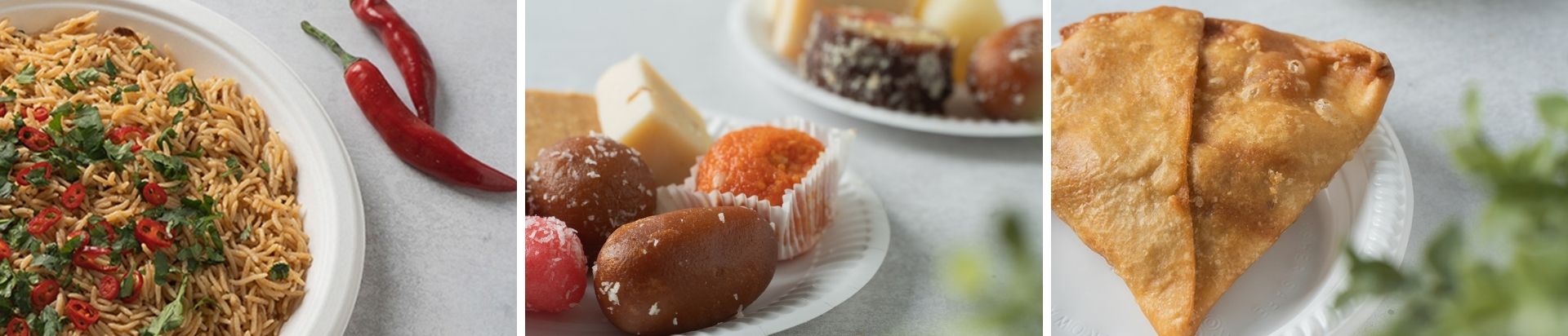
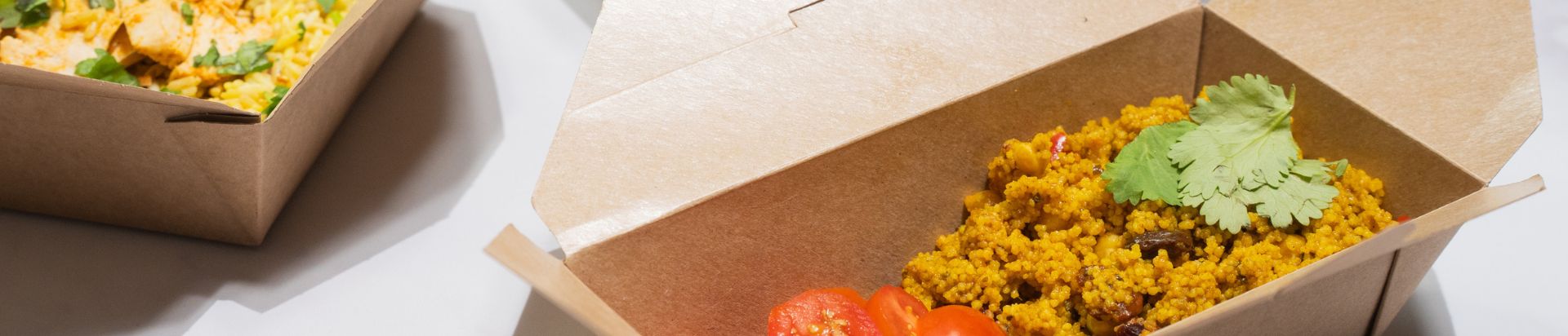
Paper food cartons are one of the most widely used disposables in catering. Walk into any takeaway, cafe, market stall, or street food vendor and you will find them in some form, holding chips, noodles, burgers, deli salads, or even soups. They are inexpensive, practical, and increasingly available in sustainable formats that suit the direction most food businesses are moving in.
But choosing the right food carton is not always as simple as it looks. Size, material, coating, lid compatibility, recyclability, and heat tolerance all vary significantly between products, and getting it wrong means food that leaks, packaging that is not fit for purpose, or money spent on cartons your customers or local waste stream can’t process.
This guide covers the main formats available, what each one is designed for, and answers the questions we hear most often about using cardboard packaging in a commercial kitchen.
Kraft Food Cartons
Kraft board is unbleached, brown paper material that is associated with natural and sustainable packaging. It’s the most common material in the food carton range. It is sturdy, grease-resistant to varying degrees, and available across a wide range of sizes and formats.
Kraft cartons suit most takeaways. They handle hot food well, they travel without losing their structure, and the natural brown finish gives a clean, considered look that customers increasingly associate with quality and sustainability. For kitchens that want to go a step further, there are also biodegradable kraft cartons made from sustainably sourced board and certified to break down in industrial composting conditions.
The right size depends on your portion. Smaller numbered cartons suit chip portions and snacks; larger formats handle full meal portions such as rice and noodles, mixed salads. Cooksmill stocks the full range, including the popular Kraft Food Carton No.4 at 2800ml for generous main course portions, and the Kraft Food Carton No.6a at 739ml for chips and sides.

Chip Trays and Burger Trays
Open-top trays are the format of choice for chips, fries, and handheld food where the customer eats directly from the tray. They are fast to fill during service, easy to handle, and give a clean presentation without the need for a plate.
The Kraft Chip Tray is a staple across fish and chip shops, burger bars, and street food operations. Sold in packs of 125, it is a practical, cost-effective choice for high-volume chip service.
For burger and handheld food, the Kraft Burger Tray 5" holds a burger securely, catches sauce overflow, and works equally well for hot dogs, sandwiches, or any single-item serve that benefits from an open tray rather than a lidded box.

Black Cardboard Cartons
Black cardboard packaging has become a popular choice in street food and premium takeaway. The colour gives a more considered, design-led look. Food colours contrast more strongly against black, which improves the visual presentation at the point of service.
The Black Cardboard Chip Tray and the Black Cardboard Large Meal Tray are direct equivalents of the kraft versions, in a black finish. The large meal tray in particular suits street food concepts where multiple components are served together on a single tray, including protein, fries, and sides, giving a restaurant-quality presentation in a fast-service format.

Greaseproof Food Trays
A standard kraft board handles moderate grease well, but for dishes with a high fat content such as fish and chips, fried chicken, or any other battered food, a greaseproof-lined tray gives more reliable protection. Without a greaseproof lining, heavy oil can soak through the base and sides, weakening the tray and leaving grease on the customer's hands.
The Kraft Greaseproof Food Tray 2lb is the traditional chip shop format. The 5lb version handles larger portions or family-sized serves. Both come in packs of 250, which is the right volume for a busy fried food operation.

Deli Bowls
Round and rectangular deli bowls are one of the most versatile formats in the food carton range. They suit everything from hot noodle soups and curries to cold pasta salads, grain bowls, and grab-and-go deli food. They are the carton of choice for the growing market of food businesses operating without a full sit-down service.
The key practical advantage of a deli bowl over a flat tray is depth. Liquid-based dishes, chunky soups, and food with a sauce base all need a container with enough height to keep the contents from spilling. The round format is also more comfortable to hold and eat from directly, which matters for street food and takeaway where the customer is eating on the move.
Cooksmill stocks the Round Kraft Deli Bowl in sizes from 500ml to 1300ml, and the Round White Deli Bowl in 500ml and 750ml for operations that prefer a white finish. A Rectangular Kraft Bowl is also available for food that presents better in a square format, or where efficient packing into delivery bags is a priority.
Most deli bowls in the range are compatible with a clear PP or PET lid, which makes them suitable for grab-and-go chilled display and delivery. Cooksmill stocks matching lids for each bowl format; always check compatibility before ordering to ensure the lid fits your bowl size and material.

Ice Cream Tubs
A paper ice cream tub is one of the most practical ways to serve ice cream. Unlike a cone, it keeps the ice cream contained without dripping, handles multiple scoops, and can be lidded for a takeaway service. Cooksmill stocks two ranges of disposable paper ice cream tubs.
The Disposable Ice Cream Tub 4oz (Pack 50), 5oz (Pack 50), and 8oz (Pack 50) are available in assorted colours. They are practical, leak-proof, and available in three sizes to suit everything from a single scoop to generous portions.
The Go-Chill Ice Cream Tubs range is available in various sizes in bright, colourful PE paper, well suited to ice cream vans, market stalls, and anywhere presentation and grab-and-go appeal matter.

Hot Pudding and Cake Slices
The Rectangular Kraft Bowl, already covered in the deli bowl section above, also works well as a dessert container. Its flat-bottomed rectangular format is ideal for a slice of cake or traybake, a brownie with ice cream, or a hot pudding like sticky toffee or crumble served with custard. The kraft finish gives a warm, natural presentation that suits a cafe or artisan dessert setting, and the depth of the bowl handles a generous pour of sauce or custard without overflow.
For businesses serving desserts as part of a wider takeaway or delivery menu, lidded kraft bowls keep desserts secure in transit and prevent toppings or sauces from shifting during delivery.

Which Format Is Right for Your Business?
| Food Type | Recommended Format |
|---|---|
| Chips and fries | Kraft or black chip tray |
| Burger and handheld food | Kraft burger tray |
| Fish and chips, fried food | Kraft greaseproof food tray |
| Hot noodles, curry, ramen | Round kraft deli bowl with lid |
| Grain bowls and cold salads | Round/rectangular kraft deli bowl with clear PET lid |
| Large meal portions | Kraft Food Carton No.4 or black large meal tray |
| Street food multi-component serve | Black large meal tray |
| Grab-and-go cold food | White or kraft deli bowl with clear PP lid |
You can find all these products in our Disposable Paper Food Cartons category.
Paper Food Cartons and the Environment
One of the main reasons food businesses have been switching from plastic and polystyrene packaging to paper food cartons is the environmental difference, but it is worth understanding what that difference actually means in practice, rather than assuming all paper packaging is automatically better.
Paper vs Plastic vs Polystyrene
Polystyrene takeaway containers were once the default for hot food service. They are excellent insulators and very cheap, but they are not recyclable through standard kerbside collections, they do not biodegrade, and they have been banned for single-use food service across the EU and are increasingly restricted in the UK. Most food businesses have already moved away from them.
Plastic containers, particularly those made from PP or PET, are recyclable in theory, but in practice are only recyclable if clean, separated correctly, and accepted by the local recycling scheme. A greasy plastic container is no more recyclable than a greasy cardboard one.
Paper food cartons have a lower carbon footprint than plastic in most life cycle analyses, particularly when made from sustainably sourced or recycled board. They are also more widely accepted in paper recycling streams, and uncoated versions are compostable in industrial facilities, giving them a clear end-of-life advantage over plastic.
The honest picture is that paper food cartons are better for the environment than plastic or polystyrene when they are clean, uncoated, and processed correctly at end of life. A greasy, sauce-soaked kraft carton that ends up in general waste is not significantly better than its plastic equivalent. The environmental benefit depends on how the product is used and disposed of.

Coatings and Their Impact
Not all kraft cartons are equal from an environmental perspective. Many paper food cartons have a coating applied to make them water or grease resistant, and the type of coating matters.
PE (polyethylene) coating - a thin plastic lining applied to the inside of the carton to make it liquid-proof. PE-coated cartons are not compostable and are not recyclable through standard paper collections. They look like kraft paper but behave like plastic at end of life.
PLA (polylactic acid) coating - a plant-based bioplastic lining used in cartons marketed as compostable. PLA-coated cartons are compostable in industrial composting facilities.
Uncoated kraft board - no lining, fully recyclable and compostable. Suitable for dry or low-grease food. Not suitable for very wet or liquid-heavy dishes without a lining.
For businesses that want to make a genuine environmental claim about their packaging, the key is to look for cartons with a recognised compostability certification and to ensure your customers and your waste contractor can actually process them correctly.
Cooksmill's biodegradable carton range is made from sustainably sourced kraft board and designed for operations that want to reduce their environmental footprint without compromising on practical performance.
Paper Food Cartons: Your Questions Answered
Can I Reheat Food in a Cardboard Box?
The answer depends on the type of cardboard. Plain, uncoated kraft cardboard can generally be microwaved for short periods, up to around two minutes, if the container is clearly marked as microwave-safe. Always check for the microwave-safe symbol before putting any container in a microwave.
Coated, wax-lined, printed, or glossy cardboard should never be microwaved. Coatings can break down under heat and release chemicals into the food. Metallic inks and wax linings can spark or melt. If the box does not carry a microwave-safe label, transfer the food to a ceramic or glass container before reheating.
For commercial kitchens where reheating in the container is a regular part of service, Cooksmill stocks a dedicated range of Microwaveable Food Containers specifically designed and tested for microwave use.
Are Cardboard Food Boxes Recyclable?
Kraft and white cardboard food cartons are recyclable, but only if they are clean. Food-soiled cardboard contaminated with grease, sauces, or wet food cannot go into paper recycling. The food residue contaminates the paper fibres and compromises the quality of the recycled material.
- Clean or lightly soiled kraft cartons: recyclable in paper and card collections
- Heavily greased or soiled cartons: general waste or compost
- Cartons with plastic or PET lids: separate the lid from the bowl, each goes into the appropriate recycling stream if clean
Can You Freeze Food in Cardboard Boxes?
For dry or low-moisture food, plain kraft cardboard holds its structure at freezer temperatures and can be used for frozen storage. For food with a high liquid content such as soups, stews, sauced dishes, a standard kraft carton is not suitable for freezing. Liquid expands as it freezes, the paper fibres absorb moisture, and the carton deteriorates. A sealed plastic or foil container is the more reliable choice for liquid-heavy food.
Are Cardboard Takeout Boxes Compostable?
Uncoated, food-grade kraft cardboard is biodegradable and compostable in industrial composting conditions. Cartons labelled as compostable typically carry a certification such as EN 13432 or the seedling logo, confirming they break down within 90 days in industrial composting.
Compostable and recyclable are not the same thing. A certified compostable kraft carton should go into food waste or compostable waste streams, not standard paper recycling. For businesses with an established food waste collection, biodegradable kraft cartons are the most practical packaging choice from an end-of-life perspective.
FAQ (Quick Takeaways)
Question: Are cardboard food containers suitable for hot food?
Answer: Yes. Disposable paper food cartons are suitable for most takeaways and able to handle hot food well. We recommend kraft deli bowls for hot noodles, curry and ramen.
Question: Can you put curry in cardboard takeaway containers?
Answer: Yes, with the right container. A round kraft deli bowl is recommended for curry because its depth helps contain liquid-based dishes and sauces. The matching lid makes it more suitable for delivery.
Question: Are cardboard containers suitable for greasy food?
Answer: Yes, but it depends on the amount of grease. Standard kraft board handles moderate grease, while heavily greasy foods should use a greaseproof-lined tray such as the Kraft Greaseproof Food Trays.
Question: Are cardboard boxes suitable for chips?
Answer: Yes. The we recommend kraft or black chip trays for chips and fries. For particularly oily fried food, a greaseproof food tray is the better choice.
Question: Can you use cardboard containers for pasta?
Answer: Yes. Deli bowls are suitable for cold pasta salads, while larger kraft cartons can handle meal portions such as rice and noodles.
Question: Are cardboard food containers suitable for rice?
Answer: Yes. Larger kraft cartons are described as suitable for full meal portions such as rice and noodles.
Question: Can cardboard containers hold sauces and gravy?
Answer: Yes, provided the container is designed for wet food. Deli bowls are recommended for food with a sauce base, and the rectangular kraft bowl is specifically deep enough for sauce or custard.
Question: Are cardboard containers suitable for salads and cold food?
Answer: Yes. Round or rectangular kraft deli bowls with clear PET lids are recommended for grain bowls, cold salads and grab-and-go chilled food.
Question: What takeaway container is best for burgers?
Answer: A kraft burger tray is recommended. It holds the burger securely and catches sauce overflow.
Question: What containers are best for food delivery?
Answer: Lidded deli bowls are particularly suitable for delivery, especially for curries, noodles, soups, salads and other foods where secure containment is important. We also recommend lidded kraft bowls for desserts in delivery.
Question: Are cardboard food containers greaseproof?
Answer: Some are, but not all. Standard kraft board handles moderate grease, while greaseproof-lined trays provide more reliable protection for high-fat foods.
Shop Paper Food Cartons at Cooksmill
Cooksmill stocks over 126 paper food carton products across kraft, white, and black finishes, from individual chip trays and burger holders to large-format deli bowls and lidded grab-and-go containers. All are available in commercial pack sizes suited to high-volume catering operations.
Whether you are stocking up on tried-and-tested food cartons or looking for something new, the full range is available online or in store. If you are not sure which size or format is right for your menu, the team in Salford and Bradford can help.
Browse the full Paper Food Cartons range at cooksmill.co.uk, with free delivery on orders over £60, or visit us in stores in Salford or Bradford.