National Curry Week takes place from 5th to 11th October 2026, marking the 28th annual celebration of Britain's most beloved cuisine. Founded in 1998 by journalist Peter Grove, the week has three core aims: to honour curry as a national dish, to celebrate and support the Indian restaurant industry, and to raise funds for poverty-focused charities.
For restaurants serving Indian, Pakistani, Bangladeshi, or South Asian food, and for any food business that wants to get involved, National Curry Week is one of the most commercially and culturally significant events in the hospitality calendar. This guide covers what it means for your business, how to prepare, and how to make the most of it.
What National Curry Week Means for Restaurants
Curry has been called Britain's adopted national dish for decades. Millions of curries are served every week across the country, and the industry that has built up around them, including thousands of independent restaurants, takeaways, and curry houses, is a significant part of the UK's hospitality economy and cultural fabric.
National Curry Week is a week of heightened public interest in curry: people seek out new restaurants, order more takeaways, try new dishes, and look for recommendations. For restaurants it represents a genuine spike in footfall and visibility, but only if you are ready for it and actively engaged.
It is also a moment of solidarity for an industry under real pressure. Britain's curry restaurants are facing a "triple squeeze" of business rate hikes, rising wage bills, and tougher migrant worker rules, which hit small, family-run operations particularly hard. National Curry Week is a reminder of the cultural contribution these restaurants make, and an opportunity to build the customer relationships that sustain them through harder periods.
How Restaurants Can Prepare for National Curry Week
Update Your Menu
National Curry Week is an ideal time to add a dish your regular customers have not seen before, or to elevate a core dish with better presentation or a new variation. New dishes do not need to be complicated, a regional curry your menu does not currently feature, a different protein on a signature base, or a refined version of a classic are all enough to generate interest and give regulars a reason to come back.
See the recipe section below for a dish you could add.
Promote the Week in Advance
Get on social media in the week before National Curry Week. Tell your customers you are taking part, share what specials you are running, and post content about the dishes you are proud of. It is also a good opportunity to reach people who have not visited in a while. A well-timed post about a National Curry Week special might be exactly what brings them back.
The National Curry Week website at nationalcurryweek.co.uk lists participating restaurants and events. Getting your restaurant listed gives you visibility to the large number of people actively searching for places to celebrate the week.
Consider a Special Menu or Offer
A National Curry Week set menu, a themed tasting menu, or a specific dish available for the week only gives customers something they cannot get at any other time. Even a small gesture, a complimentary poppadom, a discounted side, or a charity donation attached to a specific dish, signals that you are engaged with the week and adds meaning to the visit.

Brief Your Team
Make sure front-of-house staff know which dishes are most popular, what the specials are, and can talk confidently about the food. During a week when many customers may be visiting for the first time or trying new dishes, a team that can recommend and explain dishes convincingly makes a significant difference to the experience.
Review Your Tableware and Presentation
National Curry Week is a good time to assess whether your tableware is doing justice to the food you serve. Presentation is part of the experience in any restaurant, and in Indian cuisine the serving vessel is part of the tradition.
Cooksmill supplies hundreds of Indian restaurants across the UK with authentic tableware. The Indian Tableware range covers everything from black iron karahis and copper serving dishes to thali sets, pickle trays, and handis, the right equipment for both the kitchen and the table.
Tableware That Makes a Difference
Cooksmill supplies hundreds of Indian restaurants across the UK with authentic tableware, and the range covers everything from everyday stainless steel to traditional copper and black iron. The serving vessel matters in Indian cuisine as it is part of how the food is presented, how it stays hot at the table, and how the meal feels to the customer receiving it. Getting that right doesn’t require a complete overhaul. Often it is one or two pieces that make the difference.
Serving Karahis
A karahi served at the table, still hot, in the vessel it was cooked or finished in, is one of the most satisfying ways to present a curry. It signals authenticity, keeps the food hot throughout the meal, and creates a visual impact that a plate simply cannot match.
Black Iron Karahis are the traditional choice. Exceptionally durable, with even heat retention, they go from hob to table and develop a seasoned surface over time. Black iron karahis with corresponding iron rings and wooden bases give a complete, restaurant-quality table presentation.
Copper Karahis and copper serving dishes are for serving rather than cooking, but the visual impact is significant. The Copper Hammered Double Wall Karahi Balti Dish 21cm is one of Cooksmill's most popular Indian serving dishes, with a hammered copper finish, authentic brass handles, and a double wall that helps retain heat during service.
Stainless Steel Karahis are the most practical option for high-volume service, durable, easy to clean, and available in a wide range of sizes.

Thali Sets and Pickle Trays
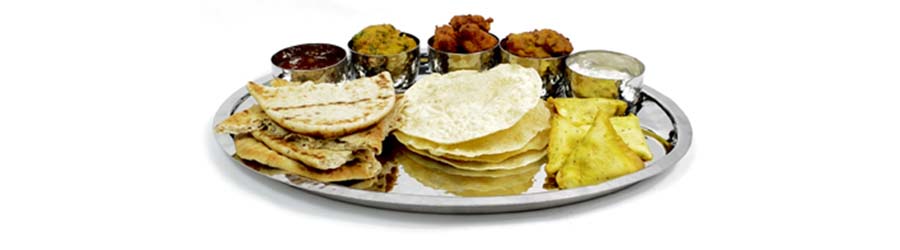
A thali set is a large round tray with individual bowls for different dishes. It’s one of the most visually impressive ways to serve a complete Indian meal. The Stainless Steel Simple Thali Set with 4 Ramekins 33cm is a practical, durable option at 33cm across with four separate ramekins for sides, sauces, and chutneys. Made from stainless steel, it is easy to clean and suited to the pace of a busy Indian restaurant service. A clean, unfussy presentation that puts the food front and centre.
For serving chutneys, raita, and pickles, the Pickle Tray with 4 Copper Bowls and Wooden Base gives a clean, authentic presentation that elevates the full table setting.

Cooking Karahis
For the kitchen, the Cooking Karahi range covers a wide range of sizes from small single-portion vessels to large commercial karahis suited to batch cooking. If you are cooking and serving in the same vessel, then a cooking karahi is the right choice as it goes from hob to table.
If you want a dedicated serving piece that looks impressive at the table, the copper and stainless steel serving karahis above are the better option. Having both in your kitchen gives you flexibility across different dishes and service styles.

A Recipe to Try: Lamb Rogan Josh
Rogan Josh is a Kashmiri dish. It’s a rich, deeply spiced lamb curry with a characteristic red colour that comes from Kashmiri chillies and dried red peppers rather than excessive heat. It is warming without being fiery, and the depth of flavour from slow cooking makes it a dish that rewards the time invested in it.
This recipe is written for home cooks and serves four. Restaurants looking to add it to the menu can scale the quantities proportionally. The method and timing remain the same regardless of scale.
Ingredients:
- 600g bone-in lamb shoulder, cut into large pieces
- 3 tbsp neutral oil
- 2 medium onions, finely sliced
- 4 garlic cloves, finely grated
- 20g fresh ginger, finely grated
- 2 Kashmiri dried red chillies (soaked in warm water for 20 minutes)
- ½ tsp Kashmiri chilli powder
- 1 tsp ground coriander
- ½ tsp ground cumin
- ½ tsp ground fennel
- ½ tsp garam masala
- 3 whole cloves
- 3 green cardamom pods, lightly crushed
- 1 black cardamom pod
- 1 cinnamon stick
- 300g chopped tomatoes
- 200ml lamb or chicken stock
- Salt to taste
- Fresh coriander to finish

Method:
- Heat the oil in a large, heavy-based pan or karahi over medium-high heat. Fry the onions slowly for 20–25 minutes until deep golden brown. Do not rush this step as the caramelised onions are the base of the sauce and contribute most of the depth.
- Add the garlic and ginger and fry for a further 2–3 minutes until fragrant.
- Add the whole spices: cloves, cardamom pods, black cardamom, and cinnamon. Fry for 1 minute until they begin to pop.
- Blend the soaked Kashmiri chillies with a little of their soaking water to a smooth paste. Add to the pan along with the ground spices and cook for 3-4 minutes, stirring constantly.
- Add the lamb pieces and sear on all sides until well coated in the spice mixture.
- Add the chopped tomatoes and stock. Stir, bring to a simmer, and cover. Cook on a low heat for 90 minutes until the lamb is completely tender and beginning to fall from the bone.
- Remove the lid and cook for a further 15-20 minutes to reduce and concentrate the sauce.
- Finish with garam masala, adjust seasoning, and serve scattered with fresh coriander. Add a small amount of cream or yoghurt if the sauce is too intense.
To serve: Transfer to a black iron karahi or copper serving dish and bring to the table. Serve with basmati rice, naan, or paratha.
For Home Cooks: Making the Most of National Curry Week
National Curry Week is not only for restaurants. If you want to cook curry at home during the week, the Rogan Josh recipe above is a good place to start. It’s not complicated, but it rewards patience, particularly in the onion stage. The recipe serves four and the ingredients are straightforward to find in any supermarket.
The most worthwhile investment for home curry cooking is a black iron karahi. Once seasoned, it develops a natural non-stick surface and conducts heat in a way that replicates the concentrated, high-heat cooking of a restaurant stove, which is why homemade curry cooked in a karahi tastes noticeably different to the same recipe made in a standard saucepan. Cooksmill stocks the full black iron karahi range in multiple sizes, from small individual karahis to large family-sized vessels.
Beyond the karahi, whole spices, fresh ginger and garlic, and a little patience with the cooking time make more difference to a homemade curry than anything else.

Frequently Asked Questions About National Curry Week
When is National Curry Week?
National Curry Week takes place every October in the UK, usually during the first or second week of the month. The exact dates change each year, so it's worth checking the official National Curry Week website for the latest information. The annual celebration recognises the contribution of Indian restaurants and the wider curry industry to British food culture, encouraging customers to support their local curry houses and discover new dishes.
How can restaurants make the most of National Curry Week?
Restaurants can attract customers by introducing limited-time curry specials, creating set menus and promoting their participation on social media. Sharing photographs of signature dishes, offering tasting menus and encouraging advance bookings can help generate interest. Staff should also be briefed on the menu so they can confidently recommend dishes and explain ingredients to customers.
What special offers can restaurants run during National Curry Week?
Popular options include fixed-price curry menus, sharing platters, complimentary poppadoms and discounted side dishes. Restaurants could also introduce a regional curry special or donate a portion of sales from a selected dish to charity. When planning promotions, calculate ingredient costs and portion sizes carefully to protect profitability.
What is the difference between a cooking karahi and a serving karahi?
A cooking karahi is designed to withstand direct heat and is used to prepare curries and other dishes on the hob. Black iron and suitable stainless steel karahis are popular choices for commercial kitchens. Decorative copper serving karahis are generally intended for presenting prepared food rather than cooking. Always check the manufacturer's instructions before placing a karahi over direct heat.
What tableware is best for serving Indian food in restaurants?
Black iron karahis, copper serving dishes, stainless steel thali sets and pickle trays are popular choices for Indian restaurants. Karahis are ideal for presenting individual curries, while thali sets allow several dishes, accompaniments and sauces to be served together. Choose durable, easy-to-clean Indian Tableware that suits your service style and the presentation of your menu.
Can you make lamb Rogan Josh at home?
Yes. Lamb Rogan Josh can be prepared at home using lamb shoulder, onions, garlic, ginger, Kashmiri chillies, tomatoes and aromatic spices. Slowly browning the onions develops flavour, while gentle simmering helps tenderise the lamb. A heavy-based pan or cooking karahi works well. Serve the finished curry with basmati rice, naan or paratha.
Shop Indian Tableware and Cookware at Cooksmill
Cooksmill has been supplying Indian restaurants across the UK for years. The full Indian Tableware range covers every serving vessel you need, from individual karahi balti dishes and copper thali sets to pickle trays, handis, and finger bowls. The Indian Cookware range covers cooking karahis and woks for the kitchen.
Whether you are restocking ahead of National Curry Week or equipping a kitchen from scratch, everything is available online at cooksmill.co.uk with free delivery on orders over £60 or in stores in Salford or Bradford.